

Featured Post

A Fox, A Hound, and a Friendship

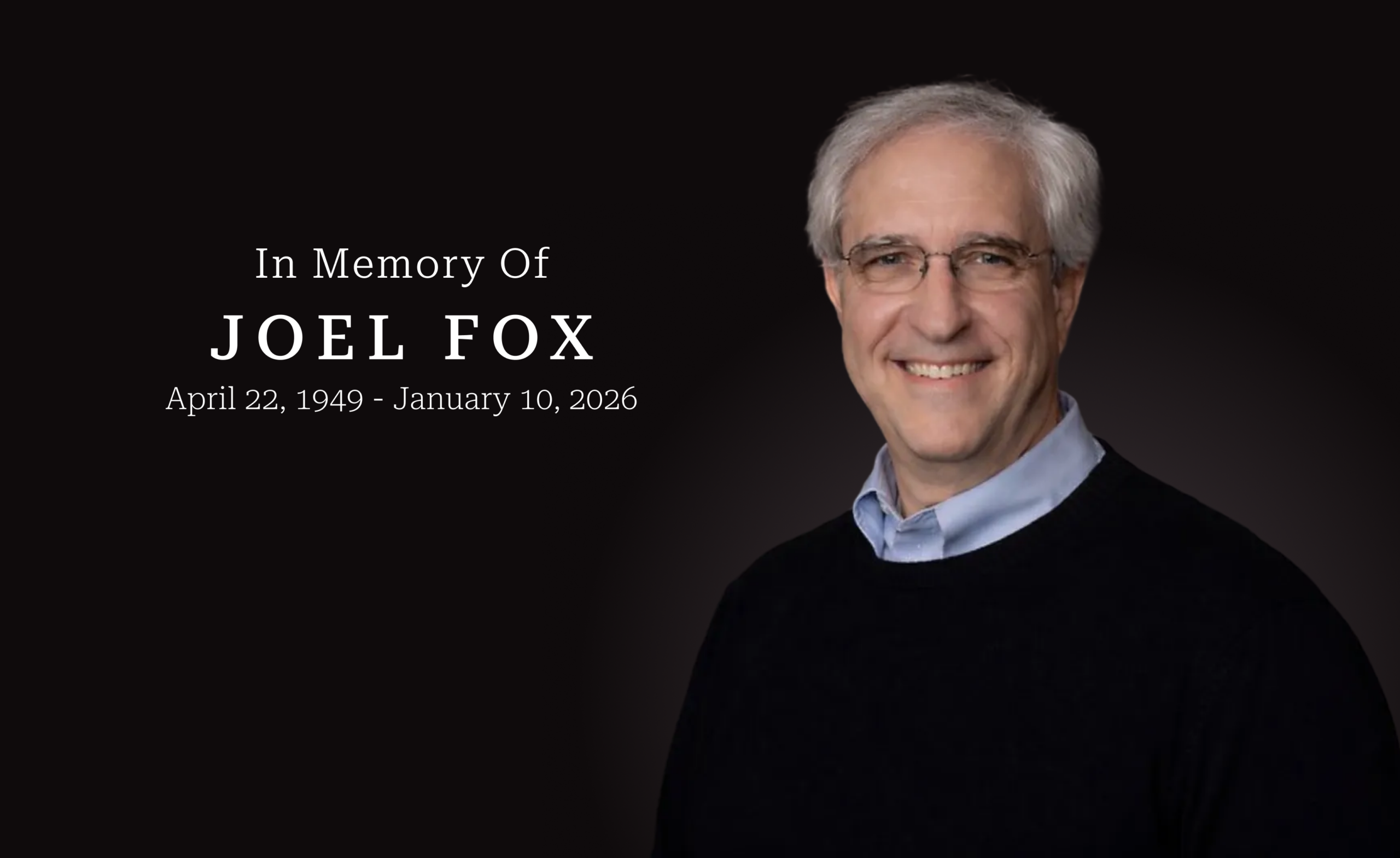
If political differences are destined to leave us divided and friendless, how do you explain the life of Joel Fox?

Fox died on January 10 after more than a decade of living with cancer. He was California’s most prominent taxpayer advocate since Howard Jarvis, for whom he worked, and whose anti-tax organization he led from 1986 to 1998. Fox, a Republican, advanced conservative ideas on TV and op-ed pages. He advised the campaigns of Gov. Arnold Schwarzenegger, Mayor Richard Riordan, and U.S. Sen. John McCain.

That profile, in our polarized times, might make you think Fox was one of those political ideologues who are driving the country apart. But the opposite is true.

Fox, more than any person in California politics, built deep relationships with people across the political spectrum. And he did not do this through consensus or compromise. Instead, Fox built friendships on disagreement itself—a warm, open, and curious style of disagreement.

Read More »

Democrats’ California Dream Act is Just An Act

For years the Democratic Party has burnished its reputation and built its support among Latinos on a foundation of empty words, broken promises and false intentions. They repeatedly claim to champion causes and to address issues important to Latinos, yet their actions invariably have been ineffective, often raising false hopes with significant negative impacts. Assemblyman Gil Cedillo’s reintroduction of the California Dream Act (AB 130, 131) represents exactly that type of political posturing.

The California Dream Act does not in any way impact a person’s legal status. It does not provide legalization nor will it provide a pathway for legalization. What is does provide is fee waivers, Cal Grants, and other financial aid programs to undocumented students, at a cost $190 million over the next five years.

I have known Assemblyman Cedillo for nearly a decade. He has been my state Assemblyman, Senator, and is now once again my Assemblyman. We have sat together on the same flights between Sacramento and Los Angeles, and we’ve sat opposite each other on television to debate economic, educational, and immigration issues. I don’t question his overall passion, commitment, or desire to be constructive. However, I do question whether introducing legislation that cost us $190 million, at a time when our higher education system is forced to cut classes, turning away thousands of eligible students, increase fees, and is now facing a billion dollars in cuts, is economically prudent.

Read More »

Ronald Reagan’s IHSS Needs Reform, not Elimination

The state budget mess, caused by years of over-spending by the Legislature, has reached a crisis
point. That’s not necessarily a bad thing. It means that we finally have the opportunity to cut
spending and institute real reforms.

The only way California can climb out of this hole and get our economy back on track is through
a combination of policies that promote private-sector job growth, reform public employee
pensions and reduce spending on almost every segment of government. But cutting programs
that actually save the state money is penny-wise and pound-foolish.

One program on the chopping block is California’s In-Home Supportive Services (IHSS)
program. Started by then-Governor Ronald Reagan, IHSS provides various services to elderly,
blind, and disabled persons who are unable to live unassisted in their own homes. I support this
program because I believe in the principle that when using taxpayer dollars, services must be
provided in the most cost-efficient way. The cost of caring for a patient in their home is about
$10,000 per year. The same care in a hospital or nursing facility averages over $50,000 per year.
Simply put, it’s much less expensive to keep patients at home than to place them in institutions.

Read More »

Predicting the Redistricting Map – How the Republicans will be Screwed

Predicting the map is always fun.  Even though the final census figures are not
out yet, people can and are drawing new legislative and congressional districts
for California.  One of the more
interesting is the work of "Silver Spring" a Democratic activist from Maryland
with a knack for numbers.

In 2010, prior to the passage of Proposition 20, he draw a
highly partisan gerrymander of California’s 53 congressional districts that he
said would result in the election of 46 Democrats and seven Republicans to
congress, a loss of 12 Republicans from the current delegation.  That won’t happen with the Citizens
Redistricting Commission doing the job.

So Silver Spring has drawn a new map with nice compact
districts that employs racial gerrymandering to cut out Republicans.  His argument, a very legitimate one, is that
the Commission will be pressured by outside groups to maximize Latino
districts, given the huge growth in Latino population in the past decade.  

Read More »

Enterprise Zones Boost the California Economy

California’s
economy needs all the help it can get. It is barely growing. Its unemployment
rate, at 12.5%, is the second highest in the nation. Yet in his
budget-balancing proposal, Gov. Jerry Brown includes a money-saving idea that,
if adopted, would kill a program that keeps more than 1 million Californians
working and generates millions in tax revenues. He claims this program doesn’t
significantly contribute to the state economy. The governor is wrong.

Begun in
1986, the state’s Enterprise Zone Program offers tax breaks and other
incentives to more than 100,000 companies doing business in any of 42
designated areas with high unemployment and poverty rates. The zones range in
size from 1.7 square miles to 671 square miles. And they boost local economic
activity.

Read More »

“Patchwork” High Speed Rail System Unraveling?

Cross-posted at NewGeography.

The widely dispersed opposition to proposals for high speed rail (genuine and faux) led Secretary of Transportation Ray LaHood to say that the Administration would press forward in a patchwork fashion if necessary.

"Patchwork" may be an overstatement. House Appropriations Committee Chairman Hal Rogers (R., Ky.) has plans to eliminate high speed rail funding in the current fiscal year. Already, holes have appeared in the high-speed rail plans with the cancellation of the Milwaukee to Madison line by Gov. Scott Walker and the cancellation of the Cincinnati to Cleveland line by Gov. John Kasich.

Read More »

Lockyer: RDAs Entering Into Bad Deals

Cross-posted at CalWatchdog.

Immediately following Gov. Jerry Brown’s budget proposal in January, the Legislative Analyst’s Office published an Overview of the Governor’s 2011-2012 Budget. As is often the case with the LAO, the analysis appears largely supportive, but reading deeper into the detail, analysts express significant reservations, specifically warning of one potential danger area with Brown’s proposal to eliminate the state’s 425 redevelopment agencies.

The LAO recommended that the Legislature take immediate action to pass “urgency legislation” as soon as possible, “prohibiting redevelopment agencies from taking actions that increase their debt.”

But the Legislature has not yet done this.

Read More »

Convincing Business on the Budget Plan

Describing himself as the Rip Van Winkle of California politics, Governor Jerry Brown, now back in the governorship after a long absence, was aggressively selling his budget plan to 1500 members and guests of the Los Angeles Chamber of Commerce last night.

Brown was looking for business support to help convince Republicans to get tax measures – he called them “revenue extensions” – on the ballot and to help get the tax extensions passed. He said earlier in the day, “It’s absolutely crucial that the people in business … get behind the effort to fix the mess in Sacramento.”

When asked at an airport news conference earlier in the day how he would convince the businesses of the need to pass the tax measures, Brown responded he would argue “stability,” adding that Californians should not “create undue turbulence” by defeating the tax measures thus requiring more budget cuts.

Brown insisted business would go along with his plan because what he was proposing was reasonable and that the chamber was reasonable.

Read More »

Joel Kotkin Opines On City of L.A.’s Decade of Decline

Cross-posted at Planning Report.

Author, internationally-recognized authority on global, economic, political and social trends, and a frequent TPR contributor, Joel Kotkin has recently been studying the economic recovery of regions and cities. What he has found may surprise the most ardent city of Los Angeles apologist: the West Coast’s largest city has been outperformed during the recession and over the past decade in the U.S. in almost every possible category of prosperity. In the following TPR interview, Kotkin details L.A.’s decade of secular decline, while also noting that, with adult leadership, a path to economic competitiveness is still open.

You have been speaking and writing about regions and metropolitan areas for some time. You have focused recently on L.A.’s position vis-à-vis other regions around the globe and in the United States. How well is L.A. doing?

L.A. is in the midst of a secular decline, which can be reversed, but before we reverse a decline, we have to know what the problems are and where we stand. You can read accounts by organizations like the LAEDC—the last effective business group in town—and have no sense that time is running out. There is very little public discussion or recognition of what’s going on. Not that we were unique in suffering from the recession, but we have actually underperformed compared with both our old rivals and some new ones over the past decade.

Read More »

Medical Malpractice Redux – H.R. 5

Another State of the
Union Address 
has come and gone and there is once again a
sense of excitement in the air. In this year’s address, the President stated,
"I am willing to look at other ideas to bring down costs, including one
that Republicans suggested last year – medical malpractice reform to rein in
frivolous lawsuits."

Is President Obama truly serious this time about
taking another look at medical malpractice reform? CALA has long stated that to
reform healthcare and not look at medical malpractice reform or defensive
medicine is just to completely miss the point. These areas have to be reformed
when tackling the issue of healthcare reform.

Lo and behold, here comes H.R. 5., the HEALTH Act of 2011. This
bill by Rep. John Gingrey (R-GA) will give the President the opportunity to
back up his words with action. It contains, among many things, a cap of
$250,000 on non-economic damages, which is similar to a reform we have in California
that the trial lawyers cannot stand. H.R. 5 even puts caps on contingency fees
and eliminates punitive damages for products that meet FDA standards.

Read More »