

Featured Post

A Fox, A Hound, and a Friendship

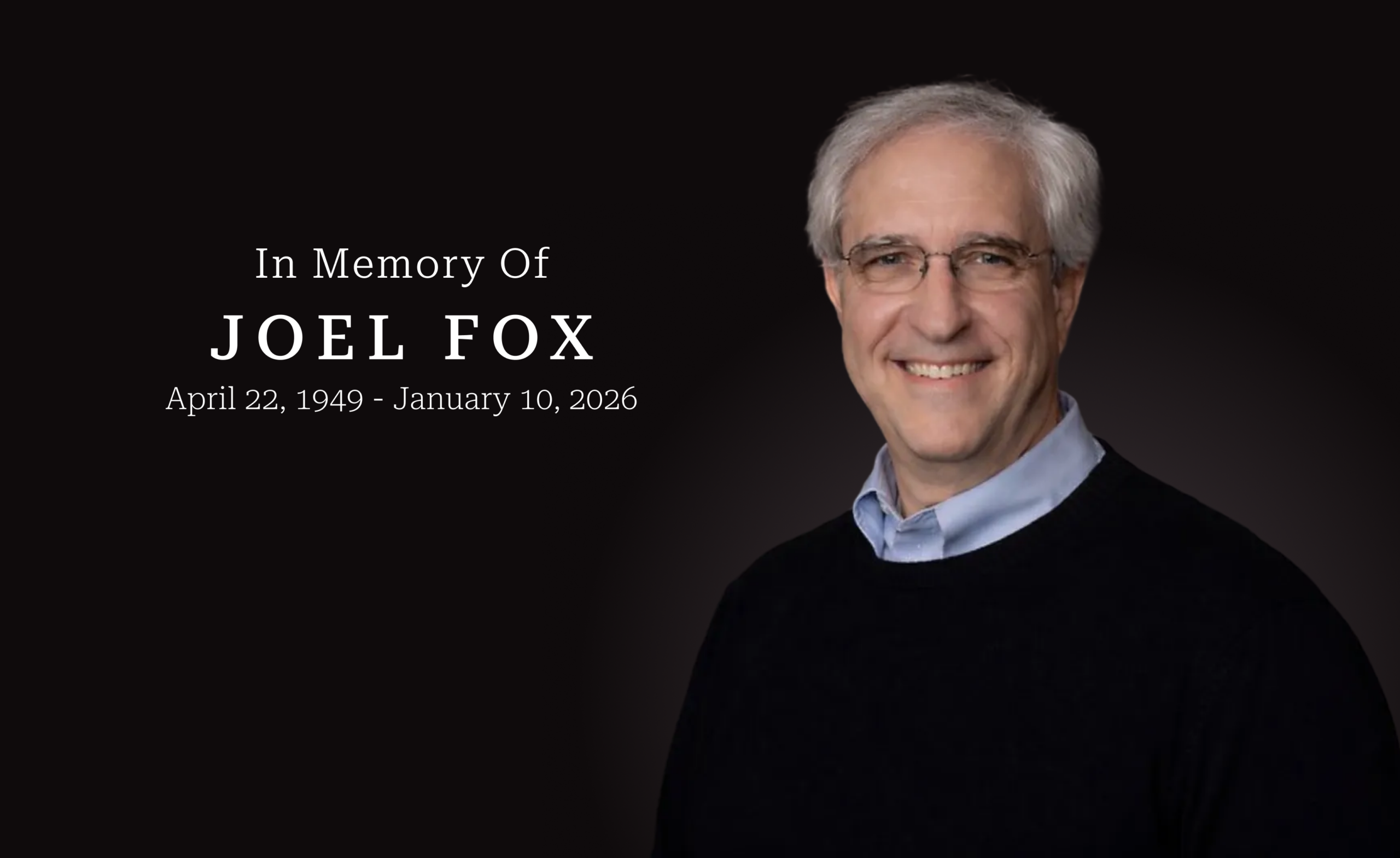
If political differences are destined to leave us divided and friendless, how do you explain the life of Joel Fox?

Fox died on January 10 after more than a decade of living with cancer. He was California’s most prominent taxpayer advocate since Howard Jarvis, for whom he worked, and whose anti-tax organization he led from 1986 to 1998. Fox, a Republican, advanced conservative ideas on TV and op-ed pages. He advised the campaigns of Gov. Arnold Schwarzenegger, Mayor Richard Riordan, and U.S. Sen. John McCain.

That profile, in our polarized times, might make you think Fox was one of those political ideologues who are driving the country apart. But the opposite is true.

Fox, more than any person in California politics, built deep relationships with people across the political spectrum. And he did not do this through consensus or compromise. Instead, Fox built friendships on disagreement itself—a warm, open, and curious style of disagreement.


Read More »

Vote Yes on Prop 22 to Stop the State from Taking Local Funds

Robbing Peter to pay Paul has become budget politics-as-usual in
California. When state government faces major deficits, Sacramento
finds a way to siphon billions of dollars from local governments,
transit agencies and redevelopment funds in order to balance the state
budget. Prop. 22 would end the pirate raids and force Sacramento to
meet its own budget obligations rather than looting the locals.

Prop. 22 must seem like déjà vu to many Californians. In years past,
voters overwhelmingly approved initiatives that were meant to prevent
these raids. Unfortunately, those initiatives contained tiny loopholes
through which state lawmakers have managed to drive a Mack truck of
budget transfers.

Recent examples include Sacramento taking $85 million in funding
earmarked for L.A.’s Community Redevelopment Agency and more than $1
billion in transportation funding meant for MTA projects. Taking this
money away from local projects and using it to fill a perpetual state
budget deficit means a loss of jobs locally as infrastructure
improvements and commercial projects sit idle in the planning stages.

Read More »

Death Penalty Trumps Environment in AG Race

In the race for Attorney General, Kamala Harris emphasizing she will be a tough enforcer of law protecting the environment won’t be enough to blunt Steve Cooley’s attack that Harris is soft on the death penalty.

In the debate between Los Angeles D.A. Steve Cooley and San Francisco D.A. Kamala Harris at UC Davis yesterday, Cooley went right for the death penalty issue with his opening comment. Harris emphasized environmental issues in an attempt to connect with voters and to avoid her controversial stand on the death penalty.

Cooley spoke of Harris’s refusal to pursue the death penalty for the killer of San Francisco Police Officer Isaac Espinoza. Cooley was quick to point out his endorsement from the Espinoza family, who earlier this week issued a tough press release stating in part: "Kamala Harris’ arrogant contempt for the sacrifice of law enforcement officers, for the rule of law and for the will of the people has disqualified her from being California’s chief law enforcement officer. She is simply not worthy."  

Read More »

Prop 27, The Big Lie Ballot Measure

Deceptive ballot measures are nothing new in California, but it is rare when an initiative is entirely a lie.  That is the case with Proposition 27, a big lie ballot measure to eliminate the voter-approved Citizens Redistricting Commission and return this vital function to self serving incumbent legislators.

Fed up with the dysfunctional legislature whose approval rating is now just 10 percent, voters in 2008 passed Proposition 11 to take the drawing of legislative districts away from politicians and give it to a 14-member Citizens Commission.  Voters said it is time to end the practice of incumbents drawing districts for themselves.

The reform the people passed in 2008 has gone spectacularly well; more than 30,000 citizens applied for the Commission, and the 60 finalists include Democrats, Republicans, Green Party members, political independents, whites, Latinos, blacks, Asians and Native Americans.  The Commission will reflect the diversity of the state, and will draw the new districts in 2011 according to specific and transparent criteria.

Read More »

Employment Gains Expected if Prop 23 Passes

The California electorate next month will vote on Proposition 23,
which would suspend the implementation of the state’s global warming
(i.e., energy taxation) law ("AB32?) until the unemployment rate
reaches 5.5 percent for four consecutive quarters.  My new paper on the
employment effects of this initiative can be found here.

In a nutshell: Based upon official estimates of the reduction in
state energy use attendant upon implementation of AB32, Proposition 23
would increase California employment by over half a million in 2012,
and over 1.3 million in 2020.  (Total employment in 2009 was about 16.2
million.) 

Read More »

Brown’s Judges

Rarely do you read a devastatingly funny yet as serious a
political book as Gov. Jerry Brown’s Destruction of the California
Judiciary.

While the title seems like a reach, by the time
you’ve read about judges who grow pot in their home, chauffeured
murderers, violated court orders and voted to overturn every murder
conviction that came before them, you will ask yourself where Governor
Brown found so many of these fruitcakes.   The book anticipates and
answers that question and includes the perspectives of Democrats like
Senator Alfred Alquist that Brown "seems to have gone out of his way to
appoint people who are extremely controversial."

It’s easy to
see why former Governor Pete Wilson, past California District
Attorneys’  Association President Ed Jagels, Senator Tony Strickland,
and Assemblyman Jim Nielsen all praise the book.

Read More »

Jerry Doesn’t Need Positions on All Nine Ballot Measures

Meg Whitman’s campaign has been issuing a steady stream of press releases demanding that Jerry Brown take positions on all nine measures, Props 19-27, on the November statewide ballot.

One wonders why she bothers.

Brown isn’t going to take a position on each measure because she asks him to. Nor should he. A candidate is under no obligation to wade into measures. In fact, the political culture in some countries with direct democracy is that candidates and elected officials should stay out of such matters, which are decisions left for the people.

Read More »

Bill Signings Send Conflicting Signals To California’s Struggling Manufacturing Community

California’s bill signing deadline passed last week and the outcomes of
a few specific bills send conflicting signals to manufacturers and
private sector job creators about the state’s interest in their ability
to compete and grow jobs.

Here’s a look at the result of four of the most important bills
affecting the state’s manufacturing job base and competitiveness:

Bad signal #1

Read More »

Prop. 25: New Front in Long War Against Prop. 13

Proposition 25 is the latest weapon against Proposition 13, but backers don’t want voters to know it.

Statewide polls taken in recent years consistently show Proposition 13
to be as popular as it was 32 years ago when it passed with nearly
two-thirds of the vote. While the general public supports the landmark
measure with its limitation on property tax increases and requirement
of a two-thirds vote of the Legislature to increase state taxes,
politicians and government employee union leaders continue to see
Proposition 13 as a barrier to their draining every dime from taxpayers.

Writing about the campaign to pass Proposition 13, the measure’s
author, Howard Jarvis, wrote, "Virtually all of the howlers against
Proposition 13 had their noses buried deeply in the public trough. They
were on a gravy train provided by the taxpayers, and they wanted to
ride that train at the taxpayers’ expense until they reached the
promised land of exorbitant pensions for the rest of their lives."

Read More »

Missing the Point on Jobs: The “More Transit – More Jobs” Report

Cross-posted on NewGeography.com

The Transit Equity Network has just published a study called More Transit – More Jobs
in which it suggests switching 50% of highway funding to transit in 20
metropolitan areas to create an additional 180,000 jobs over the next
five years. Their basic thesis is that each kajillion in spending can
produce more jobs in transit than in highways. We don’t comment on
that, because, frankly, the purpose of transportation spending is
neither to create transit jobs nor highway jobs.

We spend on transit and highways because of benefits that extend beyond
any direct employment. And, the extent of those benefits cannot be
compared between the two modes. At current rates of spending each
billion dollars spent on highways supports about 25 times as much
personal mobility as one spent on transit. Beyond that, highway
spending supports the movement of more than 1.25 billion ton miles of
truck freight, which keeps product prices low and supports our affluent
life style.

Transit carries 0.0 ton miles of freight. Researchers such
as Prud’homme & Chang-Wong and Hartgen & Fields
have shown that the type of ubiquitous mobility provided by road
systems produce greater economic growth. Moving money out of roads
would increase traffic congestion, destroy jobs and increase product
prices by slowing down trucks.

Read More »