

Featured Post

A Fox, A Hound, and a Friendship

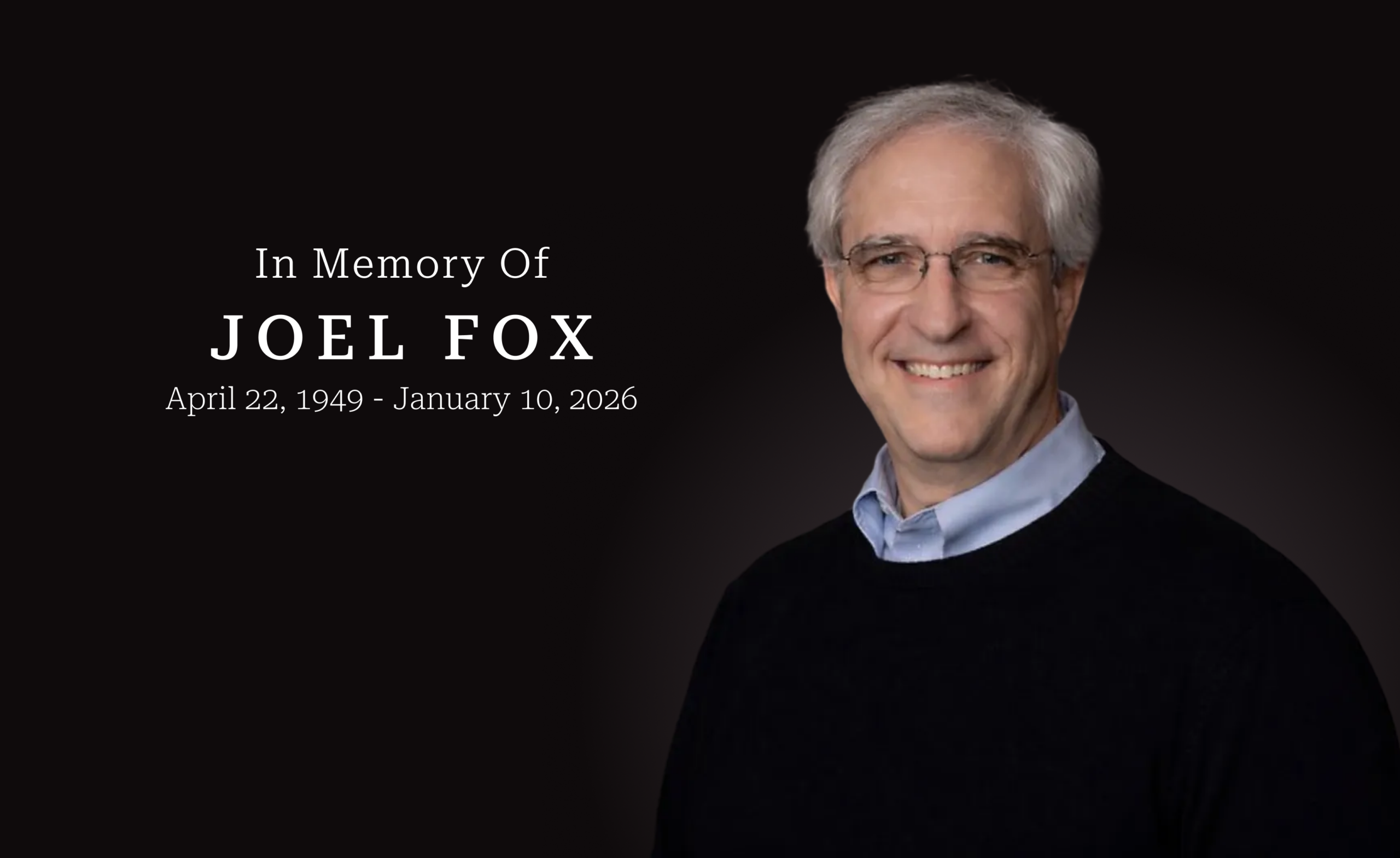
If political differences are destined to leave us divided and friendless, how do you explain the life of Joel Fox?

Fox died on January 10 after more than a decade of living with cancer. He was California’s most prominent taxpayer advocate since Howard Jarvis, for whom he worked, and whose anti-tax organization he led from 1986 to 1998. Fox, a Republican, advanced conservative ideas on TV and op-ed pages. He advised the campaigns of Gov. Arnold Schwarzenegger, Mayor Richard Riordan, and U.S. Sen. John McCain.

That profile, in our polarized times, might make you think Fox was one of those political ideologues who are driving the country apart. But the opposite is true.

Fox, more than any person in California politics, built deep relationships with people across the political spectrum. And he did not do this through consensus or compromise. Instead, Fox built friendships on disagreement itself—a warm, open, and curious style of disagreement.

Read More »

Times to Try Mens’ (& Womens’) Souls

"These are the times that try men’s souls." – Thomas Paine’s The Crisis

Going ‘from bad to worse’ is a much overused expression.  For those who have not entirely given up on the 24-7 Media coverage of all the nasty things going on lately, some have begun developing traumatic associations and now avoid news like the plague,  how many disasters does it take . . . . let me count them.

The Gulf is filling with what looks like melted chocolate and even mighty BP is clueless how to stop it, having started on live video feed, no less, it’s latest, Top Kill (think: life as comic book) solution to the month-old spewing of oil into the pristine Carribean waters and beyond, involving something with old sneakers, tennis balls, cement, what have you.  Lousiana’s bayou and wetlands country is smothered in what we only wish was butterscotch syrup, some twelve miles in now.

Read More »

Prop 14 – Its Impact on Third Party Candidates

Proposition 14, if passed by the voters in the June Primary, will scratch the current method we elect our legislators by allowing the two top vote-getters – regardless of party – to run against each other in a November runoff election.

In some heavily Democratic districts and heavily Republican districts, this could lead to two candidates of the same party to run against each other in November.

Opponents of Prop. 14 have made the argument that this would "narrow voter choice" by prohibiting the state’s smaller third-parties (i.e. Green, Peace & Freedom, American Independent and Libertarian) from appearing on the November General Election ballot.

Read More »

Prop 14 is Bad for Smaller Parties, Bad for Democracy Overall

The Green Party of California opposes Proposition 14 because it would reduce voter choice and political voice across political lines, while unfairly favoring incumbents, big money and party insiders.

By eliminating party primaries, expanding the number of voters that primary candidates have to reach and effectively front-loading the election process, Proposition 14 would put even greater emphasis on name recognition and early fundraising, increasing the corrupting influence of money and making it harder for competing candidates and movements to survive, let alone contend.

Because of pressure not to “split the primary vote” of their party’s faithful, incumbents and well-funded candidates would also be more able to “clear the field” and squeeze out competitors (like Schwarzenegger did during the recall), putting more power into the hands of party machines and insiders to, de facto, select general election candidates. As a result, Proposition 14 would stifle diversity and competition within the major parties and at the same time, limit the choices of independent voters who can already vote within the major party primaries.

Proposition 14’s backers are trying to sell this electoral scheme by promising it will deliver representatives of a particular political persuasion. Since when did the purpose of elections change from representing the people — whatever their views — to socially engineering a specific result?

Read More »

The June 9 Re-Cut

Here’s a cost-cutting suggestion for whichever of the two Republican gubernatorial candidates emerges from the June 8 primary.

Don’t make any new TV ads for the fall. Simply take the attack ads your defeated opponent has been using against you – and re-cut them slightly, replacing foreboding graphics and music with friendly and upbeat stuff. In substance, the attack ads you’re facing now may be the best advertisement you have for yourself in the general election.

Seriously. Watching Poizner blast Whitman and Whitman attack Poizner for these last several weeks, I’ve had the through-the-looking glass reaction of an independent, Decline-to-State voter: the attacks make each more attractive.

Read More »

Yes on Prop. 17

Independent agents statewide strongly support Proposition 17 on the June ballot because it will inject more competition into the auto insurance market, allowing us to better shop for the lowest rates for our auto insurance customers.

If passed, Prop. 17 will allow drivers to take their continuous coverage auto insurance discount with them no matter which insurance company they choose. Prop. 17 will reward responsible drivers and save them up to $250 per year.

Here’s the problem Prop. 17 fixes: Under current law, drivers who have maintained auto insurance with the same company are eligible for a continuous coverage discount on their auto policies.  However, a flaw in the law prohibits drivers from taking this discount with them if they switch insurance companies.

Read More »

Democrat ‘Red Ink Budget’ – How to Kill Jobs and Move California Closer to Insolvency

Earlier this week, Assembly Democrats unveiled their budget blueprint of liberal
spending and higher taxes, which they ironically call their California Jobs
Budget.

In reality, they proposed the "California Red Ink Budget" because that’s
really what it would produce ­ more government spending, increasing debt and
higher taxes that would hit working Californians especially hard.
Considering our accumulated deficit, and the fact that we have borrowed from
over 700 internal accounts, as well as our local municipalities, the plan is
one of the most irresponsible budget proposals that I have seen in my time
in Sacramento.

On the spending side, the Democrat plan rejects the tough cuts proposed by
the Governor, or any substitutes that are necessary to close California’s
$19.1 billion deficit. It instead relies on massive new borrowing and tax
increases that will push our state even closer to the brink of financial
insolvency.

Read More »

Needed: A Plan for Predictability

I was in Washington DC recently and spoke with a couple of venture capitalists who work in California. Each reported seeing other venture capital firms move employees out of our state.

The problem, they said, was that California had become too unpredictable.

It isn’t just that schools are being cut; it’s that no one knows how much the schools are being cut. It’s not that taxes get raised-it’s that no one knows exactly how or when it will happen. It’s OK and understandable, the venture capitalists said, if California raises taxes or cuts spending. But such actions need to be part of a credible plan that makes the state’s immediate budget future more predictable for people deciding whether to invest here.

Read More »

California’s Explosion in Involuntary Part-Time Employment

The number of  unemployed in California, the rate of unemployment, the average duration of employment: all of these indicators have risen dramatically since 2007. However, there is a further less-known job indicator that also has arisen dramatically, and that may have more to do with stalling a job recovery in California than any other: the number of workers involuntarily working part-time.

The table below shows the explosion of involuntary part-time employment in California since summer 2007. It was compiled from data provided by economist Paul Wessen of EDD’s Labor Market Information Division.

Californians Who Work Part-Time But Seek Full Time Work (April 2005-April 2010)

Read More »

Where’s the Beef in Clean Tech? Look Around

Last week’s announcement that automaker Tesla Motors plans to put more than
1,000 California workers back on the assembly lines at the NUMMI plant is
yet another indicator that the clean tech industry will be a driving force
in California’s economic recovery.

Just a few days earlier, Southern California Edison announced an agreement
to place up to 40 percent of Edison’s massive 250 megawatt solar project on
15 million sq. ft. of rooftops of ProLogis distribution warehouse roofs in
the Inland Empire. That project will put 1,200 to work. The International
Brotherhood of Electrical Workers (IBEW) is supporting the plan through the
expansion of its solar installation apprentice program.

Meanwhile, Spain’s leading wind company, Power System, S.L.. announced it
will open its U.S. office in San Diego. The reason? "To bring us closer to
our North American customers and enable us to offer our solutions to the
wind turbines and solar power markets in this region," said the company’s
managing director, Jose Manuel Angulo Macias.

Read More »