


Featured Post

A Fox, A Hound, and a Friendship

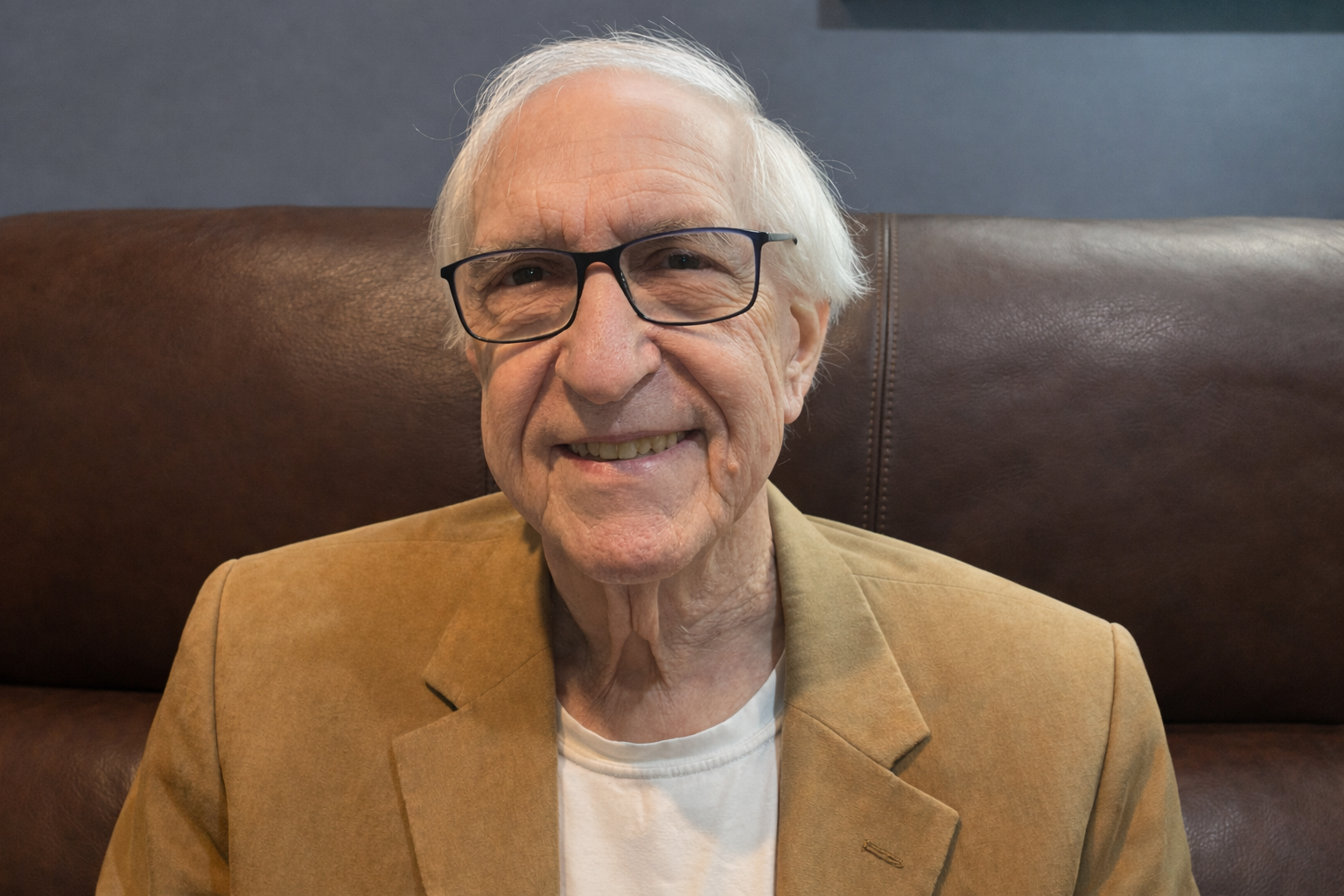
If political differences are destined to leave us divided and friendless, how do you explain the life of Joel Fox?

Fox died on January 10 after more than a decade of living with cancer. He was California’s most prominent taxpayer advocate since Howard Jarvis, for whom he worked, and whose anti-tax organization he led from 1986 to 1998. Fox, a Republican, advanced conservative ideas on TV and op-ed pages. He advised the campaigns of Gov. Arnold Schwarzenegger, Mayor Richard Riordan, and U.S. Sen. John McCain.

That profile, in our polarized times, might make you think Fox was one of those political ideologues who are driving the country apart. But the opposite is true.

Fox, more than any person in California politics, built deep relationships with people across the political spectrum. And he did not do this through consensus or compromise. Instead, Fox built friendships on disagreement itself—a warm, open, and curious style of disagreement.

Read More »

CalChamber Can’t Take the Heat

Yesterday, Capitol Weekly broke the news that the California Chamber of Commerce pulled its critical TV ad of Jerry Brown after receiving complaints from Brown, his wife, and their friends.

Last time I checked, we were in the midst of an Election Season. And the last time I checked, Elections were occasions when people actually took sides based upon their convictions.

The truth is, that ad was the most refreshing thing to come out of the Chamber in years. It was a tough yet entirely fair analysis of Brown. Widely known as the Godfather of the public employee pension crisis that is now destroying the state of California and the instigator of the global warming silliness that will literally kill our economy, there has never been a Governor more out-of-touch with businesses and taxpayers than Jerry Brown. By pulling the ad, Cal Chamber threw a damp cloth on what could have been the most virile effort to take down the one threat that stands in the way of a new generation in California.

Read More »

Let Stockholders Do Their Share

Last week we saw two attempts to rein in executive compensation in Los Angeles. One attempt was the right way. The other was not only the wrong way, but it could be disastrous for the company. Maybe even lethal.

Let’s look at the right way first.

Barington Capital Group, a New York investment firm with an activist bent, last Monday sent a five-page letter of complaint to the chief of Ameron International Corp. in Pasadena. Barington, claiming to represent a group of shareholders who own 3.7 percent of the company, precisely and dispassionately laid out its argument. Its letter included a chart showing how the stock of the company lagged its peer group as well as two broader market indexes over five time spans.

Barington made other intelligent arguments. It said, for example, that Ameron should cut internal costs since they equal 6 percent of sales vs. only 2 percent at a group of peer companies.

Read More »

Modest soda taxes don’t affect consumption or weight gain

Modest additional taxes on sweetened soft drinks don’t do much to curb consumption or child obesity, according to a study released today. But more significant levies targeting soda might have more impact.

The study, published in the journal Health Affairs, could find no significant connection between soda consumption or weight gain among children and special taxes on soda. The taxes in the study averaged 3.5 percent, and none were larger than 7 percent.

“If the goal is to noticeably reduce soda consumption among children, then it would have to be a very substantial tax” said Roland Sturm, the study’s lead author and a senior economist at RAND, a nonprofit research organization. “A small sales tax on soda does not appear to lead to a noticeable drop in consumption, led alone reduction in obesity.”

New soda taxes have been proposed in California and elsewhere. Democrats in Congress considered the idea as a way to finance an expansion of health insurance for the poor but dropped the proposal in the face of opposition from the beverage industry.

Read More »

CalChamber Rightly Voices Business Concerns in Advocacy Ad

Business must be heard on the important issues in this upcoming crucial gubernatorial election. The public employee unions rushed into the fray months ago creating Independent Expenditures, eagerly responding to Democratic candidate Jerry Brown’s request that the unions attack his opponent on issues. The California Chamber of Commerce was right to begin laying the framework for a debate on important issues by advocating on one of the chief concerns business will face under a Brown administration: Taxes and spending.

The Chamber’s issue advocacy television ad campaign comes months after public employee unions established their efforts to badger Republican frontrunner Meg Whitman. Brown has urged them to do more.

Jobs and the economy are major concerns for the voters in this election cycle and the business community has an obligation to step into the hurly-burly of politics and inform the voters on issues such as taxes and spending that will endanger economic recovery and job growth.

Read More »

Kafka on the Margins: Electronic Sigs Suffer a Setback In Court

San Mateo County Superior Court Judge George Miram this week ruled invalid the first electronic signature submitted on an initiative petition.

It’s an important ruling and not unexpected – but nevertheless it’s a setback for those of us who hope that electronic signatures might make registering voters and qualifying initiative petitions cheaper, and thus give more power to individuals and organizations that don’t have deep pockets.

What was Miram’s problem with the signature submitted by Michael Ni, founder of a Silicon Valley company that developed a technology that, it claims, allows voters to sign their names securely on their smart phones?

According to his four-page ruling, Miram’s problem wasn’t so much with the signature as it was with the nature of the electronic copy of the petition on which Ni signed his name.

One was technical. Noting that the election code requires a one-inch margin for initiative petitions, Miram found that the electronic petition that Ni signed with his iPhone was invalid because it didn’t have such margins.

Read More »

Governor Launches Office of Economic Development

What’s the first thing that comes to mind when you think about California’s economy? If it’s the high unemployment numbers or the budget deficits in Sacramento, you are not alone. But it’s also true that California, in spite of its problems, remains one of the ten biggest economies in the world and America’s leader in categories like industrial research and development and attracting foreign direct investment.

California cannot allow the past few years of recession to threaten our state’s economic standing on the world stage. We must do everything we can to make sure our state remains an attractive place for economic innovation.

That is why Governor Schwarzenegger is today announcing the launch of the Governor’s Office of Economic Development. By creating this new office, the Governor is letting it be known that California will become an even better place for doing business once we do away with some current layers of bureaucracy and streamline economic operations.

Read More »

CA’s High Tech Economy: One out of every five

One out of every five – That’s how many of America’s technology jobs are based right here in California. In this state, we don’t just talk about the technology revolution; we practically invented it. Our jobs, creativity and innovation are what drive America’s technology economy. And our high-tech industry has brought venture capital, greater wealth and increasing economic opportunity for our state and our nation.

But here is another statistic that is even more striking: one out of every four. That’s how many of America’s high-tech jobs were based in California just 20 years ago. That’s a 35% decline in the last two decades.

What is happening to California’s high-tech economy?

During the last 20 years we have seen our state’s economic environment change. The same state that once inspired two graduate students to invent Google in their dorm room now is watching as many of its largest technology companies outsource jobs to other states and even other countries. And why not? China, for example, has tripled its R&D investment since 1998.

Read More »

The Two-Thirds Vote IS about Taxes

The effort to do away with the two-thirds vote to raise taxes has been camouflaged with an argument that “democracy” must be served by applying a majority vote to all state revenue issues. UC Berkeley professor George Lakoff’s initiative to lower the two-thirds vote to majority rests on this argument.

No one is fooled. The attempt to remove the two-thirds vote IS about taxes.

Lakoff’s first initiative effort will not have the signatures needed to qualify for the ballot. He has filed a new initiative hoping to get a different title and summary out of the attorney general’s office. The first initiative title and summary told potential petition signers what the initiative was all about: “Changes Legislative Vote Requirement to Pass a Budget or Raise Taxes from Two-Thirds to a Simple Majority.”

Lakoff argued in the Huffington Post that taxes should not be mentioned in the title and summary because the measure is simply about setting up a democratic majority vote for legislative acts. Further, he argued that most people would not face taxes anyway because: “No one in the legislature wants to raise taxes on most voters.”

Read More »

Don’t Call It a Comeback

In the words of L.L. Cool J.: Don’t call it a comeback.

Not yet, anyway.

A front-page article in Sunday’s Sacramento Bee suggests that even among signs that the national economy is improving slightly, California faces an uphill climb.

The article, titled “California Comeback Faces Global Competition,” details the many challenges facing California businesses, both small and large.

For starters, the state continues to lag behind in critical areas:

– Business owners still face the harshest regulations among any of the 50 states. They face absolutely zero incentive to grow their businesses – or worse, to simply keep their businesses in California. The article points out whether it’s a small startup business in Davis, California or a large employer like Intel, companies are practically begging for the slightest shred of evidence as to why they should remain in California.

– Workers comp insurance rates are still 20% higher than most states in the nation;

Read More »