
Featured Post

A Fox, A Hound, and a Friendship

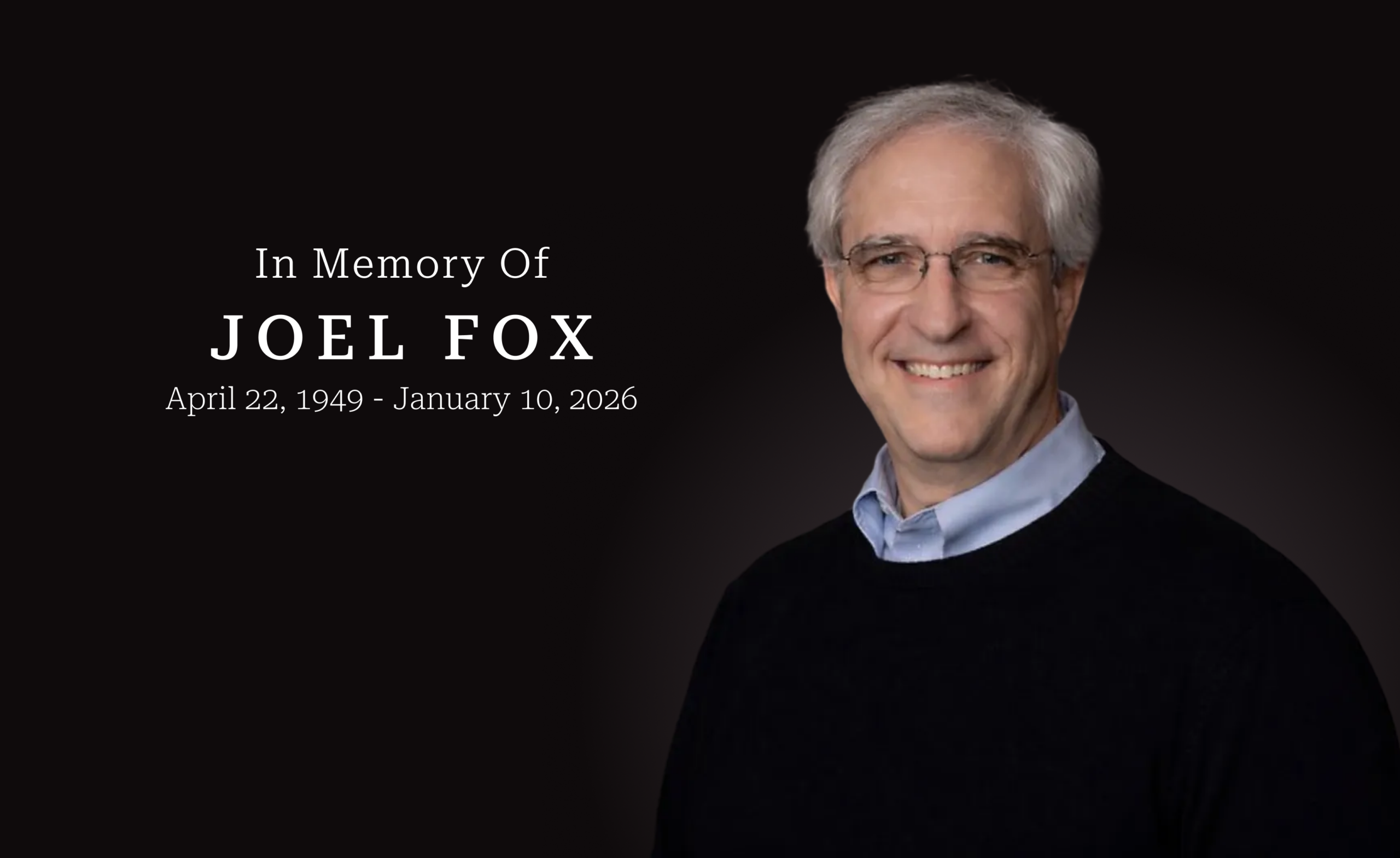
If political differences are destined to leave us divided and friendless, how do you explain the life of Joel Fox?

Fox died on January 10 after more than a decade of living with cancer. He was California’s most prominent taxpayer advocate since Howard Jarvis, for whom he worked, and whose anti-tax organization he led from 1986 to 1998. Fox, a Republican, advanced conservative ideas on TV and op-ed pages. He advised the campaigns of Gov. Arnold Schwarzenegger, Mayor Richard Riordan, and U.S. Sen. John McCain.

That profile, in our polarized times, might make you think Fox was one of those political ideologues who are driving the country apart. But the opposite is true.

Fox, more than any person in California politics, built deep relationships with people across the political spectrum. And he did not do this through consensus or compromise. Instead, Fox built friendships on disagreement itself—a warm, open, and curious style of disagreement.

Read More »

Why Con Con’s Pause Is Bad For California

Aarrrrrrrrrrrrrrrrgh!

I have a little less hair to tear out after two pieces of news yesterday.

1. The effort to call a constitutional convention is on life support after signature gathering was “paused” because the con con committee, Repair California, doesn’t have near enough money to qualify.

2. Democratic donors and interests are coming together to spend $20 million to attack Meg Whitman and help make Jerry Brown governor.

If you want to know why California’s governing system is in disrepair – and why the it won’t be fixed anytime soon – just consider those two pieces of news together.

Read More »

Leadership on jobs growth emerging

California has often claimed leadership on many big issues and movements.  It’s time for policymakers to claim leadership where it matters most — growing our job base.  A 12.4% unemployment rate, a $20 billion state deficit, a manufacturing sector that lost more than 607,000 jobs since the decline started, and a negative 5.97 public-to-private sector job ratio since 2001 leaves California in a stranglehold of deterioration.

Both parties introduced jobs packages in the last 24 hours that indicate the Legislature is now focused on leading us out of this mess with a policy environment that at least thinks of job impacts first.   Up until now, the employer, employee and unemployed communities in California were left wondering why California leads on everything but jobs and our economy.

Read More »

Numbers Add Up for High Speed Rail

It sounds like Charles Crumpley of the Los Angeles Business Journal understands some of the advantages of high-speed rail in California, and all he needs is a little help to dig through the numbers, which can too easily be skewed. So, let me outline a few numbers that a businessman, if not an editor of a business newspaper, might appreciate.

First, 25 percent. That’s the portion of the cost of the high-speed rail system that will be borne by the state. A little less actually – $9 billion from $42.6 billion. The balance will come from the federal government, private entities, or cost-sharing agreements with local governments. What other public infrastructure project can boast that percentage? A private entity would leap at the chance to make such a capital investment only putting down a quarter of its own money for each dollar expended, and so shouldn’t the state.

Read More »

We Can Do Much More to Reduce the Federal Deficit

The White House has just announced its proposed budget for fiscal year 2011, with a projected deficit of a staggering $1.27 trillion. Last year’s budget estimated a $1.17 trillion deficit, but the actual number now appears to be $1.60 trillion. Applying that same likely growth from projection to actual deficit, we are looking at a federal budget deficit closer to $1.74 trillion this year.

The size of the deficit is unconscionable and unsustainable. As a nation, we now owe more than $12 trillion, a number almost as large as the entire GDP of the United States. Even worse, we are adding to this deficit at a rate of more than 10 percent of the GDP—an alarming rate that most economists consider dangerous for any economy.

To finance our deficit, we print money and spend it—or we borrow money and spend it. When we print the money, we set the stage for massive inflation, which will occur as soon as the economy revives. When we borrow the money, we place a lever in the hands of citizens and governments of China and other nations, now our largest creditors (surpassing the 50 percent mark two years ago). It is morally wrong to spend money now and expect our children to pay the price—and it is hazardous to give to foreign sovereigns the tools to destroy our economy if they decide to “call in” their loans.

Read More »

Money Starts to Flow for Initiatives

It’s $6.5 million and counting for PG&E as the giant utility stockpiles cash for its effort to strangle the public power movement in California with a June ballot initiative.

In the other corner, packing an anemic bankroll of $10,000, is TURN, a utility reform group, and other public power advocates.

The $10,000 contribution, which was reported this week, is actually good news for the group. On Dec. 31, the war chest to oppose the PG&E juggernaut was a snappy $98.17.

Think of it as David versus Goliath, only this time Goliath is facing the shepherd’s sling with tanks and armored cars, along with plenty of cash to upgrade the weaponry.

The initiative, Prop. 16 on the June ballot, would require local governments to get two-thirds support from voters before providing power to any new customers. Since new local power customers would be the old PG&E customers, just figure the multi-million-dollar campaign as an insurance policy for the company to protect its revenues. If it wins, that is.

Read More »

No Split Roll

The split roll property tax measures appear dead this election cycle.

Since the economic recession and the collapse of tax revenue in California government treasuries, commentators and activists pointed to a split roll property tax as a likely device to raise revenue. Under a split roll, Proposition 13 would be altered to tax business property under a different formula than residential property.

Two split roll initiatives were filed aimed at the November 2010 ballot. One would require reassessment of commercial property to full market value on a regular basis; the second raised the property tax rate on business property.

The chief backer of these initiatives was the California Teachers Association. CTA has floated a number of split roll proposals in recent years. Despite gathering signatures for a split roll tax in 2004 and 2006 the petitions were never filed and the measures never appeared on the ballot.

Read More »

Petition Circulators Focus On the Wrong Enemy

Petition circulators are refusing to work on the constitutional convention petitions for fear that a convention would limit the initiative process – and thus hurt their own livelihoods.

The circulators are right to be worried about their futures.

But they are worried about the wrong thing.

The constitutional convention is the longest of long shots. An outcome injurious to petition circulators would require several events, many of them improbable.

First, the con con measures must qualify for the ballot and be approved by voters. That’s an uphill battle, given the widespread nervousness about a convention and a recent record, in other states, of voters declining the opportunity to call conventions. Second, the convention would have to meet and reach agreement on reforms that included restrictions on the initiative process, an institution that presumably would be popular with delegates (as it is with big majorities of Californians) who would be gathering at a convention that had been put in place by initiative. And third, such restrictions would have to pass muster with voters who treasure the initiative process.

Read More »

Democrats Get Cover for Maldonado Vote

Republican state Sen. Abel Maldonado may be hanging on to his day job for a while longer.

While Assembly Democrats are playing coy about whether they’ll vote to approve the Santa Maria lawmaker as California’s next lieutenant governor, a news conference Monday was a pretty good indication that the fix is in.

Democratic Assembly members Pedro Nava, Jose Solorio and Tony Mendoza all showed up to announce that they wouldn’t be voting for Maldonado when his nomination comes before the full Assembly later this week.

Normally, it’s no big deal when a trio of Democratic backbenchers complains about an appointment made by a Republican governor. But it’s no coincidence that it was three Latino Democrats making the argument that a Latino Republican shouldn’t be appointed to what – in theory anyway – is the number two office in state government.

Read More »

Carly Had a Demon Sheep

(with apologies to Mary and her little lamb)

Carly had a demon sheep
With eyes red as hot coal
And everywhere that Carly went,
The demon sheep would go

There it was on You Tube one day,
One of those new campaign rules,
And it made the journalists laugh and play
To see the political fools

Read More »