

Featured Post

A Fox, A Hound, and a Friendship

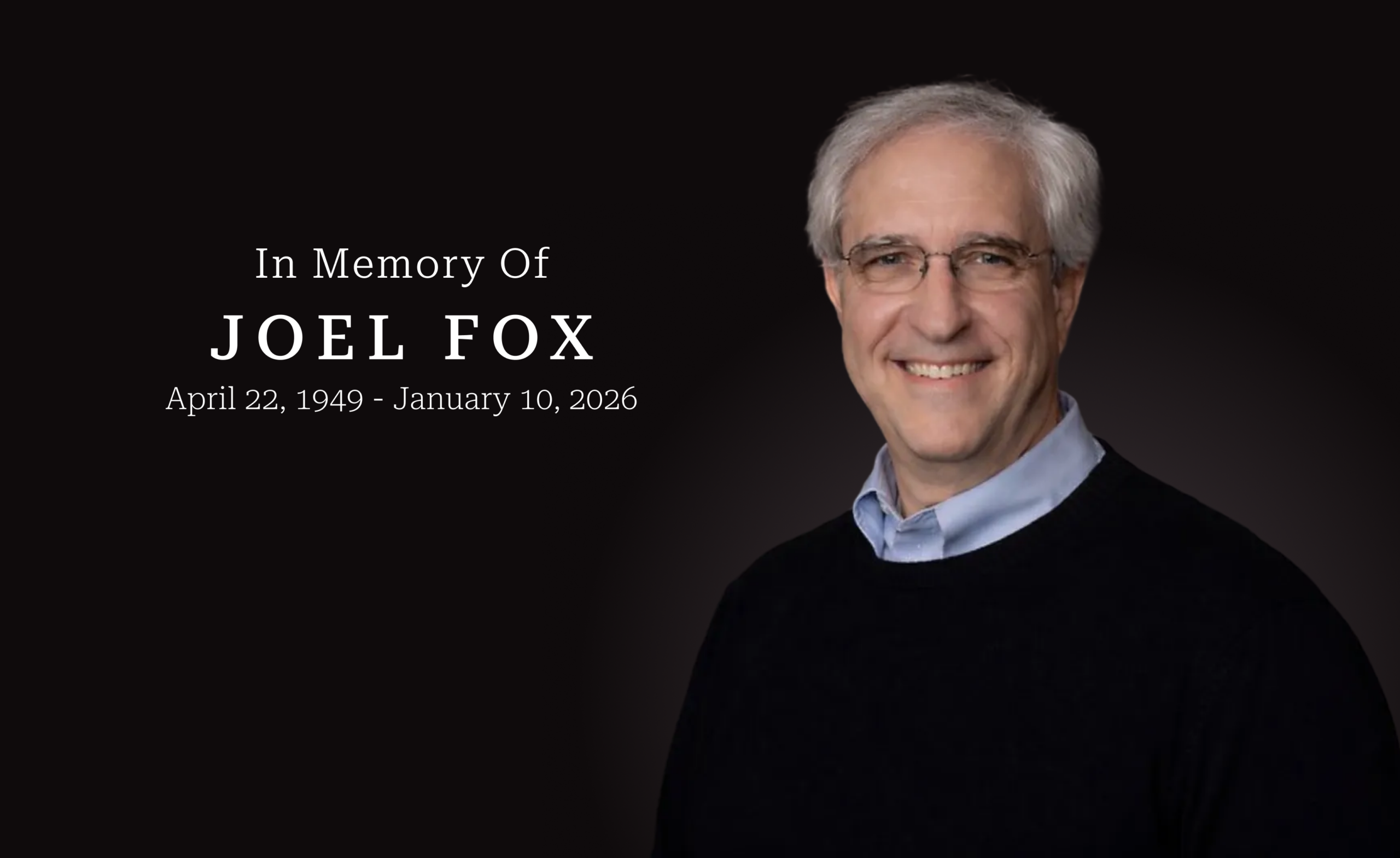
If political differences are destined to leave us divided and friendless, how do you explain the life of Joel Fox?

Fox died on January 10 after more than a decade of living with cancer. He was California’s most prominent taxpayer advocate since Howard Jarvis, for whom he worked, and whose anti-tax organization he led from 1986 to 1998. Fox, a Republican, advanced conservative ideas on TV and op-ed pages. He advised the campaigns of Gov. Arnold Schwarzenegger, Mayor Richard Riordan, and U.S. Sen. John McCain.

That profile, in our polarized times, might make you think Fox was one of those political ideologues who are driving the country apart. But the opposite is true.

Fox, more than any person in California politics, built deep relationships with people across the political spectrum. And he did not do this through consensus or compromise. Instead, Fox built friendships on disagreement itself—a warm, open, and curious style of disagreement.


Read More »

Creating Jobs Depends on our Willingness to Compete

There is good news to report about keeping film and television production jobs in Los Angeles and California. Tax incentives approved by the state Legislature and signed by Gov. Arnold Schwarzenegger last year are working. According to a state report, 60 productions that threatened to leave California are staying local, a strong statement about the value of competitive incentives.

Runaway film production has long threatened this signature industry of Los Angeles and California. Over the years, other states and countries have developed extensive tax and financial incentives aimed at luring entertainment jobs away from California. And those efforts were paying off for states like New Mexico and Louisiana, while California cities watched the jobs disappear. Every year, the Chamber and the California Film Commission suggested competitive incentives to even the playing field, but lawmakers in Sacramento argued over whether to offer any retention incentives at all. Fortunately, the long-sought film retention tax credits were enacted last February, following a strong push by local lawmakers led by former Assemblymember and now L.A. City Councilmember Paul Krekorian.

Read More »

Freezing California, Presidential Advice and Gubernatorial Politics

President Barack Obama proposes to freeze spending on discretionary budget items. Does California fall into that category as a “discretionary item”? No sooner had Governor Arnold Schwarzenegger and state legislative leaders returned from a Washington fundraising trip hoping to convince the president and congress to send more money our way than the president says there is no more.

This freeze idea is one that has been suggested to deal with California’s budget crisis in the past. Freeze the budget to the dollars that come in and reduce spending across the board accordingly. Perhaps, with the president’s example this approach will resurface in the Golden State as the governor and legislature try to figure out how to handle the current $20-billion deficit.

The clock is ticking on the special session called for closing the deficit hole and nary a word of how it will be accomplished.

Read More »

Gray Davis Not Looking So Bad to Voters

It says something about the gloomy mood of the state when California voters are looking back wistfully to those good old days when Gray Davis was in office.

A Field Poll released Sunday showed that 59 percent of the state’s voters – including more than half the Republicans – are convinced that Gov. Arnold Schwarzenegger will leave the state in worse condition than it was when he took office.

Consider that breathtaking statistic for a minute. Schwarzenegger was elected in October 2003, after 55 percent of the state’s voters decided Davis was doing such a lousy job that he should be the first governor in the history of California to be ousted from office.

Heck, Davis was the first governor anywhere in the country to be recalled since North Dakota voters bounced their governor in 1921.

Read More »

I’m Scott Brown

I’m Scott Brown too.

OK. I’m not really Scott Brown. Though I am married to a journalist, drive a populist sort of car, and am a mealy-mouthed moderate at heart. Oh, yes, and I too have great hair.

It’s just that everyone all of a sudden says they are Scott Brown.
Well, at least every Republican or independent running for office.

Even in California.

Carly Fiorina has been comparing herself to Scott Brown and suggesting that Barbara Boxer is about as invincible as Martha Coakley.
Tom Campbell has been name-checking Scott Brown, perhaps because he thinks that candidates without any money can eventually come up with big dollars, just like Scott Brown.

Read More »

They the Corporation

The US Supreme Court decision which affirmed that campaign contribution limits infringe upon a corporation’s constitutional right of free speech is unprecedented and marks one of the greatest threats to the cornerstone of democracy in America.

For those who believe that corporations are equal to persons and support today’s historic court decision, I simply ask: how does one justify that the corporation now has more of a voice than the average US citizen when determining the outcomes of future local, state, federal, and judiciary elections? Are we to believe that corporation rights were infringed, because they weren’t already allowed to spend billions of dollars to taint politicians, shape legislation, and further influence the outcomes of our elections?

The American founders never believed or intended for the concept of “corporate personhood” to exist in America, because they foresaw the dangers associated in allowing corporations to have the same legal status as persons. Corporations are not equal to individuals, because their billions of dollars speak louder than any citizen that our nation was created to protect.

Read More »

Minority Rule It is Not

In an effort to undercut the two-thirds vote requirement to pass a state budget and to raise taxes, opponents are attempting to change the language of the debate. Instead of the two-thirds vote being called a “supermajority” the opponents want to emphasize that “minority rule” runs California’s government.

Minority rule it is not. The rule to pass the budget and raise taxes was established by a majority vote of the people and can be changed by a majority vote of the people.

UC Berkeley linguistics professor George Lakoff filed an initiative to reduce the two-thirds legislative vote on the budget and taxes to a majority vote. In declaring that California is run by “minority rule,” he told the New York Times “It’s not about raising or lowering taxes; it’s about democracy and letting the people decide.”

Read More »

The Crazy Glue Governor, And The Real Shame of California

Good news. We finally have a bipartisan consensus on what
ails California. Everything, absolutely everything, is Gov. Schwarzenegger’s
fault.

Even
when the governor is right.

His current effort to extract more
money from Washington DC – a righteous cause that has gone over like a lead
Goodyear Blimp – has brought the crazy glue governor’s problem (everything
sticks to him) into sharp relief.

Exhibit 1 of the problem: The folks
at the progressive Calitics blog, in a post denouncing Arnold as the "worst governor ever," agree with him: that
California, not to mention other states, need more money from the feds. Now to
be fair, they don’t like the way Arnold has gone about seeking the money, which
involves the radically straightforward strategy of pressuring our
representatives in Congress to come up with more money.

Read More »

California Job Recovery: Still Waiting

The California jobs picture remains discouraging. Data released on Friday showed that the unemployment rate for December remained at 12.4%, hovering around this same level for about five months. But nearly 40,000 jobs were lost last month, bringing California’s overall employment to a level not seen in more than a decade. California has shed more than a million jobs since the beginning of the recession, losing nearly seven percent of its employment base.

Job losses for this recession are still outpacing the last two California downturns, and we probably have not yet hit bottom. We’re two years into this recession: recovery from the 1991 defense realignment recession didn’t begin until the 34th month; job losses from the 1990 recession after the tech bubble didn’t bottom out until 28 months into the downturn.

Read More »

Legislature Struggles For Agreement on Package of ‘Reforms’

State lawmakers are struggling to find consensus on a package of changes, such as switching to a two-year budget cycle, which they hope will improve the operation of the Legislature and the state as a whole, burnishing their tarnished image in the process.

The laundry list, presented on an internal PowerPoint obtained by California’s Capitol, includes increasing oversight of state agencies and departments, switching to performance-based budgeting to measure program success and requiring initiatives to include new revenue to cover their costs.

A hearing of the Senate and Assembly Select Committees on Improving State Government to discuss the proposals was canceled January 19, apparently because of a lack of agreement over items on the list. 

The committees were created in 2009 to conduct hearings and propose changes to make government at all levels more efficient.

Read More »