

Featured Post

A Fox, A Hound, and a Friendship

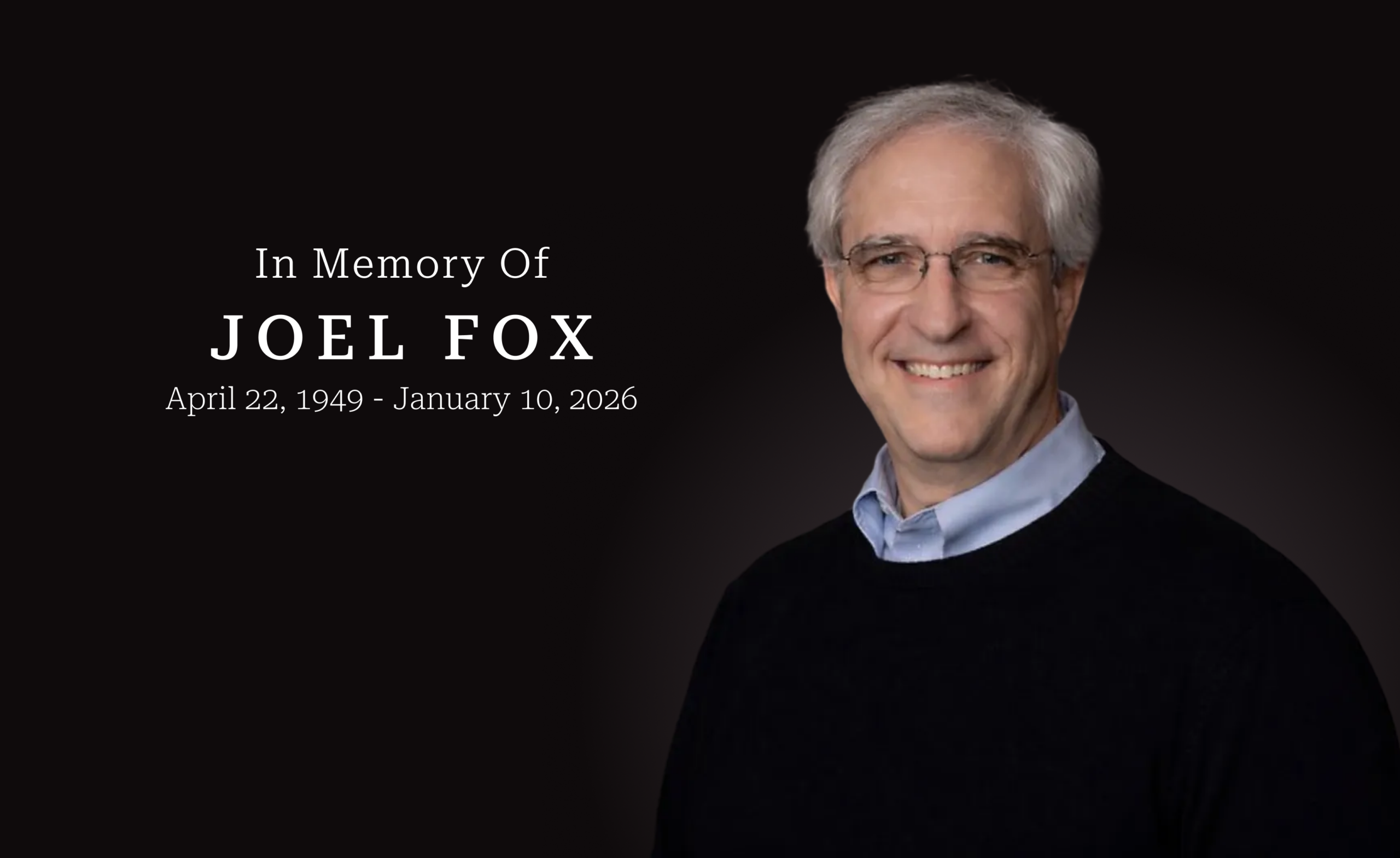
If political differences are destined to leave us divided and friendless, how do you explain the life of Joel Fox?

Fox died on January 10 after more than a decade of living with cancer. He was California’s most prominent taxpayer advocate since Howard Jarvis, for whom he worked, and whose anti-tax organization he led from 1986 to 1998. Fox, a Republican, advanced conservative ideas on TV and op-ed pages. He advised the campaigns of Gov. Arnold Schwarzenegger, Mayor Richard Riordan, and U.S. Sen. John McCain.

That profile, in our polarized times, might make you think Fox was one of those political ideologues who are driving the country apart. But the opposite is true.

Fox, more than any person in California politics, built deep relationships with people across the political spectrum. And he did not do this through consensus or compromise. Instead, Fox built friendships on disagreement itself—a warm, open, and curious style of disagreement.

Read More »

A Holiday Gift for the Children of California

While most Californians may be busy preparing for the holiday season, a debate is raging in Sacramento that will impact the quality of our state for years to come.

The debate is about public education reform and the outcome will impact the earning capacity of our young people and the ability of California business to compete in the global economy for generations.

At stake is California’s share of $4.35 billion in Race to the Top funding from the Obama administration. The money is an incentive to states and local school districts to dramatically reform and improve public education in America.

So what is happening in Sacramento? On Nov. 3, the Senate passed a Race to the Top bill that would qualify California schools for funding and was hailed by reformers as a major step toward improving student achievement. But last week, the Assembly Education Committee failed to support the Senate bill on a vote of 6-5 with six abstentions. Instead it passed its own version, which has some positive elements, but overall is too watered down and meant to appease the unions for teachers and administrators.

Read More »

Questions Aplenty on Pot Vote

Next November’s election for governor and senator may have to take a back seat to a chance to legalize the sale and use of marijuana in California.

Hey, you can always vote for governor and senator, but the chance to open the market for bud …

Richard Lee, co-author of the legalization initiative, announced Wednesday that his group has collected more than 680,000 signatures, far more than the 433,971 needed to put the measure on the ballot. He plans to submit the signatures next month.

Collecting the signatures was no problem, Lee told Carla Marinucci of the San Francisco Chronicle.

“People were eager to sign,” he said. “We heard they were ripping the petitions out of people’s hands to do it.”

Read More »

California Office Pool 2010

The late, great New York Times columnist William Safire made a habit of writing a year-end column he called Office Pool. In it, Safire offered, multiple-choice style, a series of possible news events that could take place in the year ahead. At the column’s end, he let you know which ones he thought actually would occur.

Safire’s focus was Washington, though he delved into culture and sports too. Reviving this tradition, here’s the California Office Pool. My picks are at the end. Be sure to make your predictions, and clip n’ save (or bookmark and save) so we can see how we did at the end of 2010.

1. The big, surprise California political controversy of 2010 will erupt over:
A. The California Supreme Court, when Chief Justice Ronald M. George unexpectedly retires, sparking a fight over his successor, and Associate Justice Carlos Moreno becomes a target of the Yes on Prop 8 crowd in the retention election.
B. The Board of Regents, who decide to raise UC tuition another 30 percent.
C. Jerry Brown, who loses liberals when he says, in a gubernatorial debate, that Prop 13 has been good for the state.
D. The late entrance into the governor’s race of an independent gubernatorial candidate, backed by the tea party people, who gains in the polls after raising millions on line.

Read More »

In This Fight, the Loser is California

The venue that snares the March boxing match between Floyd Mayweather Jr. and Manny Pacquiao will add millions to the host city’s bottom line. Count California cities out. The reason? Taxes.

The Mayweather-Pacquiao fight is one of the most anticipated in the pugilist world in a long time. Looking forward to a big payday, the Staples Center in Los Angeles offered a $20 million site fee to host the event. Not to be outdone, Jerry Jones, owner of the Dallas Cowboys, said he would host the event in his new football stadium and pay $25 million for the event.

Before any serious bidding war could take place, Pacquiao’s U.S. business advisor threw cold water on the Staples Center offer. Noting that Paciquino would have to pay millions in taxes to California under the current 10.55% top tax rate, the advisor said the fighter didn’t want to fight in California when there were alternatives in no income tax states like Texas and Nevada.

Read More »

Steady Work: Chelm and California

Chelm was the mythical village of East European Jews, the subject of Jewish folklore and humor. Irving Howe drew on one of the Chelm tales for the epigraph to his collection of essays published in 1966, Steady Work .

Once in Chelm, the mythical village of the East European Jews, a man was appointed to sit at the village gate and wait for the coming of the Messiah. He complained to the village elders that his pay was too low. ‘You are right’, they said to him, ‘The pay is low. But consider: the work is steady.’

Today, with nearly 2.3 million Californians unemployed, any work is attractive—steady or not. However, even today, the California labor market remains highly volatile, with workers moving in and out of jobs with surprising frequency. In previous posts I have discussed the amazing job creation and destruction numbers for California—even in a month that the unemployment rate moves only slightly, over 200,000 jobs are being created and another 200,000 jobs are being destroyed. Almost equally amazing are the numbers regarding the movement among workers in existing jobs.

Read More »

Poizner Puts Much-Needed $15 Million in the Pot

Well, Steve Poizner’s in the governor’s race to stay.

The state insurance commissioner said Sunday that he’s putting $15 million of his own cash into his GOP campaign for governor, upping his personal contribution to about $19 million or roughly the same former eBay CEO Meg Whitman has given to her effort.

The money puts paid to the rumors that:

1. Poizner really didn’t really have millions to spend on his campaign.
2. Even if he had the money, the insurance commissioner really wasn’t serious about a 2010 run for governor.

Poizner said in a statement to supporters that he’s going to use the money to tell voters about his plan to close the state’s budget problems by slashing taxes, making the supply-side economic argument that lower taxes will stimulate growth and bring in even more tax revenue.

Read More »

Impact of Presidential Approval on Mid-Term Elections

Barack Obama’s public approval rating has dropped to as low as 47% in the last week, according to Gallup. Although the President will not appear on the ballot again until 2012, how the public views his presidency will have a direct impact on each party’s performance in next year’s mid-term elections.

The party holding the White House has lost seats in 10 of the last 12 mid-terms, going back to President Kennedy’s 1962 losses. Even in that year, with a 74% approval rating following the resolution of the Cuban Missile Crisis, Kennedy’s Democrats lost seats in the House. Historically, the public uses mid-term elections to correct for the perceived excesses of the party in power, while the absence of coattail effects may result in some seats reverting back to the party with the natural advantage in the district.

Read More »

Would You Like Cheese With That Whine?

Sacramento lawmakers are unhappy with their jobs. Recent complaints by members of the Legislature include: People don’t appreciate them; solving problems is hard work; they don’t have the power they think they deserve; their retirement is mandated by term limits; there is no lucrative pension; and their pay is being cut – although they will remain the highest paid lawmakers in all 50 states at nearly $100,000 annually along with a car and another $30,000 a year in tax free expense money.

If lawmakers don’t like their jobs, their dissatisfaction is not nearly as strong as that of the general public. The October Field Poll showed the Legislature’s approval at a record low 13%.

“Who wants to grow up and be held in low esteem by 87% of the people and have to deal with the budget and not have a darned thing to say about it,” Assemblyman Juan Arambula told the Los Angeles Times.

Read More »

Getting it right on fees

A recent editorial by the Sacramento Bee says unlimited fees on housing have no impact on its development or affordability. The Bee says that the efforts of local governments in the Sacramento area to reduce those fees (aka “construction costs”) so that more housing can be built isn’t really good policy and should be at best temporary.

Sheesh. I guess the Bee wants us to believe that costs don’t matter. Most Californians know better. They know, for example, that when gasoline goes from $2.50 a gallon to $2.85 a gallon it costs more to truck produce to the supermarket and, therefore, aren’t surprised when the price of lettuce goes up 15 percent.

Taking the analogy a step further, if enough customers start eating less salad, because buying lettuce for 15 percent more money doesn’t fit in their budgets, the supermarket’s lettuce orders go down, making the marginal cost of the gas hike much bigger for the supplier. If the cost gets too high, the supplier may not be able to economically truck the lettuce to the supermarket at all.

Read More »