

Featured Post

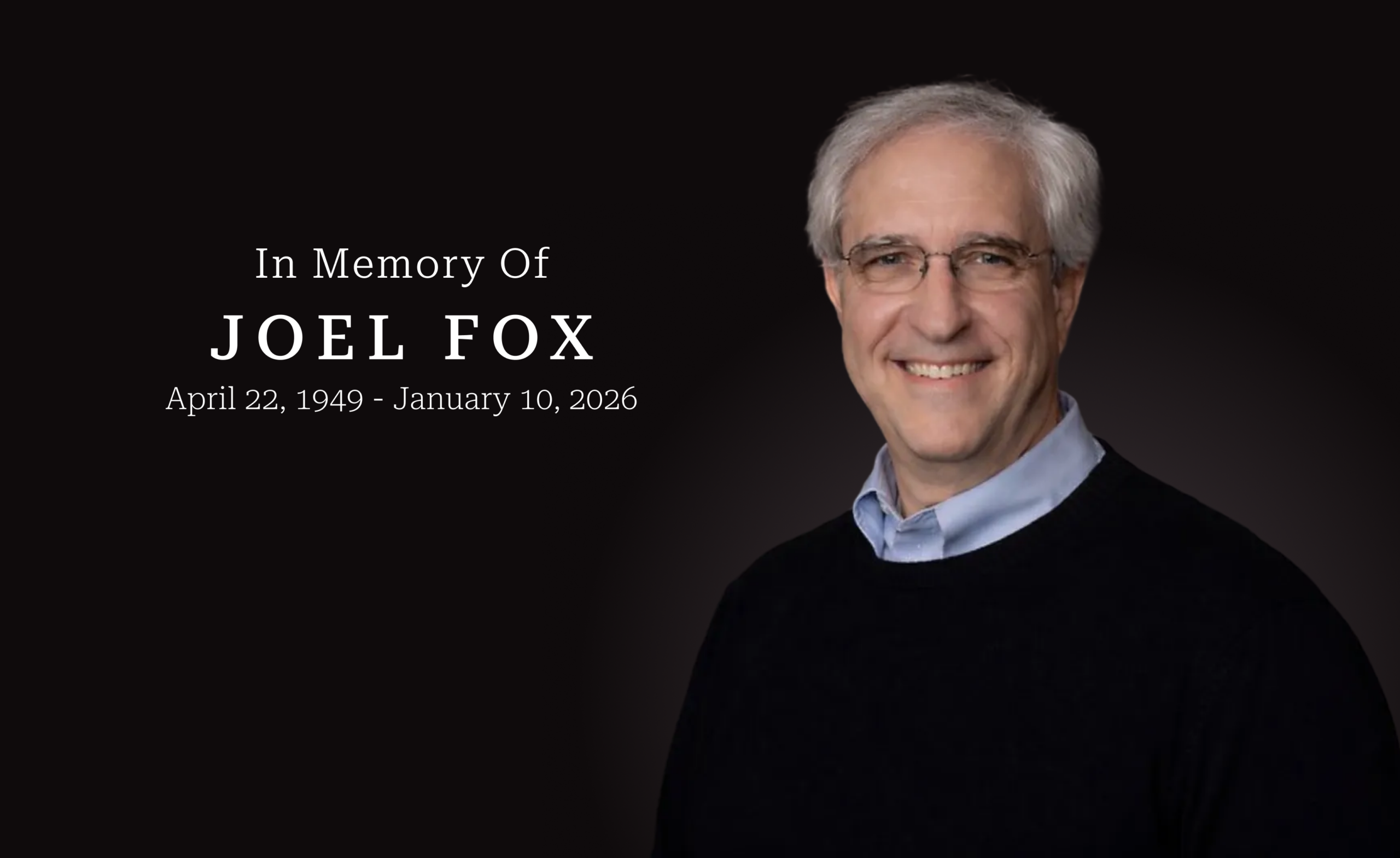
A Fox, A Hound, and a Friendship

If political differences are destined to leave us divided and friendless, how do you explain the life of Joel Fox?

Fox died on January 10 after more than a decade of living with cancer. He was California’s most prominent taxpayer advocate since Howard Jarvis, for whom he worked, and whose anti-tax organization he led from 1986 to 1998. Fox, a Republican, advanced conservative ideas on TV and op-ed pages. He advised the campaigns of Gov. Arnold Schwarzenegger, Mayor Richard Riordan, and U.S. Sen. John McCain.

That profile, in our polarized times, might make you think Fox was one of those political ideologues who are driving the country apart. But the opposite is true.

Fox, more than any person in California politics, built deep relationships with people across the political spectrum. And he did not do this through consensus or compromise. Instead, Fox built friendships on disagreement itself—a warm, open, and curious style of disagreement.


Read More »

The Jobs Initiative – Suspend AB32

When Governor Arnold Schwarzenegger signed AB32 [assembly bill 32] in 2006, California’s unemployment rate was a modest 4.8%. This past Friday we learned that it now stands at 12.5%.

AB32 requires a massive reordering of our state’s economy and massive tax increases to pay for these shifts. It includes a provision for it to be suspended if our state faces economic hardships, and that time has come.

The governor refuses to order a suspension, so I have teamed up with Ted Costa of People’s Advocate and Congressman Tom McClintock to give the people of California an opportunity to make this important decision.

On November 25, 2009, we submitted the California Jobs Initiative to the Attorney General for title & summary. We will begin gathering signatures to qualify this measure for the November 2010 ballot in mid-January. If you would like to help, go to www.danlogue.com.

Read More »

Open Primary Measure Could Assist Campbell

The Open Primary measure on the June 2010 primary ballot is identified with state Senator Abel Maldonado who was instrumental in getting the proposal on the ballot. However, Republican gubernatorial candidate Tom Campbell might see the measure as a device that could help pull him across the finish line and gain the nomination.

Campbell has legitimate grounds for attaching himself to the Open Primary measure and calling it his own. He was the major sponsor of California’s original Open Primary effort, Proposition 198 on the March 1996 primary ballot. That proposition passed 60-percent to 40-percent despite united opposition from the Republican and Democratic parties. (The United States Supreme Court on constitutional grounds later threw it out; but the new measure supposedly deals with the court’s concerns.)

An Open Primary allows the top two finishers in a primary race, regardless of party, to face each other in the general election. Campbell’s argument more than a decade ago was that an Open Primary would elect more moderate candidates who could work together in Sacramento and get things done. That argument very well could register with voters today. The voters in poll after poll have revealed their disgust with the goings-on and lack of productivity in Sacramento.

Read More »

Initiatives Shouldn’t Be a Joke

Is $200 and a stamp a cheap price to pay for joke? What about when those giggles are being subsidized by California taxpayers?

John Marcotte, a 38-year-old Sacramento web designer, has a proposed 2010 ballot initiative that would ban divorce in California. He told the Associated Press that it’s a satirical piece aimed at opponents of same-sex marriage.

His proposed constitutional amendment would take marriage protection to a whole new level, Marcotte told the Sacramento Bee.

“If you want to protect traditional marriage, don’t stop gay people from getting married,” he said. “Stop straight people from getting divorced.”

Read More »

Government Force or Market Forces?

By all accounts, future job growth is going to be sluggish at best and we can expect double digit unemployment at least through next year. The Democrats’ response is a $300 billion jobs program. Many Republicans would rather rely on the private sector to fuel the recovery and job growth. So what’s better, Government Force or Market Forces?


The use of the phrase Government Force is based on the nature of government programs. The vast majority of the people would prefer to pay little or no taxes. They are literally forced by government to pay those taxes. As it relates to a jobs bill, the Democrats will tax one set of people or businesses (taxpayers) and/or borrow money (a delayed tax) and then transfer a portion of those collected/borrowed funds to other people or businesses. In that manner, the Democrats believe they have created a job – or in today’s vernacular, saved a job. But have they?


In the process of taxing some and transferring to others, the government force has taken money away from a business/taxpayer in California and perhaps given it to someone in Alabama. That means the business in California cannot hire someone (or save a job) with the money transferred to Alabama – a type of zero sum game. Actually, it is worse than a zero sum game because government always manages to waste money in the transfer and so Alabama is never helped so much as California is hurt.

Read More »

Dunn and Done: This is Sick

They aren’t doctors, they don’t even play them on TV, yet our esteemed leaders in Washington have taken out their prescription pads to fix what they think ails us. What it really sounds like is Herbert Hoover’s old campaign chestnut, “a chicken in every pot” – in other words, quality healthcare for everyone that won’t cost us a penny.

To be sure, some of what is proposed will help some of the uninsured as well as some of the underinsured who face chronic health problems. But is the cure worse than the disease? Based on what is currently proposed, we get very little real-time reform at the cost of both our economic future and as the leading country in innovative and life-saving medical technology and pharmaceutical breakthroughs.

If the purpose is to lower costs and increase competitiveness in the health insurance market, a provision should be included to allow for the purchase of health insurance over state lines. And no cost reform can be obtained without significant tort reform. A federal health care plan should limit frivolous lawsuits against health care providers to prevent fraud and free up our legal system. Shouldn’t we start with some of the basics before we launch into a massive new bureaucracy with 110 new federal panels and commissions?

Read More »

Can California afford global warming scheme?

The California Air Resources Board policy team released its draft greenhouse gas cap-and-trade proposal last week.  According to the agency’s draft, a cost of $60 per ton of Co2 between 2012 and 2020 would total $143 billion over the first 9 years of the program.  The estimates for costs per ton of reduction range widely depending on the design of the program.  Some estimates reach as high as $200 per ton!  It is unlikely that industry and high-wage employers will be able to compete in global markets with these overwhelming California-only costs.  A program this costly should come with a valid economic analysis to show that California can grow its economy and add jobs while subject to these costs. So far we have not seen that proof.

Read More »

Why the Media Should Back the Anti-Acorn Activists

It’s hard to take seriously the loopy, conspiratorial conclusions drawn by conservative activists digging up dirt on ACORN.

But the methods they use to dig up that dirt are important – and admirable.

The best thing about the anti-ACORN reporting is that it may revive two journalistic methods that have long been dismissed as sleazy: surreptitious taping and dumpster diving on journalistic subjects.

In a skeptical age, there is no substitute for getting the goods: the video that shows the subject damning herself with her own words, the documents that demonstrate malfeasance. As institutions become more sophisticated about dodging journalistic inquiry, journalists need every investigative tool to hold institutions accountable.

But mainstream news organizations have shied away from these tactics, in large part because of terrible state laws and precedent that, in the name of privacy, protect powerful people and institutions against investigation.

Read More »

Time to Chill on Global Warming

I’m not a climatologist. I had to look up the word just to spell it. I don’t pretend to understand the science behind global warming.

But it turns out that some big-name climatologists apparently don’t understand what’s going on with global temperatures, either. And they may have hidden what they don’t know.

In the last week or so, we learned that computer hackers broke into the Climatic Research Unit at a British university and pulled out about 1,000 e-mails and 3,000 documents. And now, for all the world to see, are indications that some of the world’s top climatologists were manipulating data that baffled them or trying to hide evidence that didn’t support their belief in man-made climate change.

And they didn’t like anyone asking pesky questions, either. They wrote of the need to maintain a unified front against skeptics, to blacklist researchers who dared to question some of the man-made global warming science and to cut off scholarly journals that published contrary opinions. One wrote of how he’d delete stuff if he got hit with a Freedom of Information Act request.

Read More »

Where is the Insolvent California Unemployment Insurance Fund Headed?

Lost in the avalanche of bad news this Fall about the state budget is the recent fund estimate for California’s Unemployment Insurance (UI) Fund. In its October report, EDD projected the fund to have a deficit of $7.4 billion by the end of 2009, growing to $18.4 billion by the end of 2010, and an amazing $27 billion deficit by the end of 2011.

What does this mean? Should employers, employees or current UI recipients be worried? What options does the state have?

The condition of the fund is shown in the chart compiled by EDD below, and contained in EDD’s October UI Fund Balance report. The full report can be accessed at EDD’s website, www.edd.ca.gov.

Read More »