

Featured Post

A Fox, A Hound, and a Friendship

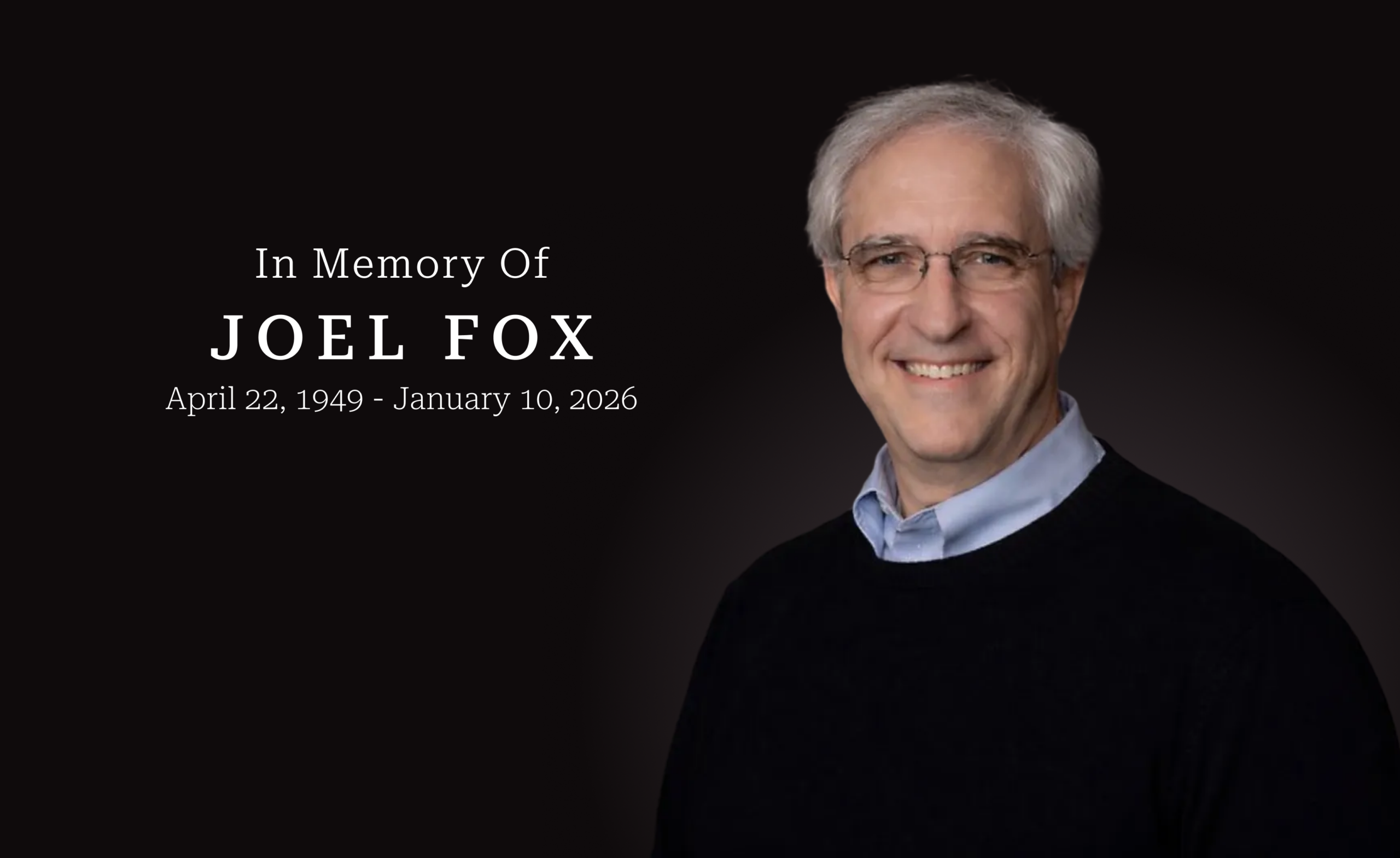
If political differences are destined to leave us divided and friendless, how do you explain the life of Joel Fox?

Fox died on January 10 after more than a decade of living with cancer. He was California’s most prominent taxpayer advocate since Howard Jarvis, for whom he worked, and whose anti-tax organization he led from 1986 to 1998. Fox, a Republican, advanced conservative ideas on TV and op-ed pages. He advised the campaigns of Gov. Arnold Schwarzenegger, Mayor Richard Riordan, and U.S. Sen. John McCain.

That profile, in our polarized times, might make you think Fox was one of those political ideologues who are driving the country apart. But the opposite is true.

Fox, more than any person in California politics, built deep relationships with people across the political spectrum. And he did not do this through consensus or compromise. Instead, Fox built friendships on disagreement itself—a warm, open, and curious style of disagreement.

Read More »

Local Tax Measures Fare Better Than Recent State Tax Proposals

What do we make of many local tax measures passing in these tough economic times? According to the preliminary review by the League of Cities’ Local Government Finances Almanac, two-thirds of fifty-seven local taxes and bonds passed Tuesday.

Local voters said “yes” to a number of tax measures less than six months after statewide voters rejected continuing a number of temporary tax increases that were part of the February state budget deal. The “yes” on taxes also comes in the shadow of polls that indicate voters are not interested in raising taxes or making it easier to raise taxes.

It is telling that the “yes” votes occurred for local tax measures, while the “no” votes carried the day against continuing state taxes. With the legislature suffering a 13% approval rating, not too many people trust legislators with their tax money. On the local level, voters have a better sense of how their money is spent.

Read More »

Tough Times for Gay Marriage Efforts

The folks looking to put a same-sex marriage initiative on next November’s ballot should take a close look at Tuesday’s election results before they plop their card tables and petitions out in front of supermarkets across California.

Tuesday was a tough night for gay rights across the country and there were plenty of indications things could get worse before they get better.

In Maine, voters repealed a law that would have allowed gay and lesbian couples to marry, a law that had the backing of the Legislature and the governor. Opponents of the repeal raised more money, ran a better grassroots campaign and even had a nine-point lead in the polls three weeks before the election. But they still lost, 53 percent to 47 percent.

The news was better in Washington state, where voters backed a referendum upholding a law granting registered domestic partners the same “rights, responsibilities and obligations” as married couples.

Read More »

Earl Warren on Water

During a recent research trip to the state archives, I came across a speech that Gov. Earl Warren gave to the Commonwealth Club in San Francisco in September 1949

It was a tough time in the state. Unemployment had reached 12 percent a few months earlier, though it was beginning to decline.. There had been a serious drought the previous year. Warren outlined major challenges for the state: terrible traffic, schools in shambles, overcrowded prisons. But what worried him most was water.

“As we look forward to the next century and to the next 10,000,000 who will certainly come here [Note: he underestimated; California’s population was just over 10 million at the time], there are certain problems that we must solve.

“The first, in my opinion, is the problem of water.

“Every person added to our population adds to our need for a water supply. It has been that way since the beginning of civilization in California.

“It will probably always be our greatest problem.”

Read More »

Plenty of Talk about Challengers to Brown

Less than a week after San Francisco Mayor Gavin Newsom exited the race, the chattering class is putting up the names of Democrats who could maybe/possibly/hopefully jump into the race to challenge Attorney General Jerry Brown, who some party leaders quietly worry might be a bit too old and shopworn to win in November.

Former San Francisco Mayor Willie Brown suggested Southern California Rep. Jane Harman and California first lady Maria Shriver as possible candidates. Bill Whalen, a former aide to Republican Gov. Pete Wilson, threw the name of John Doerr, a Silicon Valley venture capitalist, into the mix. The Los Angeles Times is taking an unscientific poll about whether Mayor Antonio Villaraigosa should get back in the race. Veteran Democratic operative Steve Maviglio has put together his own list, adding in former Assembly Speaker Bob Hertzberg, state Treasurer Bill Lockyer, Orange County Rep. Loretta Sanchez, who already has a campaign committee established, Sen. Dianne Feinstein, who hasn’t ruled out a run, and, what the hell, even Lt. Gov. John Garamendi, who was elected to Congress last night.

Read More »

Change the Voters Want

Our friends over at the lively website, Calbuzz, lamented the fact that with the exit of Gavin Newsom from the gubernatorial race there is no candidate that stands for authentic change. The particulars of the change they highlighted from the Newsom campaign were supporting a constitutional convention, changing the budget process, and taking a hammer and wrench to Proposition 13.

Perhaps the reason for Newsom’s early exit from the campaign is because those are not the kind of changes the voters want.

Citizens are angry and disgusted because government doesn’t work. However, voters are smart enough to know that not all medicine will revive the patient and some remedies could make the patient sicker. Taxing business property would not jumpstart the economy. It would cost jobs. Lowering the two-thirds vote to raise taxes leads to increased tax rates, but will it result in the expected revenue? The tax increase of February is already coming up short by billions of dollars. California’s economy doesn’t need another punch in the gut.

Read More »

Water Reform Has Not Dried Up

The California Legislature has the opportunity this week to quench the thirst of the public for leadership from Sacramento by passing the most significant water reform legislation in the past 50 years. Not only would this be landmark legislation for our state, it would demonstrate that bipartisan work can be done in our state capitol.

Late last night, the State Senate passed legislation that would create a new governance model for managing the Sacramento-San Joaquin River Delta, increase water conversation goals for the state and fund major water-related infrastructure projects through a nearly $10 billion bond package. Two other bills that would increase penalties for illegally diverting water and require local agencies to monitor underground water levels fell short of passage, but are expected to come back up today.

Since the entire package of bills must pass in order for any of the individual bills to go into effect, legislative leaders are working furiously today to approve the remaining two bills on the Senate side and then secure passage in the Assembly. This is heavy lifting, but there is a unique level of resolve by both Republicans and Democrats to get this package approved. That’s a good sign for California.

Read More »

When Jobs Were Plentiful in 1950s California

In
the current debates over joblessness in California,  reference is made to California of previous decades when jobs
were plentiful. In particular, the 1950s California is singled out as a golden
age of employment, when jobs were available and workers in a wide range of  blue collar and manufacturing jobs as
well as white collar jobs could make a decent living.

Is
this accurate? What does it mean for California employment strategies going forward?.

As
indicated in job data provided by Ms. Bonnie Graybill and Mr. Spencer Wong of
the Employment Development Department, 1950s California was a period in which
jobs sought workers. Unemployment 
was consistently under 5%  In January 1951, the state unemployment rate was 5%. Over the
next nearly seven years, through November 1957, the rate did not go over 5%,
and was under 4% for much of the time

Read More »

Schwarzenegger Should Pick Tom Campbell to Replace John Garamendi

Last night, California’s Lieutenant Governor John Garamendi became the Member of Congress in CD-10. That means that Governor Schwarzenegger has the opportunity to name a replacement for Garamendi as Lt. Governor. He should pick Tom Campbell.

I say this not as someone who has chosen another candidate in the race for Governor – but as a Californian who would like to see the “right direction/wrong track” numbers reverse and our state get its fiscal house in order.

An overwhelming 75% of Californians say the state is on the wrong track. This, coupled with the legislature’s unsatisfactory approval ratings, shows that people want our elected leaders to work together to solve problems and provide a more welcoming environment for business.

Read More »

The Terrible Law That Tripped Up Brown Aide

While reporting a magazine piece on Jerry Brown this summer,
I talked a few times to his spokesman Scott Gerber, who resigned Monday after
reports that he recorded phone calls with reporters without their knowledge. We
don’t know which reporters Gerber taped. If I’m one of them, I don’t feel at
all violated.

Here’s why: the state law that
Gerber may have violated with his secret recordings is a terrible statute. In
fact, under federal law and the law in 38 states, what he did is perfectly
legal. (Those states have one-party consent laws; if one party to a
conversation knows it’s being recorded, then the recording is legal). The irony
of the Gerber case, the first "scandal" of the Brown campaign is this: the supposed
victims of Gerber – journalists and the public they serve – are the people who
suffer most under the law.

Read More »