

Featured Post

A Fox, A Hound, and a Friendship

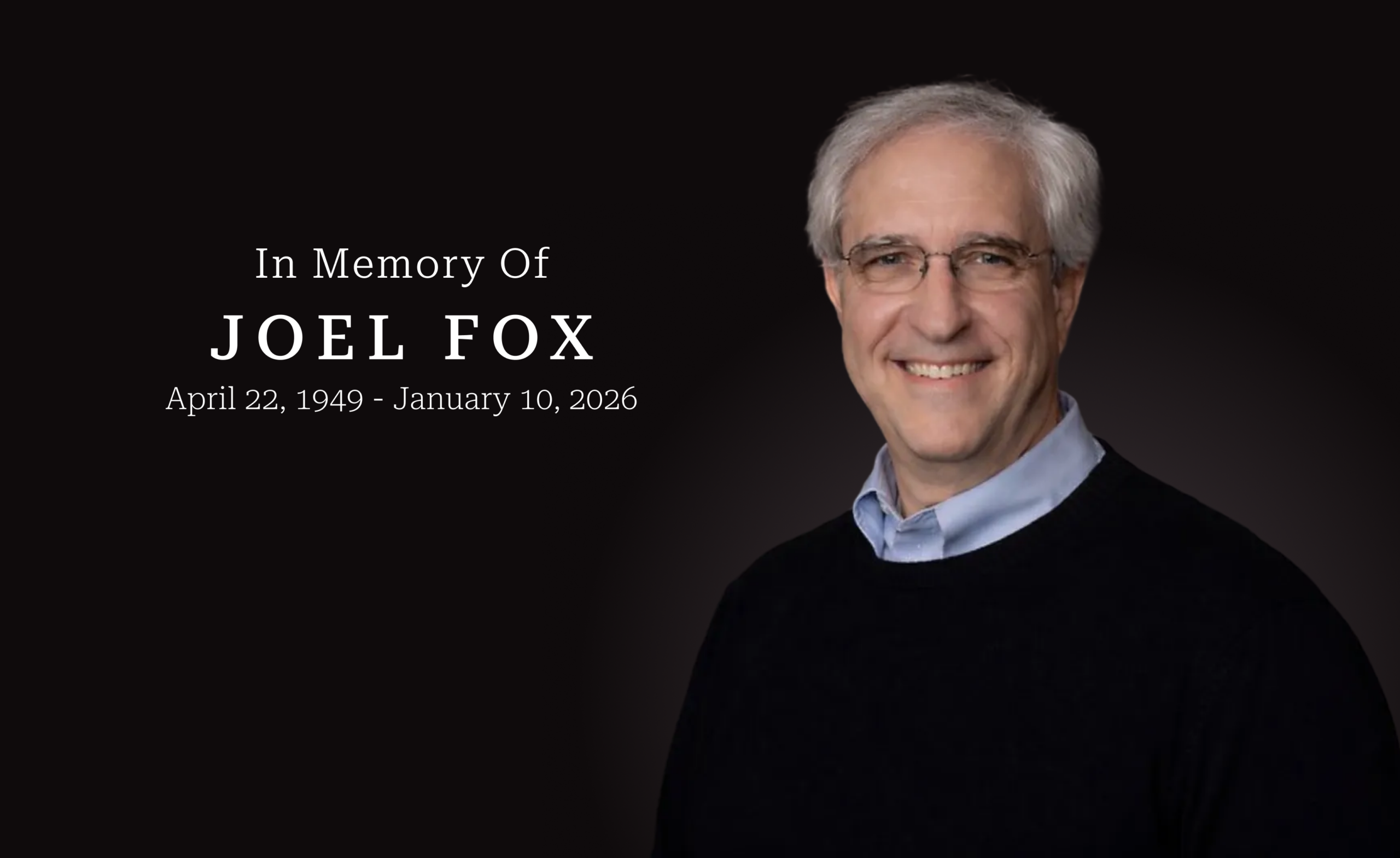
If political differences are destined to leave us divided and friendless, how do you explain the life of Joel Fox?

Fox died on January 10 after more than a decade of living with cancer. He was California’s most prominent taxpayer advocate since Howard Jarvis, for whom he worked, and whose anti-tax organization he led from 1986 to 1998. Fox, a Republican, advanced conservative ideas on TV and op-ed pages. He advised the campaigns of Gov. Arnold Schwarzenegger, Mayor Richard Riordan, and U.S. Sen. John McCain.

That profile, in our polarized times, might make you think Fox was one of those political ideologues who are driving the country apart. But the opposite is true.

Fox, more than any person in California politics, built deep relationships with people across the political spectrum. And he did not do this through consensus or compromise. Instead, Fox built friendships on disagreement itself—a warm, open, and curious style of disagreement.


Read More »

What We’ve Learned So Far From the Federal Stimulus in California

The continued high unemployment
rates announced in the past few weeks for the nation (9.8%) and the state
(12.2%) have increased the calls for additional targeted job creation measures.
A range of strategies are being put forward this week– tax credits for private
sector job creation, another round of infrastructure investments, even
government as the employer of last resort.

I’ve been engaged since earlier
this year in tracking the job impacts of the Stimulus in California. In
crafting any further employment initiatives, it is important to examine
California’s Stimulus activities. Chief among these lessons are the following
five:

1. The job numbers announced for
Stimulus job creation in California are meaningless
: Last week, Governor Schwarzenegger  reported  100,000 jobs saved or created in California from the $5.3
billion in federal stimulus funds that state agencies have spent.

Read More »

Solving the Budget Crisis is Like Living Through “Groundhog Day”

I had a sense I was in the movie “Groundhog Day” at the Milken Institute State of the State conference in Beverly Hills yesterday. Each year it seems experts at the annual conference are discussing how California can right the ship and solve the state’s fiscal problems. Different actors but the same play over again.

The morning panel session called Time For Change: How to Reform the State’s Budget Process featured an all-star cast. Former Governor Pete Wilson shared the podium with Treasurer Bill Lockyer, Former Assembly Speaker Bob Hertzberg, State Controller John Chiang, and California Finance Director Mike Genest.

Solutions were familiar as were objections to proposed solutions. Differences were aired. There was no lightening strike solving the budget crisis. However, some interesting points were made.

Read More »

Lawsuits Add to State Budget Woes

Another day, another lawsuit and another potential hole in California’s already leaky budget.

It’s looking ever less likely that the budget numbers will hold up until June 30, the end of the fiscal year. That means legislators are looking at a potential repeat of this year’s long and ugly budget revision battle, with even fewer choices available.

This time it’s the California Redevelopment Association that’s taking aim at the state’s spending plan. In a suit filed Tuesday in Sacramento Superior Court, the group is arguing that the state’s attempt to grab more than $2 billion from local redevelopment agencies to help balance California’s budget is unconstitutional.

If a judge agrees, the state is going to have to find $1.7 billion this year and another $350 million in 2010-11 to replace that redevelopment cash. And given California’s shrinking revenue numbers, that extra money isn’t likely to be there.

Read More »

Why the Bad Economy Is Good for Whitman

I’m sure she isn’t this callous. But, if I were Meg Whitman,
I’d be rooting hard against a quick economic recovery.

Why? Over the past couple of weeks, I’ve had conversations
with California fundraisers and donors from across the political spectrum. They
all said the same thing: no one has any money. And donations to campaigns and
causes of all kinds are way off. Gavin Newsom’s recently publicized
difficulties in turning President Clinton’s endorsement into a big fundraising
score are only one example of this trend. Raising money for politicians is
very, very difficult right now. Estimates that the 2010 governor’s race could
be a $500 million campaign are way too high, I’ve been told.

Read More »

It’s Time to Get Down to Business in Los Angeles

More than 400 business, labor and community leaders will descend upon Los Angeles City Hall this Thursday morning with a unified message: It’s time to get down to business. Now facing 12.7 percent unemployment and a half billion dollar budget deficit, we must focus 100 percent on new and collaborative actions that will spur our economic recovery and usher in an era of fiscal responsibility.

The L.A. Area Chamber has published a 16-point advocacy agenda recommending concrete steps that will create good-paying jobs, protect taxpayer money and increase desperately-needed revenue for the city without raising taxes. These are common sense priorities that will focus business and government in Los Angeles on the most important job today: economic recovery.

Last week, the City Council took important steps forward on two of these key priorities — pursuing another round of business tax reforms and exploring the creation of a DWP ratepayer advocate. Our call for the City to require an Economic Impact Analysis on major legislation is also gaining traction. This is important progress, and I applaud the Chamber members who have been assisting us in advocating for these initiatives and many others.

Read More »

Let the Governors’ Debate Begin

GOP gubernatorial hopeful Steve Poizner’s new plan to chop taxes, slash welfare and Medi-Cal spending and build up a $10 billion state budget reserve deserves cheers from voters across California, whether they’re Republicans, Democrats or independents.

Not over the details of the plan, necessarily, since there’s plenty for people to dislike in the economic blueprint the state insurance commissioner laid out Monday.

But every voter in the state should be thrilled whenever one of those-who-would-be-governor lays out a detailed plan, numbers and all, and says “Here’s what I’ll do if I’m elected.”

There’s not a politician or voter in California who can argue with a straight face that state government is running so well no changes are needed. OK, then, it’s up to the candidates for governor to get the debate started.

Read More »

Pension Issue Rises

The public employee pension issue is gaining traction. Results from the recent Field Poll indicate that voters are becoming concerned with the potential cost to the taxpayers as a majority of those polled support changes to the government pension system. Polling the public on pension issues has hardly ever been done.

Public pressure from newspaper editorials and a radio ad campaign by the Howard Jarvis Taxpayers Association against a Metropolitan Water District pension increase plan forced the water district’s governing body to pull the pension proposal off its agenda last week. Rallying public opposition to a pension program is not something you see everyday.

Part of the responsibility for this public awareness of pensions falls to the California Foundation for Fiscal Responsibility founded by former Assemblyman Keith Richman. Current president Marcia Fritz has led the organization on an aggressive education campaign to inform the public about pension excesses and potential taxpayer liability.

Read More »

Staring At Goats and Paycheck Protection

If the first two times you don’t succeed, fail. Fail again.

One would think that the devastating defeats of so-called
"paycheck protection" initiatives — Propositions 226 (in 1998) and Prop 75 (in
2005) — would have ended the fantasy that California voters are going to back
initiatives to limit how labor unions use their dues.

But I have in my hands an Oct. 7 letter from Robert W.
Loewen, president of the Lincoln Club of Orange County, declaring to supporters
of those defeated measures that his organization intends to launch another
paycheck protection initiative in 2010 and in "2012 if necessary."

The letter’s logic – and I use that word generously – is
that there are four main reasons why the next 2-3 years are the "perfect time"
to pass paycheck protection. 1. The state of the economy (the letter offers no
explanation of the connection between paycheck protection and the economy). 2.
"Widespread populist outrage over the expansion of government, much of which is
already being blamed on the unions." 3. A recent Supreme Court decision
upholding Idaho’s ability to ban the government from automatically collecting
dues for government unions.

Read More »

California’s Shocking Jobless Numbers

Just how many Californians need a job? The answer may be larger than you think.

Judging by the official unemployment rate of 12.2%, California has more unemployed workers than the entire population of New Mexico. To provide a job for every unemployed worker, California’s economy would have to generate nearly 2.3 million new jobs.

But a growing number of “underemployed” workers in California’s labor force aren’t included in the conventional unemployment statistic. These workers, who want full-times jobs but have settled for part-time work, now number more than 1.4 million.

Add 2.3 million and 1.4 million and you get 3.7 million. That number, which exceeds the entire population of Oklahoma, represents a startling 20% of California’s labor force. Simply put, one in five California workers wants full-time work, but can’t find it.

Read More »