

Featured Post

A Fox, A Hound, and a Friendship

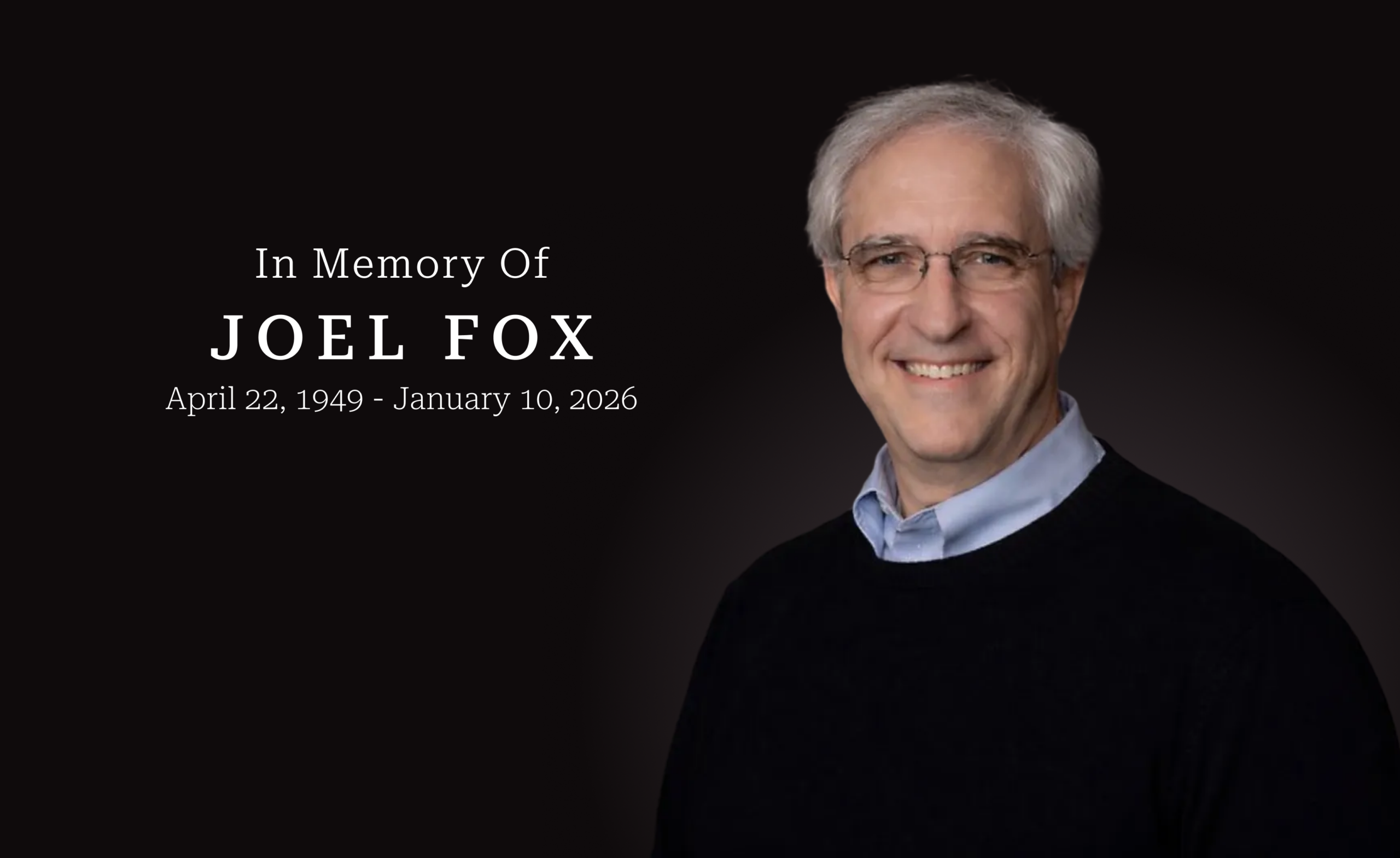
If political differences are destined to leave us divided and friendless, how do you explain the life of Joel Fox?

Fox died on January 10 after more than a decade of living with cancer. He was California’s most prominent taxpayer advocate since Howard Jarvis, for whom he worked, and whose anti-tax organization he led from 1986 to 1998. Fox, a Republican, advanced conservative ideas on TV and op-ed pages. He advised the campaigns of Gov. Arnold Schwarzenegger, Mayor Richard Riordan, and U.S. Sen. John McCain.

That profile, in our polarized times, might make you think Fox was one of those political ideologues who are driving the country apart. But the opposite is true.

Fox, more than any person in California politics, built deep relationships with people across the political spectrum. And he did not do this through consensus or compromise. Instead, Fox built friendships on disagreement itself—a warm, open, and curious style of disagreement.

Read More »

Business and Environmental Groups Converge – Urge Governor’s Signature

As the Governor convenes a Global Climate Summit in Los Angeles this week, a bill awaiting signature on his desk will help achieve many of the objectives being discussed at the Summit. Indeed, when signed, SB 546 will help save millions of gallons of oil, encourage the re-refining of used oil, and help create green jobs in California – all with no cost to taxpayers or the general fund. And, the bill enjoys an interesting and refreshing pedigree as it is supported by both the business and environmental community.

Under SB 546 (Lowenthal) oil manufacturers have agreed to support, and voluntarily add to, an increase in the oil manufacturer’s fund, with the new resources dedicated to increased funding for municipal oil recycling programs, increased incentives for Do It Yourself (DIY) oil changers to recycle their oil, a science based Life Cycle Analysis of the disposition of used oil, direct incentives for re-refining used oil, and ensuring that California is not exporting used oil pollution to neighboring states. Because this program will be self-funded, not one penny will come out of the state general fund.

Read More »

The future of Bay Area employment

The latest numbers show unemployment in California at 12.2 percent, its highest level since World War II. Bay Area counties are only slightly lower, in the range of 9 to 12 percent, and way above their rates of around 5 percent in December 2007.

To be sure, since 1970 state unemployment has soared near or over double digits several times, and each time the economy came back. In the early 1980s, amid a downturn in heavy manufacturing, state unemployment reached 11 percent in February 1983, only to come back down to near 8 percent within a year. In 1993, with major cuts in defense and aerospace jobs, state unemployment reached 9.9 percent in January, but the figure came down to near 8 percent by November 1994.

During those recessions, unemployment seemed endless, but employer and consumer confidence returned, and hiring commenced in significant numbers.

The current California recession differs from those in the past in at least two major ways.

One is its severity. The 12.2 percent rate (affecting more than 2.2 million workers) is not only the highest, but it does not cover the roughly 1.3 percent of the California workforce (more than 200,000 workers) classified as discouraged workers or marginally attached or the roughly 5.8 percent (nearly 1 million workers) employed less than full time for economic reasons.

Read More »

Water vs. Football

The press reported recently that an L.A. businessman wants to build a 75,000 seat football stadium in the City of Industry. Now that local objections to the project have been settled, the state legislature plans to waive environmental and planning rules for the new structure, arguing that the stadium is a job-creating machine. A bill granting that waiver, which bends the rules every other builder must comply with, passed the state Assembly earlier this month and now awaits approval from the Senate.

I don’t get it. How can the state legislature even propose to “bend the rules” to complete a stadium for a mere Sunday afternoon sporting event but they can’t “bend the rules” to get water to one half of the state’s population?

No government in the history of civilized society has turned off a water supply for its people until now. Because of a protected fish, water pumps have been turned off, drying food-producing fields, killing jobs in Central California, and threatening water supply for all of Southern California. Water rates are skyrocketing and mandatory conservation, even water rationing, is the order of the day.

Read More »

Clinton for Governor

President Clinton is headed out to California next week to do some campaigning for San Francisco Mayor Gavin Newsom, who trails badly in the polls.

I wish he would ditch Newsom and run for governor himself.

I started having Clinton rescue fantasies the morning this summer when he landed at Burbank airport with two California journalists he’d rescued from North Korea. Then, as now, five people were running for governor – two Democrats, three Republicans – and none of them had set the world on fire.

Polls suggest that as many as half of voters are undecided about whom to support for governor.

So why not Bill Clinton?

Read More »

The Green Governor – Environment and Money

Governor Arnold Schwarzenegger liked what he saw and heard from the tax commission when commissioners handed over their report to him. He gave the proposal a thumbs up and said he’d sign the plan into law immediately if he could. However, those thumbs were way up and his energy was much higher when he addressed the gathering at the Governors’ Climate Summit 2 in Los Angeles, yesterday,

To be sure, there were stark differences in the two events. At the climate summit the governor was playing to an admiring audience of world and environmental leaders while at the press conference he was talking to a bunch of grumpy reporters who he sees on a regular basis.

The environmental extravaganza plays into his grassroots stirring of a “Green Revolution”, as he called it, for which he has received international acclaim. With the tax proposal he faces an unruly legislature, which will demand changes and then most likely sink the whole proposal. He’s been down that rocky road too many times before to think its any fun.

Read More »

Purple Politics: Is California Moving Toward the Center?

You don’t have to be a genius, or a conservative, to recognize that California’s experiment with ultra-progressive politics has gone terribly wrong. Although much of the country has suffered during the recession, California’s decline has been particularly precipitous–and may have important political consequences.

Outside Michigan, California now suffers the highest rate of unemployment of all the major states, with a post-World War II record of 12.2%. This statistic does not really touch the depth of the pain being felt, particularly among the middle and working classes, many of whom have become discouraged and are no longer counted in the job market.

Even worse, there seems little prospect of an immediate recovery. The most recent projections by California Lutheran University suggest that next year the state’s economy will lag well behind the nation’s. Unemployment may peak at close to 14% by late 2010. Retail sales, housing and commercial building permits are not expected to rise until the following year.

Read More »

The growth question

Denial is the first obstacle an individual must overcome if he or she is to break the bondage of alcoholism. Step number one in the now-renown “12-step” process for beating the addiction reads:

We admitted we were powerless over alcohol – that our lives had become
unmanageable.

Thinking about the sorry conditions the state is currently laboring under – economic decline, fiscal chaos, dysfunctional governance – I can’t help but see the similarities between a struggling addict and us. That is, we seem to know what the problem is but are trying mightily to ignore it. California is in denial.

Admittedly, it may be naïveté, not denial – state leaders have been acting for decades as if bad things “can’t happen here.” After all, they grew up believing that “California has it all” – the brains, the brawn, the beauty – and that those gifts of God, or accident, would keep California’s standard of living high and in great demand; would keep the economy humming; and, correspondingly, would grant those leaders the freedom to govern as they saw fit.

Read More »

Life for the Tax Commission Proposal Depends on its Heart

Nine members of the tax commission signed the final report submitted yesterday to the governor and the legislature. Five members refused to sign. Ironically, if this proposal were a tax measure it would fail because it did not receive a two-thirds vote.

Justification for the two-thirds vote found multiple times in the state and federal constitutions means consensus has been achieved on important matters. There was no consensus within the commission that this tax plan is the remedy for what ails California.

The final report from the Commission on the 21st Century Economy was a bold attempt to re-make the state’s tax landscape. The spirit of what was attempted – restructuring tax codes to fund government through economic growth – should be applauded. There should be no penalty for producing a daring, experimental plan.

However, the plan is centered on a new tax proposal that violates a basic canon of good tax policy. The business nets receipts tax (BNRT) is unclear. Taxpayers do not know how it will affect them.

Read More »

Stop Blaming and Start Praising AB32

In 1973, the president of Ford testified against pollution-reducing catalytic converters on cars on the grounds that such a requirement risked “a complete shutdown of the US auto industry.”

Of course, no such shutdown occurred and pollution was greatly reduced. But 35 years later, Meg Whitman, a candidate for the Republican nomination for governor, is raising similar fears about California’s Global Warming Solutions Act, signed into law by Governor Schwarzenegger in 2006 (AB32). In doing so she betrays an apparent lack of understanding about how AB32 will be implemented, the opportunities arising from that implementation, and an indifference to the risks of suspending the law.

Ms. Whitman says that AB32’s implementation can only result in reduced economic growth, but as California demonstrated in the 1970’s when it launched its energy efficiency effort using performance standards, that does not have to be the outcome — provided we harness the power of capitalism and competition. Back then, refrigerator makers claimed performance standards would curtail consumer choice and raise prices, but instead, choices weren’t reduced, energy consumption per unit dropped 75%, and prices fell nearly 50%. In fact, relative to a 1974 model, energy savings have put $15 billion in Californians’ pockets.

Read More »