

Featured Post

A Fox, A Hound, and a Friendship

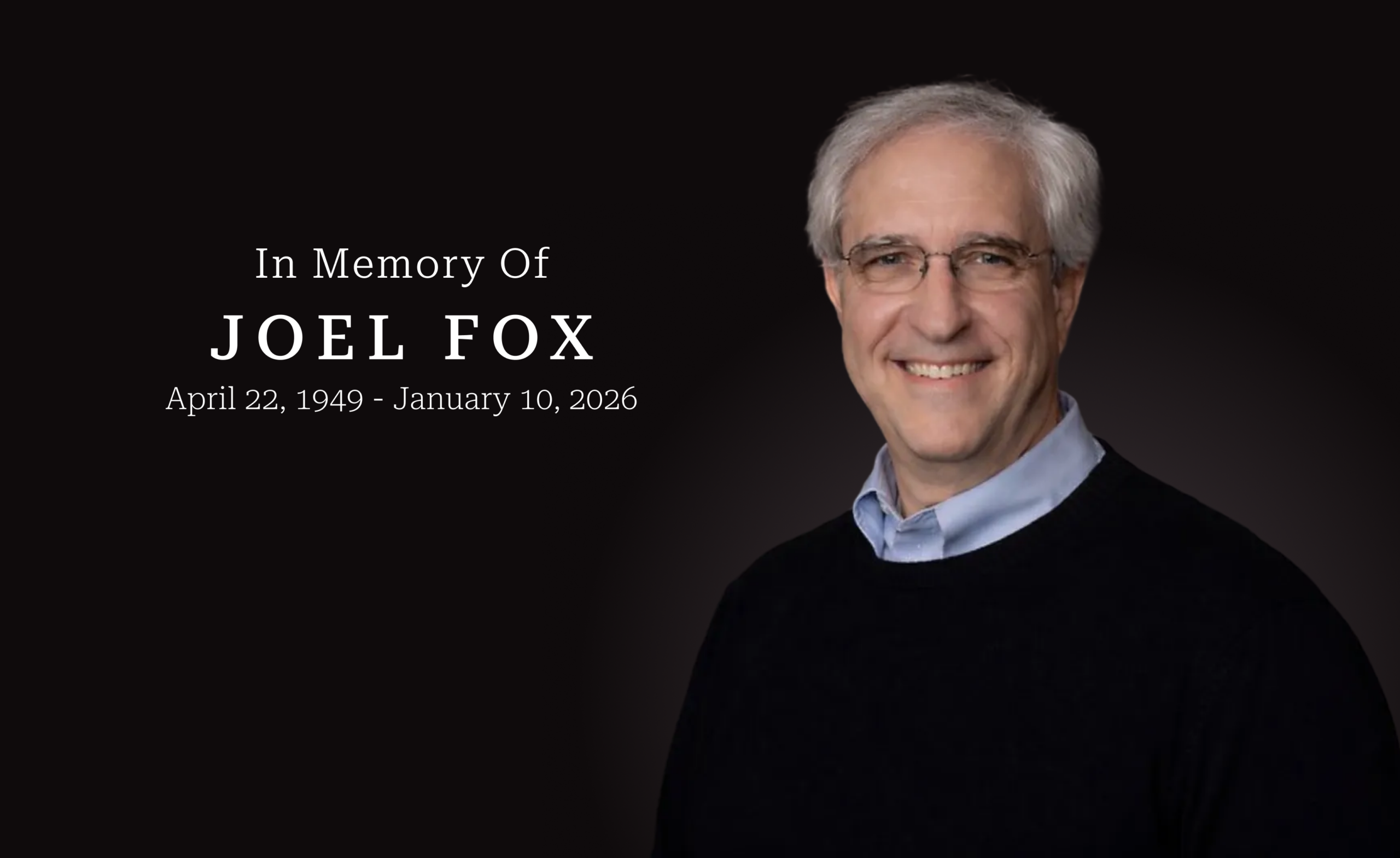
If political differences are destined to leave us divided and friendless, how do you explain the life of Joel Fox?

Fox died on January 10 after more than a decade of living with cancer. He was California’s most prominent taxpayer advocate since Howard Jarvis, for whom he worked, and whose anti-tax organization he led from 1986 to 1998. Fox, a Republican, advanced conservative ideas on TV and op-ed pages. He advised the campaigns of Gov. Arnold Schwarzenegger, Mayor Richard Riordan, and U.S. Sen. John McCain.

That profile, in our polarized times, might make you think Fox was one of those political ideologues who are driving the country apart. But the opposite is true.

Fox, more than any person in California politics, built deep relationships with people across the political spectrum. And he did not do this through consensus or compromise. Instead, Fox built friendships on disagreement itself—a warm, open, and curious style of disagreement.


Read More »

Surprise, the Budget’s Not Balanced

If the state budget is supposed to be a blueprint, this is
one funny structure California is building.

One month into the new fiscal year and the state is already
10 percent short of what it needs to keep the budget balanced. And as Joel Fox noted
in this space
Friday, it’s not like the national economy is inspiring a lot
of optimism that things are going to get better in a hurry.

Sure, July is just one month. And the state Department of
Finance says their numbers are better than state Controller John Chiang’s
report Tuesday of a $538 million shortfall.

Local businesses could fling open the hiring window,
Californians could dig into their wallets and start buying homes, cars and
video games and then cue the confetti, happy days are here again.

Read More »

Signature Gathering Scare Ads are Right On — Potential Identity Thieves are All Around us, Starting with Political Consultants

I, like virtually every member of the California media and
good government community, was appalled when the group calling itself
Californians Against Identity Theft and Ballot Fraud, backed by the building
trades and pipe trades unions, broadcast a radio ad claiming -without evidence
— that signing an initiative petition put you at great risk for identity
fraud.

But now
that I’ve thought about it – and seen the new, revised ad from the same
mysterious group – I realize I was wrong to condemn this ad. I think the
admakers here are onto something. If anything, the group CAITBF doesn’t go far
enough.

Let’s look
at four messages of the CAITBF ad campaign that should be expanded to protect
all of us against the identity theft-related dangers of political
participation.

Read More »

Another Nail in the High Speed Rail Coffin

A new study on the California High Speed Rail (HSR) project
released this week says the cost estimates for the first segment of the rail
are much higher than previously calculated. Everyone who is surprised by this
fact please raise your hands. I thought so. The High Speed Rail project has
received one credibility cut after another. Like the tree subject to continuous
hacks from lumberjacks, HSR is about to topple over.

As reported by the AP’s Adam Weintraub, supporters of the
rail are now having second
thoughts
. He quoted rail supporter Senator Alan Lowenthal, "We really
need to re-examine what we’re spending and what we’re going to get for
it."

The first leg was tagged at a cost of $7.1 billion in 2009.
The new study reports the cost at anywhere from $10 billion to $13.9 billion,
an increase of anywhere from 40 to 95 percent. And that’s the cost overrun of
just the first leg – a Central Valley leg that doesn’t run through the coastal
metropolises. What will the cost overrun be in trying to build the rail through
those high population corridors?

Read More »

Travel and Tourism is Keeping California Out of the Red

Travel is big
business for California and leading the recovery post-recession. It is helping
to jumpstart the economy and plays a vital role in our economic health.

How vital?

The industry
provides billions in taxes and nearly a million jobs to the state. While
California’s Real GDP grew at a relatively modest 1.8 percent in 2010, travel
spending (adjusted for inflation) grew at more than twice that rate, up 4.4
percent.

Last year, California tourism generated $95.1 billion in
travel-related spending and $6.1 billion in direct state and local tax
revenues. Travel in California means jobs – employing 873,000 people with
earnings of $29.9 billion.

Simply put: travel matters.  It matters with job creation, productivity and
regional economic expansion.

Read More »

Fed Says Interest Rates will Stay ‘Exceptionally Low’ Through Mid-2013

Tuesday brought news from the Fed that interest rates will
stay near zero until mid-2013, due to "considerably slower" growth than expected.  Accepting that growth will not come quickly
now, the Fed also commented: "[t]he committee now expects a somewhat slower
pace of recovery over the coming quarters," and "[t]he unemployment rate will
decline only gradually."  The Fed did not
act unanimously, as it usually does, however, and these comments, eagerly read
by the financial community like one would read tea leaves or the entrails of a
chicken, in times past, were the product of a 7-3 vote.  The three dissenters are concerned about
inflation rearing its head once again.

We
are running out of the usual tricks which have been employed in past recessions
and depressions to jump start a sick economy like applying those electrical
paddles to a patient whose heart has stopped it’s steady beating.  The Fed has decided to keep federal funds at
zero to one quarter percent, which is practically free money for those who
receive money directly from the Fed.

Read More »

November 2012 Targets – Part One: The Assembly

Should the new lines for the 80 assembly districts released
by the Citizens Redistricting Commission (CRC) become final on August 15 –
meaning there are no successful legal challenges or referendum that could
require the state Supreme Court to draw the lines – following are my early
picks as to where the action will be in November 2012 (Part Two will cover
state senate and congressional races)

Those who were hoping that lines drawn by the CRC, rather
than politicians, would significantly boost the number of competitive races in
2012 will be sorely disappointed. It didn’t happen.

Here are the assembly districts that early handicappers are
currently looking at as being competitive, with the more likely targets being
listed first.

Read More »

Racing to Tax the Rich

Who gets to tax the rich first – the federal government or
the California state government? Politicians and tax increase advocates on both
the federal and state level say the rich must pay more. In the end, neither may
pass a tax on high-end income taxpayers and there is no advocacy to raise taxes here. However, how successful the federal
government tax-the-rich supporters are on this issue will clearly affect the
fortunes of the state.

President Barack Obama says the United States must attack
its deficit problem in a "balanced" way, which includes both cuts and revenue
increases. He talks about taxing millionaires and billionaires but sets that
bar rather low, often citing the figure of $250,000 in income as a target for
tax increases.

California tax increase advocates think the rich start at a
higher point, if not quite millionaire territory. Assembly Member Nancy
Skinner’s income tax increase proposal, AB 1130, would levy an additional 1%
tax on taxable income of $500,000 and more.

Read More »

California Job Training Updates: WIA, H-1B and Poizner/Lansing

Just a few years ago, California was flush with job training
money. The federal Stimulus of 2009, the American Recovery and Reinvestment Act
(ARRA), brought to California an additional $488 million in Workforce
Investment Act (WIA) funds-adult activity funds, dislocated worker funds and
youth funds. This $488 million was in addition to the $496 million in regular
program year 2009 WIA funding.

The ARRA funding has been near entirely spent and for the
2011-2012 year, the workforce community in California is facing a scaled back,
though still significant, WIA expenditure. 
Mr. Michael Evashenk of the Employment Development Department’s
workforce division knows as much about WIA funding as anyone in our state. He
prepared the following chart showing the WIA funding for the upcoming year.

California drops from $460 million to $402 million, a
decrease of 12.7%. This is a larger decrease than the national decrease
of 9.8%– $3.198 billion in WIA funds in 2010/2011, $2.88 billion in 2011/2012.
(The high water mark for WIA funds in California was in 2000 when WIA funding reached
around $600 million.)

Read More »

Protecting Taxpayers by Protecting Local Discretion

Co-authored by Jon Coupal, President of the Howard Jarvis Taxpayers Association

Those familiar with Sacramento politics know that the Howard Jarvis Taxpayers Association and the League of California Cities are often on opposing sides of major policy issues. Nonetheless, we have worked together on a number of issues where our interests overlap. One issue on which we have always agreed is firm opposition to unfunded mandates on local governments. Many in local government are unaware that it was a taxpayer advocate, Paul Gann, who placed in the California Constitution a prohibition against unfunded state mandates to local governments.

Today, we stand together again as state legislators attempt to inject paralysis and dysfunction into local budgets. Specifically, our organizations join in strong opposition to several bills attempting to restrict the ability of local governments to reduce costs, manage their budgets and spend tax dollars in the most efficient manner possible.

Read More »