

Featured Post

A Fox, A Hound, and a Friendship

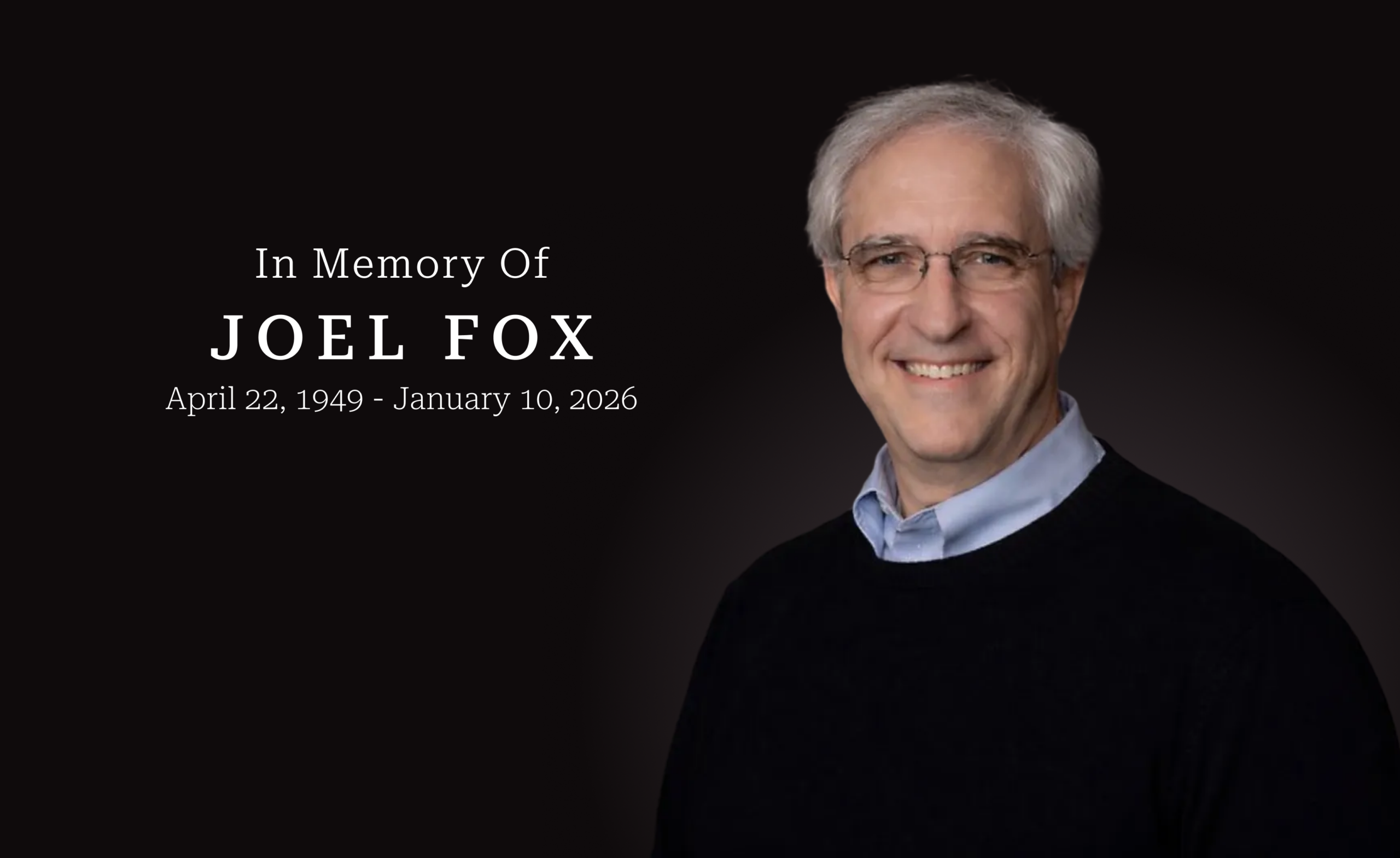
If political differences are destined to leave us divided and friendless, how do you explain the life of Joel Fox?

Fox died on January 10 after more than a decade of living with cancer. He was California’s most prominent taxpayer advocate since Howard Jarvis, for whom he worked, and whose anti-tax organization he led from 1986 to 1998. Fox, a Republican, advanced conservative ideas on TV and op-ed pages. He advised the campaigns of Gov. Arnold Schwarzenegger, Mayor Richard Riordan, and U.S. Sen. John McCain.

That profile, in our polarized times, might make you think Fox was one of those political ideologues who are driving the country apart. But the opposite is true.

Fox, more than any person in California politics, built deep relationships with people across the political spectrum. And he did not do this through consensus or compromise. Instead, Fox built friendships on disagreement itself—a warm, open, and curious style of disagreement.

Read More »

Proving the Redevelopment Rule

Cross-posted at City Journal.

Doug Tessitor is the mayor of Glendora, a city in Los Angeles County. He’s a self-described conservative and dead certain that preserving California’s redevelopment agencies (RDAs) is essential to his city’s fiscal health. In a pair of recent online columns, Tessitor mounted an impassioned defense of redevelopment in response to my City Journal article depicting the agencies as a “secret government” that runs up debt, abuses eminent domain, and doles out subsidies to favored developers. Tessitor’s response is worth rebutting, not because his arguments are exceptional but because they echo those of other California Republicans who defend redevelopment.

One of Democratic governor Jerry Brown’s few good ideas so far has been his proposal to shut down the RDAs as part of an effort to close a massive budget gap. Democrats in the state assembly tend to favor redevelopment, with its big-government, central-planning tools, but they backed Brown in order to shave about $1.7 billion from the budget. Republicans often complain about redevelopment’s abuses of property rights, but they blocked Brown’s plan, with only one Republican—longtime redevelopment foe Chris Norby of Fullerton—joining Democrats in April to support the measure, which fell one vote shy of passage. It might return for another vote. When I confronted several of the Republicans about their votes, I kept hearing the same rationale: they don’t like central planning, these Republicans say, but redevelopment works in their communities. (The abuses I described take place only in other cities, apparently.)

Read More »

Is the Legislature Worth the Bother?

Do you maybe think the voters have decided the Legislature
is more trouble than it’s worth?

I mean, if we’re talking savings, canning the 120 folks in
the Assembly and state Senate would save $11.4 million a year right away, and
that’s not even counting benefits and that tax-free $142 per diem.

It’s pretty clear voters aren’t convinced that the
legislators are earning their pay. A new poll by the
Public Policy Institute of California the other day found that only 17 percent
of the state’s likely voters approve of the job the Legislature’s doing,
compared to 72 percent who aren’t happy at all.

And as for trust, 18 percent of those likely voters think we
can trust the state government to do what’s right at least most of the time.
Which means, of course, that a solid majority is convinced California would be
better served if the Legislature was replaced by one guy flipping a coin. Way
cheaper, too.

Read More »

Power grabs

Two budget-related developments yesterday bring a
small amount of clarity to the political positioning on achieving a deal. But
their long-term effect is to re-allocate political power.

Controller John Chiang released
a legal opinion interpreting the section of Proposition 25 that would halt salary and expense
payments to the Legislature if it fails to transmit a budget to the Governor by
June 15. His lawyers concluded that even if the budget is timely passed and
sent to the Governor, if it is not a balanced budget, then legislators
would forfeit their pay until they pass one that is balanced. This twist arises
from an earlier measure, Proposition 58 in 2004, which requires that the
Legislature may not send to the Governor, nor may the Governor sign, a budget
that would spend more than the revenues estimated for the year. Until the
Controller’s memo, this constitutional provision had no teeth. Now that
provision has been given real force, and the arbiter of whether a budget is
balanced – and therefore whether the Legislature will be paid – will be
Controller John Chiang.

Read More »

As Yogi Would Say: It’s Déjà vu All Over Again

Looking at the most recent Public Policy Institute poll on
the state budget situation, it is clear not much has changed in the public’s
view. The numbers have bumped a few points here and there but generally the
poll respondents have stayed on the same road they have been on: we want to
vote; we like Jerry Brown’s overall thinking, but when it comes to specific tax
increases-no thanks. Oh yeah, those spending limits and rainy day funds are a
good idea – and we should cut prisons.

Comparing these results to recent polls, Yogi Berra’s famous
saying comes to mind: it’s déjà vu all over again.

For those who would argue that the people’s vision is
blurry, if not downright dim-witted, I would submit the response to the first
question PPIC reports on: The state’s biggest problem is jobs and the economy.
52% of likely voters make that judgment. Budget and taxes is a distant second
at 16%. The people understand that if jobs increase and the economy improves,
the budget and tax situation will be taken care of.

Read More »

Matt Fong – Taxpayer Advocate, Respected Public Servant, Friend

I was touched by Joel Fox’s tribute here at Fox and
Hounds.  Largely the word that comes to my
mind when I think of Matt Fong is – respect.

Matt earned the respect of taxpayers and policy makers who
cared about responsible governing.  He embodied
the ‘good’ in government serving with distinction whether he was elected or
appointed.  Public service and generosity
defined Matt Fong.  He knew that he served
"at will" – that his job was to protect taxpayer dollars and give his very best
advice to guard state finances.  Respect
for taxpayers catapulted him to notable national posts requiring financial
expertise and savvy.  One thing was for
sure: Taxpayers could trust Matt Fong.

I met Matt through several of my Asian American mentors and
friends including former U.S. Secretary of Labor Elaine Chao and former
Presidential appointees Joe Yew, Walter Liang, Clayton Fong, Elsa Cheung, and the
late John Tsu.  These individuals I
respect called him "friend."

Read More »

Poll suggests local focus may be Brown’s best hope

A new independent poll released Wednesday suggests that a scaled back plan to increase taxes and dedicate all of the money to local government might be Gov. Jerry Brown’s best hope of finding new revenue to help balance the budget.

The poll by the Public Policy Institute of California finds that likely voters overwhelmingly want local government officials to have more say in how state money is spent in their communities.

The poll also shows that of all the major services, prisons are the ones voters least want to protect with their pocketbooks.

Finally, voters think they should be asked to weigh in on the tax plan, although many of those who want to vote apparently want to vote against it.

But the secret to overcoming that opposition might be to play on the voters’ preference for keeping government close to home.

Read More »

A Sad Goodbye to Matt Fong

Matt Fong could throw a snowball with accuracy. I know. I
was on the receiving end of a couple of sharply tossed snowballs sliding down a
hill in Big Bear when our families got together years ago. Matt was a spirited
guy, a dedicated public office holder, and an example of someone who could
paddle through strong political currents with his character unscathed.

I asked Matt once how, as a Republican who served as
California’s Treasurer and ran for the U.S. Senate, he dealt with politics with
his mother, March Fong Eu, longtime California Secretary of State and a
Democrat. Matt explained that his mother respected his political beliefs as he
respected hers. I assumed his confidence came from the certain feeling that he
had his mother’s vote in the privacy of the ballot booth.

Read More »

Will Crashing Real Estate Kill Prop. 13?

Cross-posted at CalWatchdog.

A demogogue is a leader who obtains power by means of impassioned appeals to the emotions and prejudices of the populace. And a demographer is someone who studies the characteristics of human populations, such as size, growth, density, distribution, and vital statistics.

Thus, to coin a phrase, a  ”demogogue-grapher” is someone who studies human population with his emotions and a political agenda.

Such must be the case of USC Professor of Demography Dowell Myers, interviewed by columnist and Proposition 13 hater Steve Lopez in the May 31 issue of the Los Angeles Times, “Debunking the Myth of Prop. 13”.

According to Myers, the decline in the number of families and children at the bottom of the population pyramid means that, in the future, there will be a surplus of family housing and the price will drop out of the bottom of single family residential housing.  Thus Myers asserts that Prop. 13 is “toast” because, according to him, it only works in a constantly rising real estate market.

Read More »

‘Tax the Rich’ Code for Taxing Job Creators

Years of overtaxation and overregulation have given
California the second highest unemployment rate in the nation. Even so some of
our state lawmakers still believe that punishing success is a recipe for job
growth.

Efforts by Assemblywoman Nancy Skinner (D-Berkeley) and
other Democrat legislators to increase taxes on high income earners will
actually punish California job creators and worsen volatile state revenues.

According to the Tax Foundation, California already has the
third highest income tax rate and one of the most progressive tax structures in
the nation. The top one percent of California’s income earners have incomes of
$500,000 or more per year and pay up to 50% of all income tax revenues received
by the state each year, according to a report by the non-partisan Legislative
Analyst’s Office.

Read More »