

Featured Post

A Fox, A Hound, and a Friendship

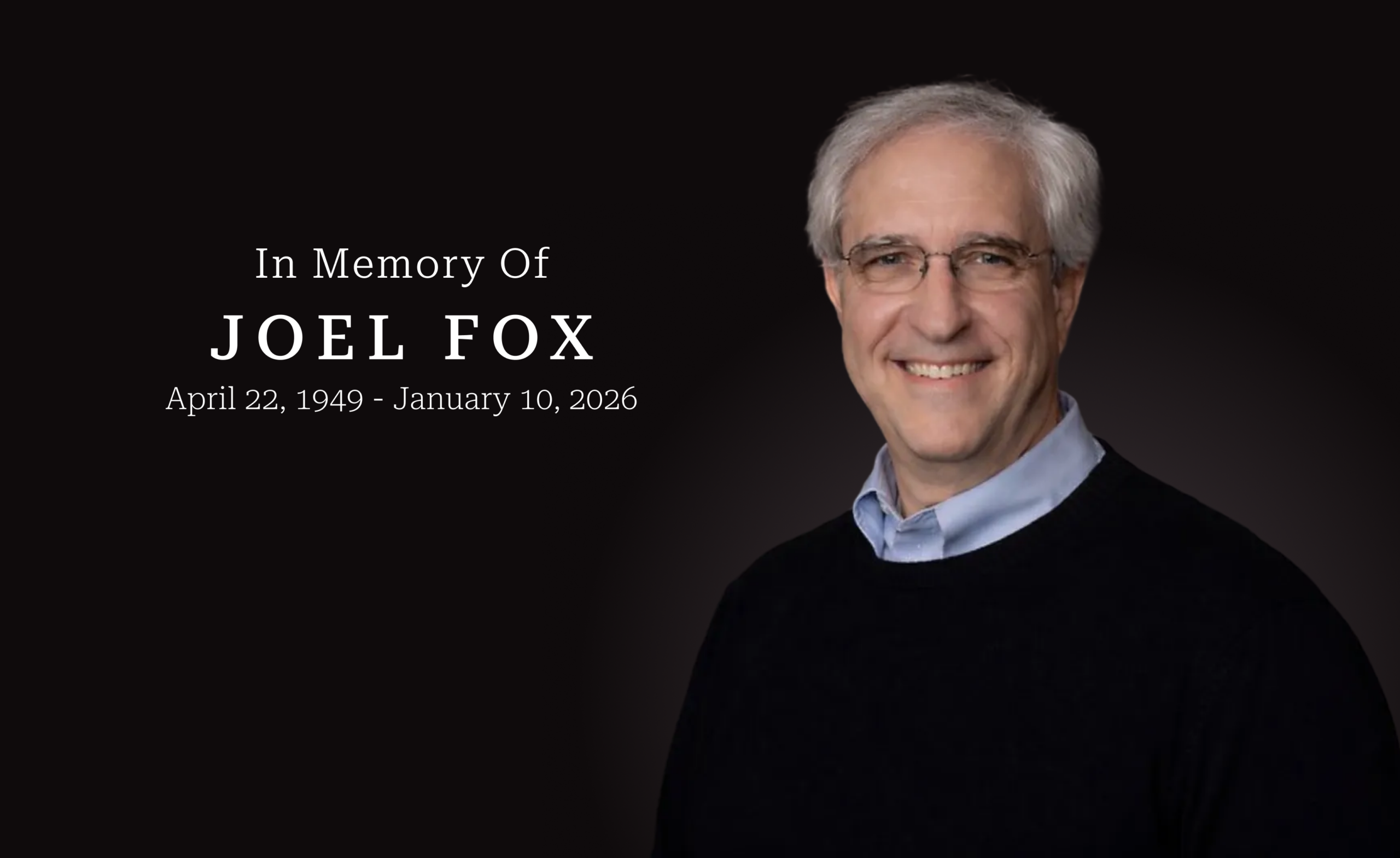
If political differences are destined to leave us divided and friendless, how do you explain the life of Joel Fox?

Fox died on January 10 after more than a decade of living with cancer. He was California’s most prominent taxpayer advocate since Howard Jarvis, for whom he worked, and whose anti-tax organization he led from 1986 to 1998. Fox, a Republican, advanced conservative ideas on TV and op-ed pages. He advised the campaigns of Gov. Arnold Schwarzenegger, Mayor Richard Riordan, and U.S. Sen. John McCain.

That profile, in our polarized times, might make you think Fox was one of those political ideologues who are driving the country apart. But the opposite is true.

Fox, more than any person in California politics, built deep relationships with people across the political spectrum. And he did not do this through consensus or compromise. Instead, Fox built friendships on disagreement itself—a warm, open, and curious style of disagreement.


Read More »

Want more jobs? Open wallets for small businesses

Over the past few weeks, the Obama administration has
been touting initiatives in the Small Business Jobs Act,
the American Recovery and Reinvestment Act, and other legislation passed in
2009 and 2010 as a sign that it is pro-business, and in particular, pro-small
business.

Here at the Milken Institute, we’ve repeatedly noted
that small business is an essential component of any economic recovery. From
the first quarter of 2008 to the second quarter of 2009, businesses with 50 or
fewer employees shed a staggering 2.9 million jobs. While small businesses are hiring
again, they are not doing so at a rate nearly fast enough to reach their
pre-recession level any time soon. Still, while White House efforts in this
area have been solid, the single greatest remaining concern among small
businesses persists: the lack of access to credit.

The issue of credit for small business is not simply a
matter of business as usual; it’s actually a key impediment to hiring. During
the financial realignment that took place during the Great Recession, small
businesses saw significant constraints placed on two of their most important
means of accessing revolving credit: credit cards and real estate equity. While
the equity issue is a direct consequence of the collapse of the housing bubble,
the slashing of credit lines attached to business credit cards has had a more
profound impact.

Read More »

Friday Issues: The 11th Commandment; Property Taxes; SF Pensions

When Ronald Reagan first ran for governor of California, he faced a hailstorm of sniping and attacks from the moderate wing of the Republican Party supporting the candidacy of San Francisco mayor George Christopher. To tone down the attacks, the California Republican Party Chairman created what he called the Eleventh Commandment. As Reagan described it in his autobiography, An American Life, “The personal attacks against me during the primary finally became so heavy that the state Republican chairman, Gaylord Parkinson, postulated what he called the Eleventh Commandment: Thou shalt not speak ill of any fellow Republican.”

Ironically, the conservatives are firing the verbal attacks nowadays offering a resolution to declare any legislator who votes to put taxes on the ballot a traitor. As introduced, the resolution gives no leeway for voting to put taxes on the ballot even if they are accompanied by major reforms such as a spending limit or pension reform.

There has been no talk about the 11th Commandment as the Republican Convention comes to Sacramento this weekend, and seemingly no talk of Reagan’s Big Tent idea, either.

Read More »

How to Send Texas and Other States Back Home

The recent headline, "Texas isn’t rustling from State" in the Los Angeles Times implies that few California companies are picking up and moving their operations from California to Texas. That’s good news, but it is not the end of the story and it does not indicate that California can rest on its massive assets and assume that the world will beat a path to our door.

In any given year, very few corporations relocate their headquarters or major operations to another state. Corporate boards and CEO’s in California and elsewhere try every strategy possible before undertaking the costly and dramatic decision of moving to another state. Business CEOs are particularly concerned about the possible loss of existing employees and the value that these employees bring to the company.

Read More »

Larry, Moe and Curly Go to College

In recent weeks, Los Angeles has been witness to an embarrassing exposé involving blown money, unrestrained ego and a wasted reputation. No, I’m not talking about Charlie Sheen but about the local community college district.

The Los Angeles Times did a terrific job of documenting the problems, revealing the incompetence and nailing the offenders of the Los Angeles Community College District’s $5.7 billion building spree. The newspaper’s six-part series, Billions to Spend, was a true public service.

A good deal’s been written on the topic since, but something is troubling me: It seems that the root of the problem is not getting acknowledged. The root of the problem is clear. No business people were on the college district’s board of trustees.

Just look at the seven trustees, whose background The Times helpfully laid out. You see a onetime Green Party activist, a retired political science professor, a documentary film maker and various union boosters. Other than Tina Park, who was described as a former New York Stock Exchange auditor, not a single trustee would seem to have the background to ask an insightful question about money.

Read More »

Republicans should listen to Kevin McCarthy

Republicans meet this weekend at their State Convention in Sacramento to discuss their nominations process in the aftermath of Proposition 14. Some may think it’s an inside baseball debate. The truth is that what happens this weekend will have a tremendous impact on the Republican Party, its candidates and their ability to win future elections.

California’s highest ranking Congressional Republican Kevin McCarthy has become active in this debate. He is co-sponsoring a measure with State Senate Leader Bob Dutton and Assembly Leader Connie Conway. The plan focuses on the principle that Republican voters should decide who their nominees are – not party insiders.

McCarthy addressed California Republican Party delegates via teleconference this week contrasting the differences between the process for party endorsements that he and a vast majority of Members of Congress, State Senators and Assembly Members support and the one proposed by the current party chairman.

Read More »

Protecting the Durbin Amendment is Critical to America’s Small Businesses

As the U.S. economy continued to
struggle to recover from near financial collapse, lawmakers took a much-needed
shot at financial regulatory reform last year.  Thankfully, their efforts
were largely focused on helping the backbone of this economy: small
businesses.  And when President Obama signed the Dodd-Frank Act into law
last July, it included important bipartisan reforms to excessive debit card
swipe fees that have plagued America’s small businesses for ages.  As a
member of the Board of Directors of the Fallbrook Chamber of Commerce, I
applaud their efforts to rein in these out of control fees and protect
consumers. However, now Wall Street banks and credit card giants have launched
a massive campaign to undo Congress’ good work and protect the profits and
perks that they have long enjoyed as a result of these outrageous fees. 
We cannot let them succeed.

Read More »

Field poll suggests Brown has done a good job engaging Californians

The big news in this week’s Field Poll was that 40 percent of California Republicans favor a mix of spending cuts and tax increases to erase the state’s $26 billion shortfall. So far, none of those Republicans seems to be serving in the Legislature, but the results certainly suggest that legislative Republicans can at least vote to place a tax measure on the ballot without fear of being rejected by their base as traitors to the cause.

An even larger group of Republicans — 44 percent — say they support Jerry Brown’s proposal to extend temporary taxes due to expire this year. Fifty-five percent of Republicans oppose the idea. Overall, Brown’s proposal is leading in the poll by a margin of 61 percent to 37 percent, with nearly 7 in 10 Democrats and independents supporting the idea.

The poll suggests that Brown has done a good job engaging Californians in the discussion about the state’s fiscal predicament. Two years ago, when then-Gov. Arnold Schwarzenegger and a bipartisan group of legislative leaders took a series of budget measures to the voters, they were soundly rejected. One big reason was that the public employee unions spent heavily against the slate of measures because the unions did not like the spending limit and rainy day fund that was part of the package. But the voters were leaning that way before the unions nudged them into a landslide.

Read More »

Not All Hope Is Lost: Latinos & California Republicans

The growth of the Latino vote in California should compel the
state’s Republican candidates to learn more about this growing demographic
whose share of the statewide vote has consistently grown.  In the case of the 2010 election, Latino
voters cast 1.7 million votes statewide, an increase of 300,000 votes from the
2008 presidential election. 

To better understand this growing constituency we completed a
survey of 400 likely California Latino voters this week to gain a clearer
picture of their attitudes on key issues and toward the Republican Party.  The survey was conducted by Moore
Information, Inc. with an assist by Marty Wilson and its purpose was to begin
the process of understanding both the challenges as well as the opportunities
for future Republican candidates in gaining a greater share of the Latino
vote. 

First, let’s get to the challenges that face the Republican Party
and its candidates with California Latinos by looking at the data:

Read More »

Who is in Charge of All That Money?

With more than $230 billion in assets to manage and the responsibility to buy health care benefits for 1.3 million people, the taxpayers of California have a tremendous amount of money riding on the people who govern and operate the California Public Employee Retirement System (CalPERS). This week, two events at CalPERS provide taxpayers good reasons to secure their wallets and demand change.

First, the CalPERS board received an investigative report detailing the shameful, corrupt conduct of its former CEO, board members and senior staff. In concert with outside investors and middlemen, these CalPERS insiders rigged investment decisions to benefit friends, paid generous management fees to favored firms and tried to buy political support with pension fund money. Their fates will ultimately be decided in the courts, but voters will need to change the governance of all pension boards to protect themselves.

The report reveals that these public employees were playing in a Wall Street fast lane where $4 million is a small finder’s fee, $5 million is a gambling debt and private jets are used to close billion dollar deals. These unconscionable abuses were perpetrated by the board members, in direct conflict with their fiduciary duty under the state constitution to put the system’s beneficiaries’ and participants’ interests above their own. These were not rogue employees, these were unaccountable CalPERS leaders enriching themselves at the public expense.

Read More »