

Featured Post

A Fox, A Hound, and a Friendship

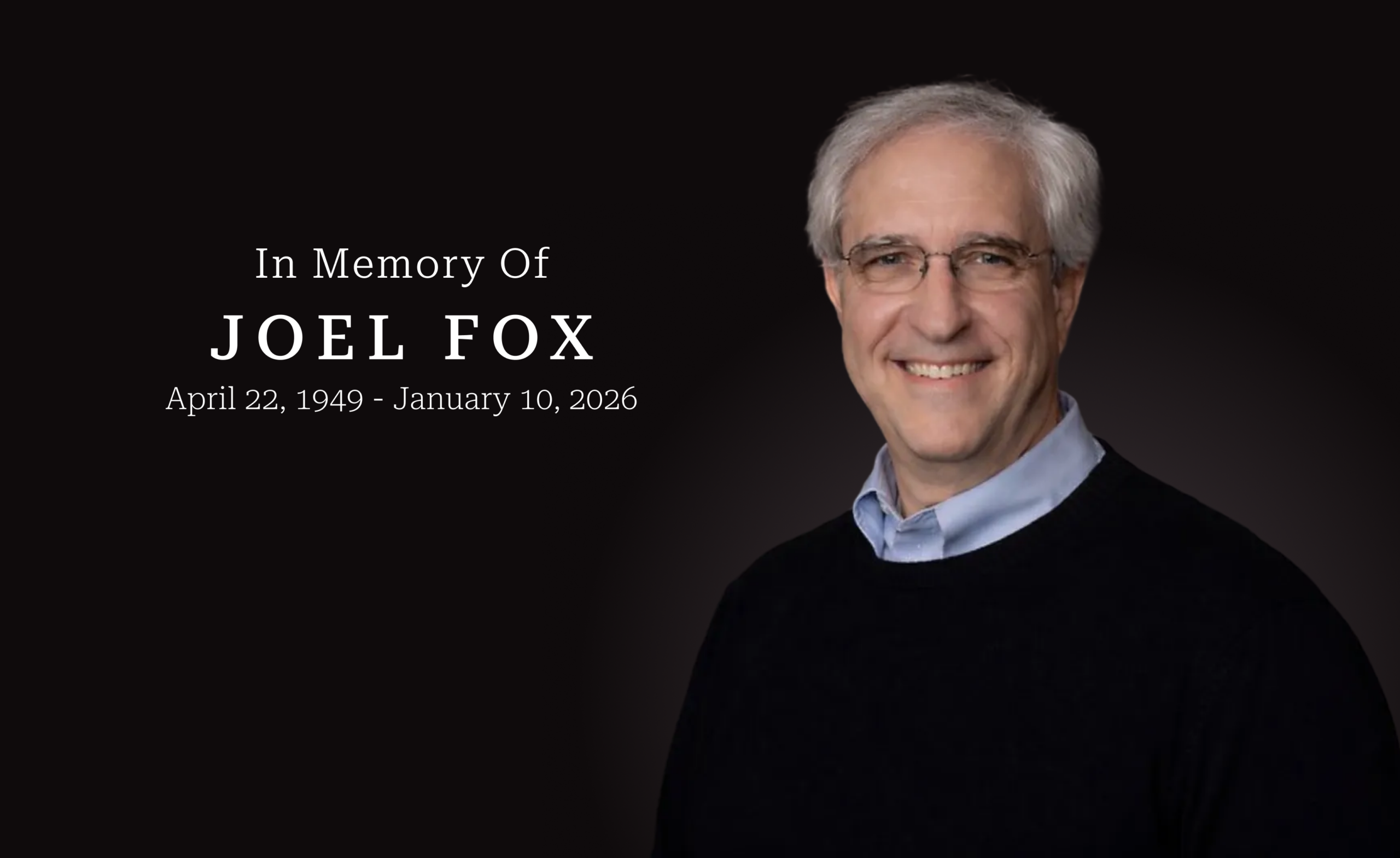
If political differences are destined to leave us divided and friendless, how do you explain the life of Joel Fox?

Fox died on January 10 after more than a decade of living with cancer. He was California’s most prominent taxpayer advocate since Howard Jarvis, for whom he worked, and whose anti-tax organization he led from 1986 to 1998. Fox, a Republican, advanced conservative ideas on TV and op-ed pages. He advised the campaigns of Gov. Arnold Schwarzenegger, Mayor Richard Riordan, and U.S. Sen. John McCain.

That profile, in our polarized times, might make you think Fox was one of those political ideologues who are driving the country apart. But the opposite is true.

Fox, more than any person in California politics, built deep relationships with people across the political spectrum. And he did not do this through consensus or compromise. Instead, Fox built friendships on disagreement itself—a warm, open, and curious style of disagreement.

Read More »

Grossly Unfair to Older Businesses

I was an early customer of Netflix. In late 1999, I signed up for its then-revolutionary service – DVDs of my choosing in the mail! I can keep them as long as I want! – and I was a happy customer.

But I wasn’t so happy a few years later when I saw an advertisement from Netflix touting new lower rates for those who sign up now. In other words, new customers were getting a better deal than old customers.

I asked Netflix to give me the lower subscription rate it was charging new customers. I got turned down. The discounted rate is for new customers only, the company said.

So, I thought, this is how Netflix rewards customers loyal from the beginning? It makes them pay more? I quit Netflix, never to return.

Read More »

Obama’s High-Speed Rail Obsession

Cross-posted at NewGeography.

Perhaps nothing so illustrates President Obama’s occasional disconnect with reality than his fervent advocacy of high-speed rail. Amid mounting pressure for budget cuts that affect existing programs, including those for the inner city, the president has made his $53 billion proposal to create a national high-speed rail network as among his top priorities.

Our President may be an intelligent and usually level-headed man, but this represents a serious case of  policy delusion. As Robert Samuelson pointed out in Newsweek, high-speed rail is not an appropriate fit for a country like the U.S. Except for a few areas, notably along the Northeast Corridor, the U.S. just lacks the density that would make such a system work. Samuelson calls the whole idea “a triumph of fancy over fact.”

Arguably the biggest problem with high-speed rail is its extraordinary costs, which would require massive subsidies to keep operating. Unlike the Federal Highway Program, largely financed by the gas tax, high-speed rail lacks any credible source of funding besides taxpayer dollars.

Part of the pitch for high-speed rail is nationalistic. To be a 21st century super power, we must emulate current No. 2 China. But this is a poor reason to indulge in a hugely expensive program when the U.S. already has the world’s most evolved highway, freight rail and airline system.

Read More »

Arab World Protests and a California Special Election

Can Col. Gaddafi and/or the oil-rich countries of the Middle East sway a California special election? Okay, let’s agree that the scenario I am about to examine is way down the road and things will change in a few months. But it is possible that the revolutionary actions in the countries along the rim of Africa and the Middle East could play a role if California holds a special election in June.

How so? You already know the answer: the price of gasoline. The price is already affected by the uncertainty in the region and if the unrest ever hits Saudi Arabia the price would blow through the roof like a gusher on an old-fashioned oil derrick.

Increased prices for crude oil translate to increased prices for gasoline at the pump. CNBC Executive Editor, Patti Domm, said clues to whether the United States hits $4-a-gallon gasoline would first show right here in the Golden State. “Let’s watch California. California is the first state that will see prices go up to the point that will really impact consumers.”

Read More »

Marc Antony at the Grave of the California Dream

Friends, Californians,
countrymen, lend me your ears;

I come to bury the California dream, not to praise it

The nasty debts and obligations that the
state incurred funding the dream of a better opportunity for the next
generation persists long after the money is spent,

The good done, by say, a good public
education is interred with the loser who got the education,

So let it be with the dream … The noble
Brown
Hath told you the old dream was too ambitious for these times;
If it were so, it was a grievous fault,
And grievously hath the dream answered it
Here, under leave of Brown and the wise men of California,
(For Brown’s budget is honest;
So are its provisions all; all honest and realistic)
Come I to speak at the funeral for the dream
A well-funded California was a friend to our ancestors, and seemed like a
promise to my generation,

Read More »

Another CA manufacturer gone, but we fail to acknowledge the problem

Yesterday the Inland Daily Bulletin wrote about a California-based hydrogen-powered fuel cell company, Bing Energy, deciding to locate its manufacturing, along with a headquarters and a technology lab, in Tallahassee, Florida.

Bing officials indicated clearly that it was 15 percent cheaper to operate in Florida and that the Sunshine state unequivocally wanted them there.

In the same article, Chris Thornberg of Beacon economics countered, "we’ve lost a lot of manufacturing jobs, but a lot less than in other states.  California (manufacturing) is weathering the storm better than the nation overall."

The Public Policy Institute of California similarly countered that, "only a small fraction of the state’s job losses are due to businesses leaving the state."

Read More »

Business and Labor Join Together on Important Issues

It wasn’t an illusion. Last week, the presidents of the U.S. Chamber of Commerce and AFL-CIO appeared before Congress together — on the same side. U.S. Chamber President Tom Donahue and AFL-CIO President Richard Trumka became the "odd couple" at a Senate hearing on infrastructure. The two presidents jointly advocated for investment in "building roads, bridges, high-speed broadband, energy systems and schools." While they may differ on details, both leaders share the same goals — creating jobs and successfully competing in the global economy.

This week, the Los Angeles Area Chamber of Commerce and the L.A. County Federation of Labor testified before Congress toward the same goal. The same U.S. Senate committee held a field hearing in Los Angeles on Wednesday. We advocated for infrastructure funding to advance projects in L.A. County, especially the innovative 30/10 initiative. Our two organizations meet on a weekly basis with other stakeholders to push this transportation and jobs plan forward.

Read More »

Let’s give the redistricting commission a chance

I suppose it’s too much to ask that the state’s brand-new redistricting commission be given a chance to do its job.

The 14-member commission, established by 2008’s Prop. 11, didn’t finish appointing all its members until the middle of December and has only held a handful of meetings. But the boo-birds already are out in force, accusing the commission of a partisan bias, a tilt against rural California, sneaky, single-source contracts and, just for the hell of it, general incompetence.

Yesterday, for example, in this very Fox and Hounds Daily blog Doug Jeffe provided a critique of the commission. You really don’t have to read past the headline: “Redistricting commission looks to be fiasco in the making.”

How upset do you think everyone would be if the commission had actually done something by now?

Read More »

Voters know little about budget details

Cross-posted at HealthyCal.

Gov. Jerry Brown wants California voters to weigh in by June on his plan to balance the budget. But the voters, polls show, know next to nothing about the state’s finances, and much of what they think they know is wrong.

That widespread ignorance, understandable in a state as complex as most countries, might play a role in shaping the debate over Brown’s plan, and ultimately the outcome.

Brown is asking state legislators to approve about $12 billion in spending cuts by early April. Then he wants to ask the voters to pass another $11 billion in taxes, mostly by extending temporary taxes adopted in 2009 and due to expire this year.

Brown believes the voters will be more likely to approve the taxes if the cuts are done first. But his approach carries high risk. If the voters say no, the new governor will have used up much of his political capital and he will then be forced to try to get the Legislature to make extremely difficult decisions to cut spending even further.

Read More »

On Wisconsin

What are they fighting about in
Wisconsin, and what might this mean for California?

The battle in Badger State is on
many levels, but the closer you look, the less it seems to be about union
members’ benefits and the more it seems to be about union leaders’ ability to
mobilize organizational and political power.

Wisconsin public employees
traditionally have had generous benefits. Their health care contributions have
been about 5.6 percent of total premiums and they contribute only 0.2 percent
of their monthly pay to their pension plans.

Governor Scott Walker is proposing
to more than double state and school employee health care contributions to
about 12.6 percent of premiums, but that still compares favorably to, say,
California. According to the California Health Care Foundation, Californians
paid 27 percent of the cost of premiums in 2010 for family coverage. California state employees pay about 20 percent
of their health care premiums.

Read More »