

Featured Post

A Fox, A Hound, and a Friendship

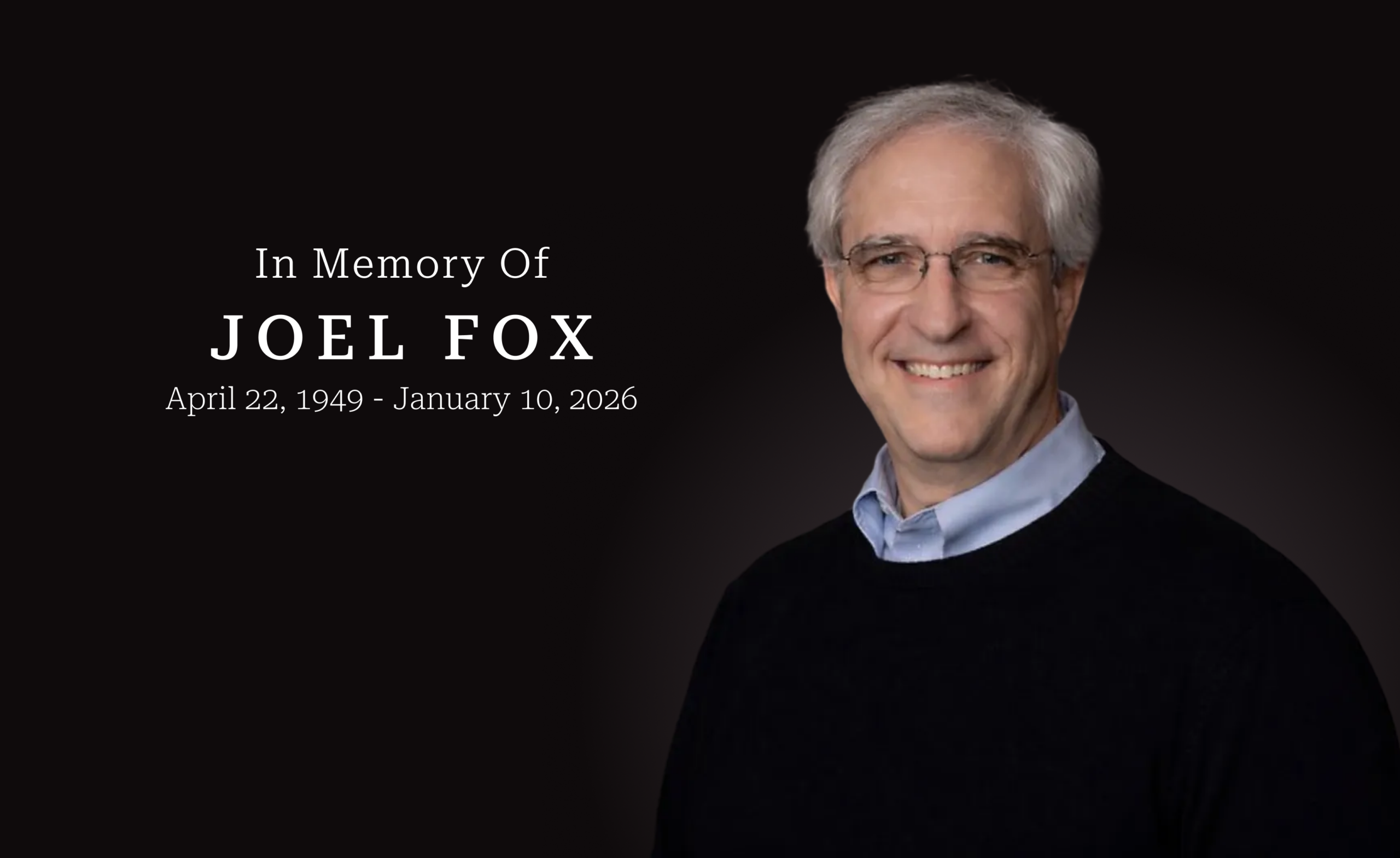
If political differences are destined to leave us divided and friendless, how do you explain the life of Joel Fox?

Fox died on January 10 after more than a decade of living with cancer. He was California’s most prominent taxpayer advocate since Howard Jarvis, for whom he worked, and whose anti-tax organization he led from 1986 to 1998. Fox, a Republican, advanced conservative ideas on TV and op-ed pages. He advised the campaigns of Gov. Arnold Schwarzenegger, Mayor Richard Riordan, and U.S. Sen. John McCain.

That profile, in our polarized times, might make you think Fox was one of those political ideologues who are driving the country apart. But the opposite is true.

Fox, more than any person in California politics, built deep relationships with people across the political spectrum. And he did not do this through consensus or compromise. Instead, Fox built friendships on disagreement itself—a warm, open, and curious style of disagreement.


Read More »

It’s time to eliminate government discrimination against taxpayers

Government discriminates against taxpayers,
and oftentimes, it’s predicated as the basis upon which millions in political
contributions are delivered every year. 
The goal is to drain every last penny from people to protect a public sector
that has become fat, arrogant and seemingly proud of it.

Taxpayers are being lectured about the need
for "shared sacrifice" to protect education, public safety, health and welfare
spending and other public sector programs at a time when we are already
considered a "high-tax" state. Not to mention our record high unemployment
rates.  None of that seems to matter when
it comes to our insatiable government.

Don’t get me wrong, I believe we should have
the best possible schools, well-trained and supported law enforcement
professionals, and public services.  The
problem is, public employee unions and their partners think legalized
discrimination against the private sector and its taxpaying workforce is the
solution.  Teamsters Local 572
representative, Connie Oser, wrote the following in a letter to the Los Angeles
Unified School District (LAUSD) Board of Education, "LAUSD can no longer afford
to subsidize private industry with taxpayer dollars."

Read More »

Unions at End of Brown’s “Big Pipe”

Here’s what I got out of Jerry’s Brown press conference
yesterday: the public employee union position is currently prevailing in the
Horseshoe (the governor’s suite of offices.)

Governor Brown believes his spending cut and tax extension
plan should go on the ballot pretty much as is. Adding long-term budget fixes
like pension reform and spending limits would weigh down the ballot too much so
that all the measures, including taxes, might fall of their own weight.

The unions, of course, don’t want spending limits or pension
reforms and Brown doesn’t appear to want them on the ballot, either.

Read More »

Let’s Caucus

The legislature now seems inclined to consolidate the 2012
presidential primary with the state primaries. In tough fiscal times, the money
saved by consolidation seems to outweigh the attention that the state might
gain from having a separate presidential primary. And the low turnout in the
2008 state primaries, which were separate from that year’s presidential
primary, was embarrassing.

For those
reasons, one primary is probably better than two. But consolidation isn’t the
only option. In fact, there is a proven election format that would spare the
state a separate presidential primary while still providing us a boost of
public attention from the national media and candidates.

The caucus.

Yes, I’m talking about the same
sort of presidential caucus used by Iowa. Voters gather in one place for a
couple of hours to decide, face to face, how to divide up presidential
delegates in their area. Such caucuses are usually associated with smaller
states, but that doesn’t mean it couldn’t happen in California.

Read More »

Cuts Ahead For State’s Many Regulations

Cross-posted at CalWatchdog.

California leads the country in regulatory laws. It’s nothing to be proud of. While other states mock California’s businesses representatives at national industry meetings for the crazy laws and regulations, California’s businesses owners and employees are paying the price with business and job losses.

Tired of temporary fixes, Sen. Sam Blakeslee and representatives from the Assembly and Senate formed the E3 Roundtable in an effort to achieve meaningful, structural regulatory reform.

Yesterday the E3 held its first meeting of the new year and invited several representatives of the business community to speak about the burden of overregulation, and the impediments to doing business in the state.

Blakeslee said the goal is not to prohibit regulations, but to reform the process in which rules and regulations are developed so that regulations better achieve the intended objectives, in a well-designed manner that is also protective of jobs and the state’s economy.

Read More »

What’s the Deal, Governor?

Let’s say you and I make a deal. If you agree to move into my not-so-great neighborhood and be a good citizen, I’ll give you something in return. For example, I’ll pay all your utility bills for 15 years.

Now, let’s say you decide to take a chance and you move your family. Over time, you and the other folks who took me up on my deal work to improve your new neighborhood, to make something of it.

But a few years later, I show up and say, “Ummm, you know, this arrangement is costing me money. Deal’s off.”

Now you could say, “Wait right there. You’re backstabbing me. We made a deal, and a deal should be a deal.”

You could – you should – argue that you’re the one who took a chance and moved your family. You and the others who accepted the deal are the ones who worked to improve my iffy neighborhood. The least you should get is your free utilities for the rest of the 15-year term. That was the deal, after all.

Read More »

“Parent Trigger” Hearing at State Ed Board a Test for Brown

The State Board of Education holds a hearing on the Parent Trigger law today and how the board reacts will be a first test of the Brown Administration’s view on school reform. Last month, Brown, in one of his first acts as governor, dumped a majority of the 11-member education board, removing advocates of the Parent Trigger and replacing them with new members, a number with ties to the teachers’ unions.

Teachers’ union officials have opposed the new Parent Trigger law. The Parent Trigger allows for major changes to be made to an under-performing school, including converting the troubled school to a charter school, if more than 50-percent of the parents sign a petition. One teacher union official complained that the law amounted to "mob rule."

However, some parents see the Parent Trigger as a way to shake up a failed school and seek a better education for their children. In Compton, 63-percent of the parents signed a Parent Trigger petition seeking change at the McKinley Elementary School. A heated battle over the petitions broke out with charges of signature tampering shouted by both sides.

Read More »

I told you so

On several occasions I’ve made the case that the Legislature
might propose a ballot measure to increase taxes without needing a two-thirds
vote to place the matter on the ballot. The tool is a little-known and rarely-used constitutional provision
allowing the Legislature to amend an existing initiative statute by a
subsequent statute placed on the ballot for voter approval. These statutes can
reach the ballot after approval by a simple majority vote of the Legislature
and the Governor’s signature.

While some experts have dismissed this notion, it is
apparently gaining some initial credibility where it counts, in the
Legislature. A freshman Democrat from Alameda County, Assemblyman Bob
Wieckowski, has introduced legislation to resurrect the California
inheritance or estate tax, which was abolished by voter initiative in 1982. His proposal would use
the majority vote maneuver to place the new estate tax on the next statewide
ballot for voter approval. Legislative Counsel has validated this approach.

Read More »

“Now for the Hard Part” in California Job Creation

Former New York Times columnist William Safire from
time to time told this chestnut from the early 1950s about Princess Margaret
and the matchmaker:  A Jewish matchmaker
had the idea of matching up poor Sammy-a nebbish and a schlemiel–with Princess
Margaret then the world’s most eligible woman. Sammy’s mother would not hear of
it: the Princess could not cook and was not Jewish. After weeks of persuading,
with the matchmaker showing how the alliance with British royalty would help
Israel, the mother gave her grudging approval. The matchmaker heaved a sigh of
relief and said, "Now for the hard part".

Read More »

What Egypt Protests Say About California

Gov. Jerry Brown’s state-of-the-state effort to link the
Egyptian protests to his budget plan fell flat. But the Egypt protests do hold
one important lesson for California: politics is a family thing.

Just look
closely at the crowds on TV. Or read the news stories in which participants are
described or interviewed. I was struck again and again by one thing: that so
many of the people who took the streets came not by themselves but with friends
and especially family.

Those streets are full of mothers
and daughters, sisters, brothers, fathers and sons. Families clearly had made
decisions together to participate in overthrowing a dictatorship.

Read More »