

Featured Post

A Fox, A Hound, and a Friendship

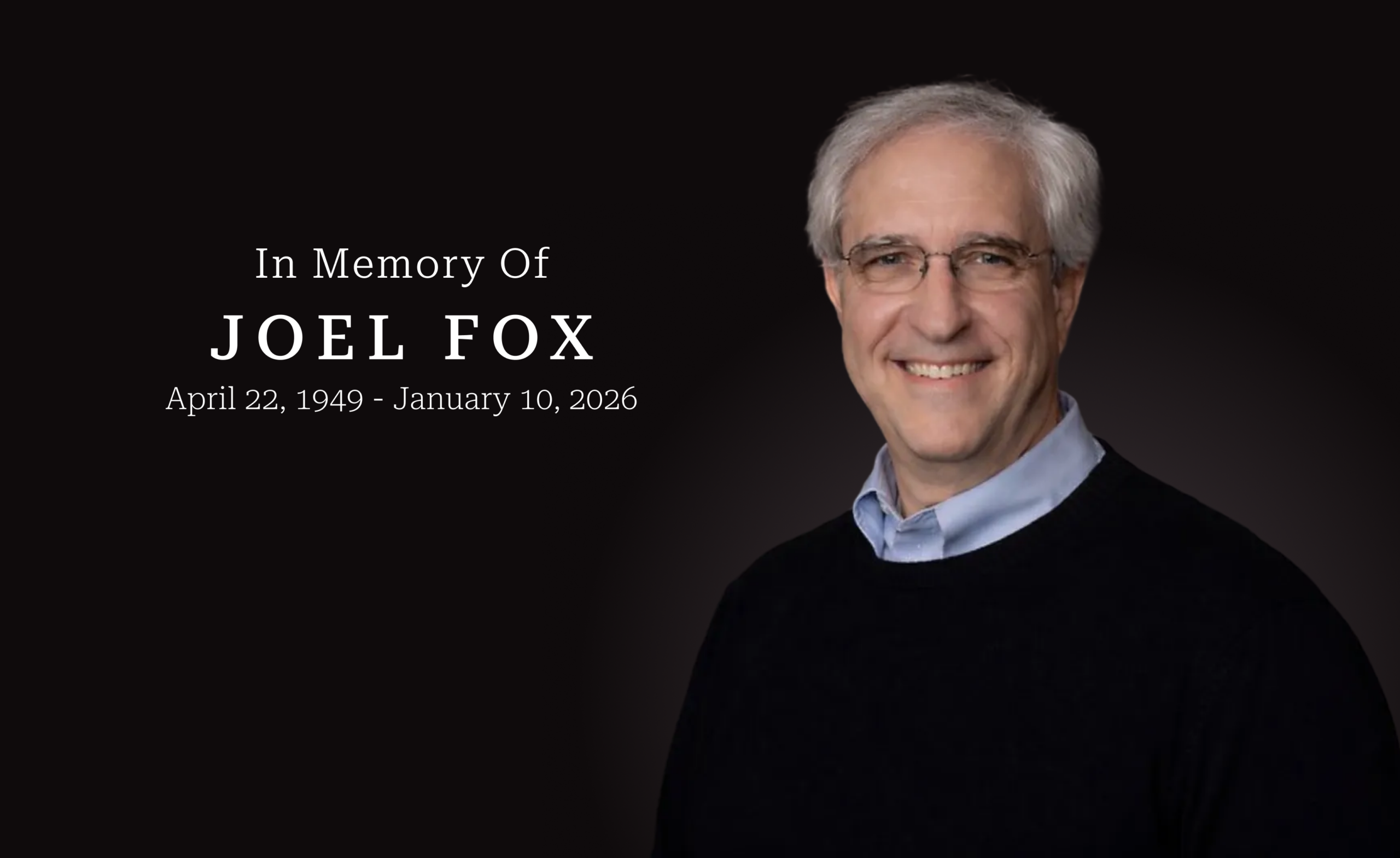
If political differences are destined to leave us divided and friendless, how do you explain the life of Joel Fox?

Fox died on January 10 after more than a decade of living with cancer. He was California’s most prominent taxpayer advocate since Howard Jarvis, for whom he worked, and whose anti-tax organization he led from 1986 to 1998. Fox, a Republican, advanced conservative ideas on TV and op-ed pages. He advised the campaigns of Gov. Arnold Schwarzenegger, Mayor Richard Riordan, and U.S. Sen. John McCain.

That profile, in our polarized times, might make you think Fox was one of those political ideologues who are driving the country apart. But the opposite is true.

Fox, more than any person in California politics, built deep relationships with people across the political spectrum. And he did not do this through consensus or compromise. Instead, Fox built friendships on disagreement itself—a warm, open, and curious style of disagreement.

Read More »

CalSTRS’s Extra Hurdle

In May 2008, Federal Reserve Vice Chairman Donald Kohn
delivered important remarks about an obscure but
consequential issue:

"Public pension benefits are essentially bulletproof promises
to pay. The only appropriate way to
calculate the present value of a very-low-risk liability is to use a
very-low-risk discount rate.  However,
most public pension funds calculate the present value of their liabilities
using the projected rate of return on the portfolio of assets as the discount
rate. This practice makes little sense from an economic perspective [and] pushes
the burden of financing today’s pension benefits onto future taxpayers, who
will be called upon to fund the true cost of existing pension promises."

To the vast
majority of Americans those remarks were hardly understandable, much less relevant.  But not to some public pension fund
officials.  Later, the CEO of the California
State Teachers Retirement System (CalSTRS) labeled as deserving of a "letter
grade of F" a study from Stanford University that adopted the Kohn methodology
for measuring California’s pension liabilities.  

Read More »

California’s Renewable Portfolio Standard

RPS.  Never have three seemingly innocuous letters stirred so much
passionate debate and consumed so much legislative time in recent
years. And for good reason.  

The future energy infrastructure of our
state over the next decade will largely be shaped by the decisions that
could result this year from the debate swirling around California’s
Renewable Portfolio Standard.

I am very supportive of efforts to increase our state’s reliance on
renewable energy, but I am also very aware just how difficult that task
is to accomplish. After all we have not even reached the state’s
original goal of 20% by 2010. Simply put, changing the culture of our
energy delivery system is extremely complicated. Many critical issues
must be fleshed out in a precise manner so that in the end we can move
California in what I believe is the appropriate direction without
harming ratepayers.

Read More »

The IOU Monster Rises at a Unique Time

The Wall Street Journal’s Stu Woo had it right when he wrote yesterday, "If California resorts to IOUs, it will be the latest humiliation for the cash-strapped state." Key on the word humiliation. In my recent travels, I heard much snickering and disbelief about California’s fiscal situation.

The most intriguing thing about California’s drive to another in a long line of humbling fiscal moments is the timing. Controller John Chiang predicted that if nothing changes California would run out of money in late October.

Right before the November 2 election.

Read More »

Sales Tax On Services? Again?

An
old friend is back in town, at least according
to George Skelton
. He shows up every so often trying to settle in, but
after making an initial good impression, the neighbors usually politely ask him
to keep moving on.

I’m
talking about the proposal to extend the state sales tax to services, which is
apparently a tax reform being considered by the Governor’s Office.

We’ve
been through this before, most recently when the Commission on the 21st Century
Economy
("Tax Commission") began to consider reforming the tax
code to make it more stable and "fit with the state’s 21st century
economy."

Read More »

Preaching To The Political Choir Is Good Business, Bad For Progress

I would love to hear some great ideas that are identical to mine.

That’s right; tell me exactly what I want to hear. Give it some oomph too. Exaggerate and bend those facts.

Now yell – show me you are passionate. Prove it to me.

You’re smart, just like me; nothing like those other idiots, who by the way, I never watch, listen or read. We are so right. I can’t wait to post this on my Facebook.

Read More »

Urban Legends: Why Suburbs, Not Dense Cities, are the Future

Cross posted on NewGeography.com

The human world is
fast becoming an urban world — and according to many, the faster that
happens and the bigger the cities get, the better off we all will be.
The old suburban model, with families enjoying their own space in
detached houses, is increasingly behind us; we’re heading toward
heavier reliance on public transit, greater density, and far less
personal space.

Global cities, even colossal ones like Mumbai and
Mexico City, represent our cosmopolitan future, we’re now told; they
will be nerve centers of international commerce and technological
innovation just like the great metropolises of the past — only with
the Internet and smart phones.

According to Columbia University’s Saskia Sassen, megacities will
inevitably occupy what Vladimir Lenin called the "commanding heights"
of the global economy, though instead of making things they’ll
apparently be specializing in high-end "producer services" —
advertising, law, accounting, and so forth — for worldwide clients.
Other scholars, such as Harvard University’s Edward Glaeser, envision
universities helping to power the new "skilled city," where high wages
and social amenities attract enough talent to enable even higher-cost
urban meccas to compete.

Read More »

Lights, Camera, Inaction

Some politicians must think Californians are fools. Either that or they
must believe the Titanic wouldn’t have sunk had just the tip of the
iceberg been removed while the rest of it stayed hidden below the
surface.

The politicians I’m referring to are those engaged in vigorous
grandstanding about the city of Bell’s compensation abuses.

So far
we’ve heard calls to publish every government employee salary and to
make Bell give its citizens refunds. But we haven’t heard anything that
would actually make a difference in solving our state’s financial woes.

Read More »

Lessons in Lawsuits

Cross posted at www.cala.com

This week, CALA released a report on litigation costs to 12 of California’s school districts, finding that in just three fiscal years, these schools spent $98.7 million.

The
report examined verdicts, settlements and outside counsel costs to
Capistrano Unified, Elk Grove Unified, Fresno Unified, Kern High
School, Long Beach Unified, Los Angeles Unified, Merced Union High
School, Modesto City, Poway Unified, San Diego Unified, San Juan
Unified, and Santa Ana Unified.

You
would think at a time when a record number of our schools are in
financial trouble and further education cuts are likely ahead, we would
not allow these litigation costs to go unchecked. California continues
to rank among the most litigious states in every study yet we rank at
the bottom in many measures of student performance. The more dollars
our schools have to pay in litigation costs, the less we have to
improve our students’ performance.

Read More »

For Whom Does Bell Toll?

On July 15, 2010 the Los Angeles Times broke a story devastating the working class residents of Bell, California. 

In
the midst of the Great Recession, in a city where one in four residents
lives below the poverty level, came one of the worst municipal scandals
in recent memory.  City council members making $100,000 a year for
part-time work.  A police chief making $450,000 a year. 

And
the cream of the crop?  A city manager making nearly $800,000 a year. 
Meanwhile, as Times columnist Steve Lopez noted, the primary industry
in Bell is survival.

Read More »