

Featured Post

A Fox, A Hound, and a Friendship

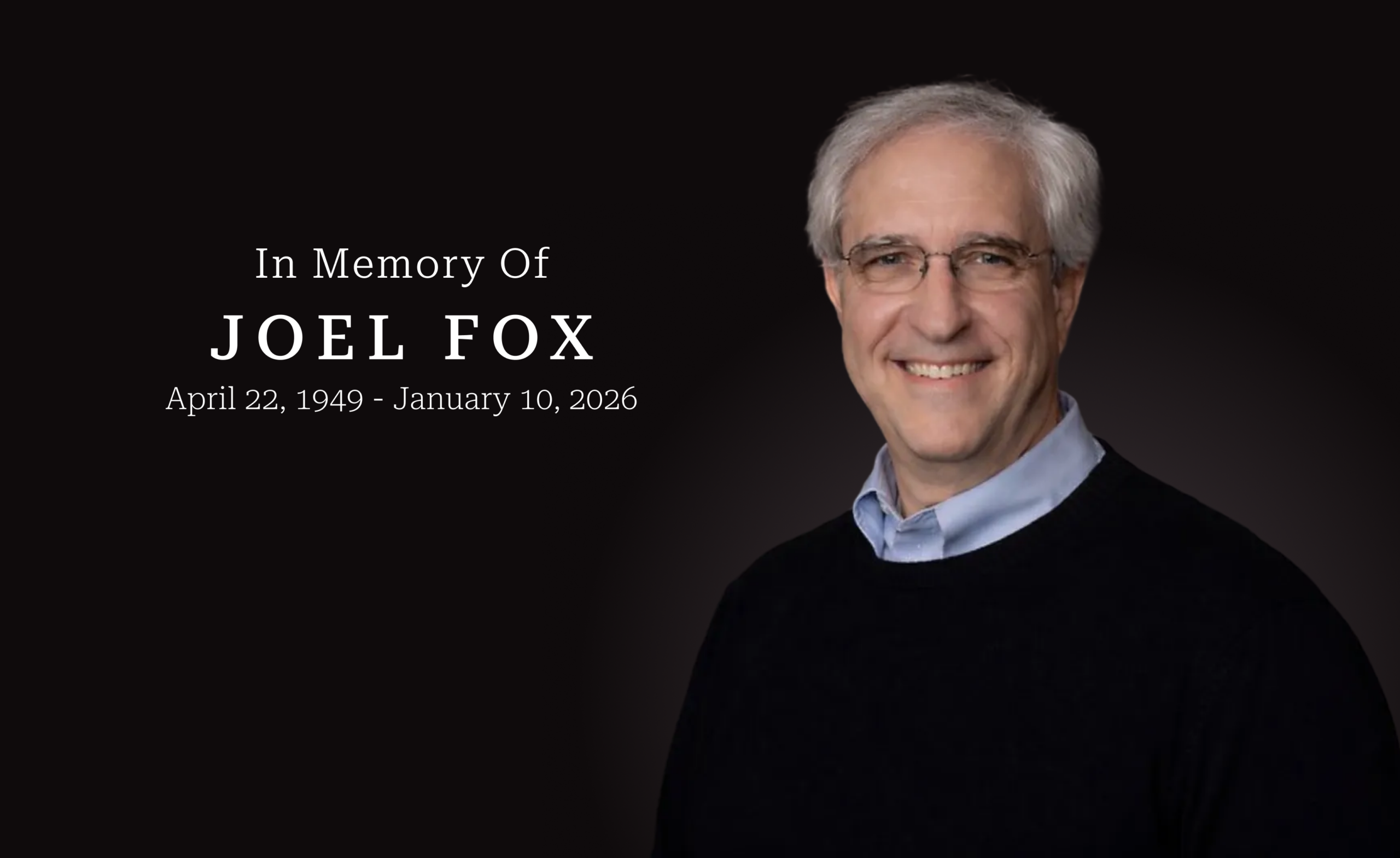
If political differences are destined to leave us divided and friendless, how do you explain the life of Joel Fox?

Fox died on January 10 after more than a decade of living with cancer. He was California’s most prominent taxpayer advocate since Howard Jarvis, for whom he worked, and whose anti-tax organization he led from 1986 to 1998. Fox, a Republican, advanced conservative ideas on TV and op-ed pages. He advised the campaigns of Gov. Arnold Schwarzenegger, Mayor Richard Riordan, and U.S. Sen. John McCain.

That profile, in our polarized times, might make you think Fox was one of those political ideologues who are driving the country apart. But the opposite is true.

Fox, more than any person in California politics, built deep relationships with people across the political spectrum. And he did not do this through consensus or compromise. Instead, Fox built friendships on disagreement itself—a warm, open, and curious style of disagreement.


Read More »

May Revise Comes as Political Landscape Shifts

Governor Jerry Brown reveals his revised budget today. The
Republican Assembly offered a blueprint for a no-tax budget last week. Budget
negotiations appeared to be non-existent for over a month. The new dynamics,
especially reports of increased revenue, could kick-start the budget
negotiations with new thinking from the governor. There is another factor
shadowing the budget process — the soon to be announced new legislative
districts.

The Los Angeles Times reported
over the weekend
that the governor will reduce his income tax increase
proposal. The question is will that be enough to bring Republicans to the
table?

Reports suggested a deal was close in March that would put
tax extensions and spending and pension reforms before the voters. However,
nearly every poll has indicated that the reforms would likely sail through
while the taxes, at best, had a 50-50 chance of passing. Public unions,
concerned that the tax increases would not pass, changed focus to pressure a vote
on taxes in the legislature. Negotiations broke down.

Read More »

California Transit Villages: Wrong and Right

I first became involved in the transit oriented development
movement in California in the late 1980s, when I was on the BART  board of directors. At the time it was a
minor planning movement, with a small number of theorists, including Bob
Cervero and Peter Hall at UC Berkeley and Marlon Boarnet at UC Irvine, and
architects Peter Calthorpe, Dan Solomon, Robin Chiang, and Marc Futterman.

Over the next two decades, transit oriented development
entered the mainstream of planning  theory
in California, with its own  literature
and an array of  federal, state and local
funding sources. The number of built projects always lagged behind the theory,
but a number slowly emerged.

Read More »

The unseen cigarette-tax crime wave

Originally posted in the Orange County Register.

Sophisticated criminal organizations have one
incentive: money. They find a need and fill it. It doesn’t matter whether the
product is narcotics, prostitution or terror, the goal is the same; more money.
They use that money to fund their other illegal activities.

As a result of rising tobacco taxes across the
country, these organizations are increasingly moving to cigarette smuggling for
the potential profit. Cigarette-related crime is rising across the U.S. In California,
1.4 billion packs were estimated to have been consumed in fiscal year 2005-06.
And 209 million packs were estimated to have been sold tax-free, resulting in a
$182 million revenue loss for the state. That’s more than the general fund
budget for Huntington Beach.

There’s no doubt that higher cigarette taxes lead
to less smoking; that’s a basic law of economics. According to the State Board
of Equalization, "For cigarettes and nearly all goods there is an inverse
relationship between prices and sales. Higher prices almost always result in
lower sales if there are no other major changes in government policy, consumer
preferences or other factors."

Read More »

Examining Criticisms of the Republican No-Tax Budget Plan

The Republican Assembly members put forth a logical plan to
close the budget deficit this year with no increased taxes. Whether the plan
can get past political hurdles is another matter. But, the plan deserves due
consideration.

Chief among the criticisms of the plan are three points. 1)
Too much reliance on new, unanticipated revenue; 2) Cuts in the government
costs of 10-percent; 3) Seeking a vote of the people to move revenues from
ballot initiative-created early childhood education and mental health programs
when a similar effort was rejected by voters two years ago.

Taking the critiques one at a time, the first issue is
probably the most difficult because it relies on a bit of the unknown. The
state certainly has new revenue in the bank that wasn’t expected when the
governor presented his budget last January. The new revenue amounts to about
$2.5 billion. Republicans are projecting another $2.5 billion above anticipated
revenues will be available in the next fiscal year.

Read More »

Republicans hoping to corner Brown with Budget Plan

Days before Gov. Jerry Brown releases his revised budget proposal for the coming year, Republicans in the state Assembly have offered their own outline they say would balance the budget without renewing temporary taxes that have expired or about to do so.

Republicans are clearly hoping to corner Brown and Democratic lawmakers by making education funding the centerpiece of their plan. They say they are proposing the same level of spending Brown has already offered for education, and no further cuts to the state’s universities.

Brown is widely expected to say that unless the state extends the temporary taxes, deep cuts to schools are inevitable. With their plan, Assembly Republicans will claim that education spending can be protected without extending the temporary taxes.

The Republican plan also spares $500 million in local public safety funding and scraps Brown’s proposal to shift an array of services to cities and counties.

Read More »

Cancel This Election

The sample ballot from the city of Los Angeles came in the
mail about 10 days ago. Today, I opened it, but something was missing.

Oh, yeah.
An election.

Only after
my third time through did I notice there is something for me to vote on next
Tuesday, May 17-a run-off contest for a Los Angeles Community College Board
seat between Lydia Gutierrez and Scott Svonkin. I follow California politics
for a living but could not pick either one out of a police line-up.

All the
other city contests were settled in the first election back in March. There are
no ballot measures. So this is community college race is all that is left for
those of us in the mid-City area.

Read More »

Trade will Create Jobs for Los Angeles

Exports are the key to putting America back on track in the global economy. Only 1 percent of U.S. companies are exporting. Yet with more than 1 billion new middle class consumers expected over the next 15 years, U.S. businesses will have global market opportunities unparalleled in human history. The challenge is to seize this moment by implementing a national export strategy that will truly lifts all boats.

In the minds of many Americans, international trade is associated with outsourced jobs and shuttered factories. The impact of globalization — especially our nation’s shift from manufacturing to a service dominated economy — has been painful for many families and communities. But with new growing economies and rising incomes around the world, we are no longer in a race to the bottom. There is a new growing market for American innovation.

President Obama and his administration are working to implement the National Export Initiative. The initiative has three key components:


Read More »

Republicans Present No-Tax Budget Roadmap

This morning the Assembly Republicans presented a budget roadmap that contained no new taxes, funds education at its current level and requires government to help balance the budget by reducing state employee costs.

The six-point plan was formally presented to Assembly Speaker John Perez in a letter from Minority Leader Connie Conway. You can read the letter here.  You can read more from Conway in her Flash Report column here.

A take on the plan from Kevin Yamamura of the Sacramento Bee is here. He points out that some features of the plan would require voter approval to move special funds to the general fund that voters rejected in the past.

Read More »

High-Speed Rail Still Has Place in California

You want to kill a project like high-speed rail? Just let
the Green Eyeshade Brigade start working on it.

On Tuesday, Mac Taylor and his Legislative Analyst’s Office put out a report that treated
the 15-year-old effort to tie the state together with a 200-plus mph train as
something nasty that needed to be wiped off his shoe.

You might remember that plan. It’s the one that 6.6 million
California voters agreed to support with $9 billion in state bond money when
they passed Prop. 1A back in 2008.

It’s also the one that has collected around $3.5 billion in
federal funds even as President Obama has announced a six-year, $53 million
plan to expand high-speed rail, including $8 billion in next year’s budget.

Read More »