

Featured Post

A Fox, A Hound, and a Friendship

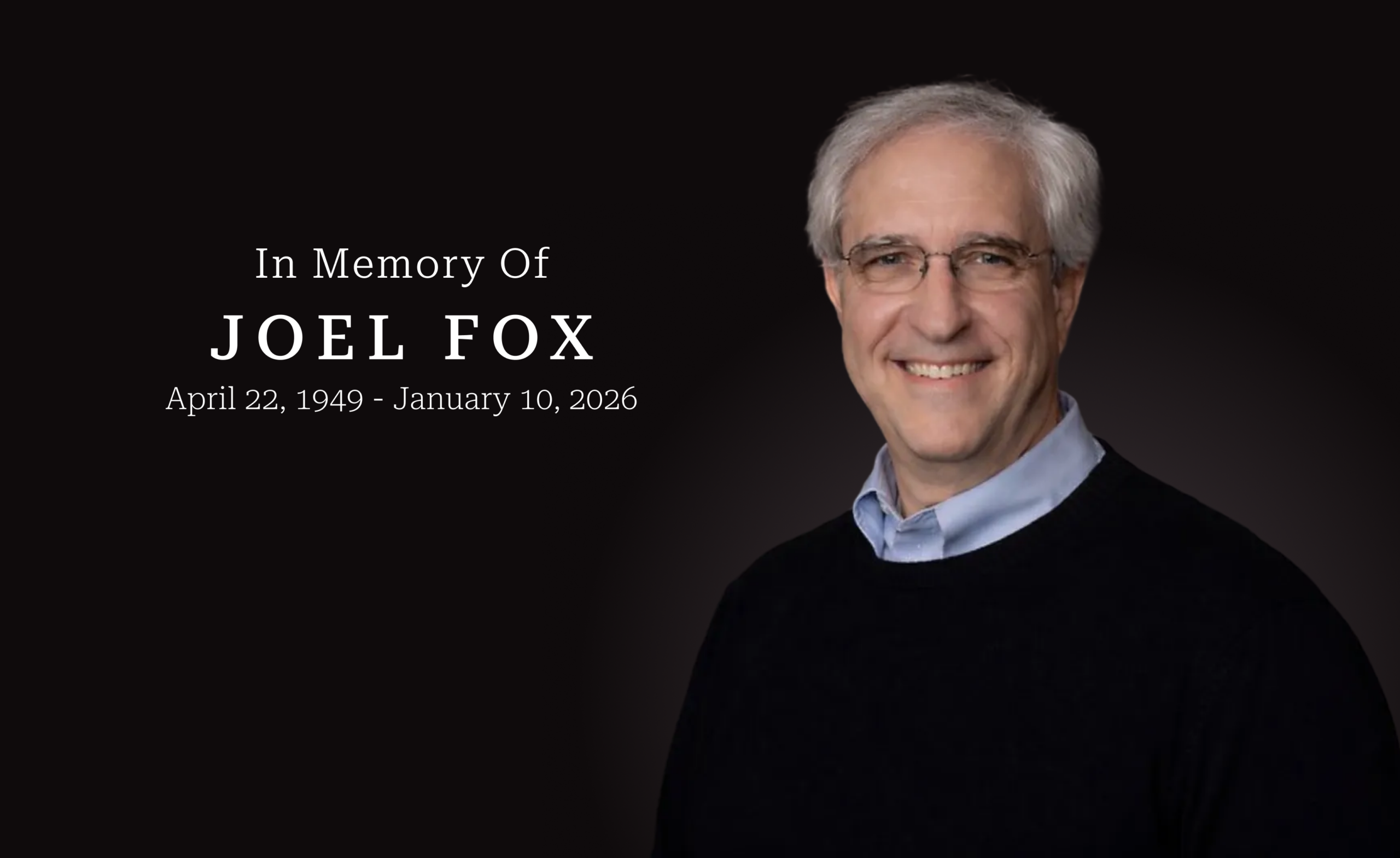
If political differences are destined to leave us divided and friendless, how do you explain the life of Joel Fox?

Fox died on January 10 after more than a decade of living with cancer. He was California’s most prominent taxpayer advocate since Howard Jarvis, for whom he worked, and whose anti-tax organization he led from 1986 to 1998. Fox, a Republican, advanced conservative ideas on TV and op-ed pages. He advised the campaigns of Gov. Arnold Schwarzenegger, Mayor Richard Riordan, and U.S. Sen. John McCain.

That profile, in our polarized times, might make you think Fox was one of those political ideologues who are driving the country apart. But the opposite is true.

Fox, more than any person in California politics, built deep relationships with people across the political spectrum. And he did not do this through consensus or compromise. Instead, Fox built friendships on disagreement itself—a warm, open, and curious style of disagreement.


Read More »

Jobs is Issue Number One

While last night’s senate debate between Barbara Boxer and Carly Fiorina covered a number of issues, it also affirmed what we have been saying all along – that jobs is issue number one.

California stuck with over 12% unemployment for what seems an eternity must unlock the formula to create more jobs. Both candidates hit the job issue hard during the debate.

Boxer excoriated Fiorina for sending 30,000 jobs overseas when she headed Hewlett-Packard. Fiorina responded that she made tough executive decisions and cut some jobs to save others.

Read More »

Proposition 23 Is Needed to Save Jobs

The African American business community has long been wary of California’s global warming law (AB 32) because of its potential negative impact on small businesses in the state.  A large percentage of African American-owned businesses fall into precisely that category.

Unfortunately, our instincts have proven correct.  The independent Legislative Analyst has determined that AB 32 will increase energy costs and result in lost jobs.  The California Air Resources Board (CARB) itself has acknowledged that small businesses will be hit disproportionately hard since they typically spend a larger percentage of their budgets on utilities and fuel.

That’s why the Black Business Association, and African American organizations across the state, strongly support Proposition 23.  By temporarily suspending the state’s costly global warming law, Yes on 23 will save small businesses and families from the electricity, gasoline and natural gas cost increases that would occur if this flawed law were implemented.

Read More »

Prop 25, the On-Time Budget Act Fixes, Doesn’t Create, Problems

To paraphrase Mark Twain, the report of the death of the right to referenda have been greatly exaggerated.

The notion that California could become one of 47 states that has a majority vote budget appears to have opponents in something of a froth. Charges of majority vote taxes and loss of the right of referenda have flown – even in the face of irrefutable evidence to the contrary.

It’s fear mongering at its worst.

Read More »

If You Don’t Like Tax Increases, Why Would You Vote for a Republican Governor?

The debate – well, calling it a debate is charitable, so let’s say the never-ending yelling match – over taxes in California politics makes little sense, particularly when applied to the governor’s race.

Meg Whitman says she opposes tax increases. Jerry Brown says he opposes them, unless the public goes along. Who to believe?

If past is prologue, believe Brown. And get ready for a Whitman tax increase.

Read More »

The Senate Debate: Riding Momentum

Tonight’s debate between Barbara Boxer and Carly Fiorina will set the race for California’s United States Senate seat off in a new direction. By all accounts the race is even. It feels even … if I can justifiably claim that one can get those feelings about political races after hanging around politics for a long time.

That means what happens starting at 7 p.m. tonight at St. Mary’s College in Moraga could be a very important step in deciding California’s next senator. A superior performance or a sub-par one likely would be a game changer.

Will Fiorina look inexperienced next to the three-term senator? Will Boxer appear out-of-touch and arrogant, as her opponents have charged in the past? Any mistakes, superior ability, or personality traits could set an impression with observers and allow one of the candidates to build momentum.

Read More »

Dear California’s Public Employee Unions

You are absolutely right when you argue that state budget cuts are doing lasting damage to California.

It is plain foolish to cut the school year, lay off thousands of teachers, increase university tuition, undermine the safety net, and close state offices on Fridays. And you’re also right to argue that there need to be new revenues on the table to reverse the cuts to these important priorities.

If only you were effective advocates of these positions.

Read More »

Sending out an SOS to our SoS

Debra Bowen’s term as California’s Secretary of State started with fanfare. Upon assuming office in 2007, Bowen was greeted with the task of approving the implementation of electronic voting machines throughout the state.

Over $400 million had been invested in the initiative, but the new Secretary of State took a step back and commissioned an independent study of the machines, uncovering several problems with the new technology. 

Confronting the machines’ manufacturer and unhappy county officials, Bowen decided to restrict implementation of the new voting system prior to the state’s February 5 presidential primary. It was a gutsy call, and for it, Bowen earned plaudits from around the state, and even nationally – receiving a John F. Kennedy Profile in Courage Award at the Kennedy Library and Museum in Boston.

Read More »

America’s 21st-Century Business Model

Cross-posted with NewGeography.com

Current attitudes aren’t too kind to the old American way of doing
business. In our globalized economy, the most enthusiastically touted
approaches are those adopted by centralized, state-dominated economies
such as China, Brazil and Russia as well as–somewhat less
oppressively–those of the major E.U. states.

Yet the U.S. may well be constructing the best sustainable business
model for the 21st Century. It is an approach built on the country’s
greatest enduring strength–an innovative business culture driven
increasingly by a diverse pool of immigrants.

This model, of course, lacks the kind of centralized control beloved
by many pundits. Yet its virtues are also missing from statist-oriented
European or East Asian capitalism. These other regions’ systems may be
more disciplined in their thinking, but they do not draw as well on the
diversity of human experience and connections that drive America’s
post-racial economy.

Read More »

The Real Jerry Brown Issue

Meg Whitman is getting it wrong.  Her attacks on Jerry Brown are sporadic, unfocused and in many cases just downright untrue.  She is trying to define him as a traditional tax and spend liberal, but that dog won’t hunt. 

The state budget increased by 120 percent while Brown was governor (1975-1982), says a Whitman website; well, budgets increased 120 percent while Ronald Reagan was governor (1967-1975).  As governor, Brown wanted to raise $7 billion in new taxes, she says.  Not true, wrote Ed Salzman, then editor of the California Journal, in a 1982 summary of the Brown years.

"Ronald Reagan left Brown in a fiscal Fat City (in 1975), with a healthy surplus and a tax structure that far outpaced the state’s needs.  Brown guarded that surplus in his first term, fighting off those who would increase spending."

Read More »